


More news on this day
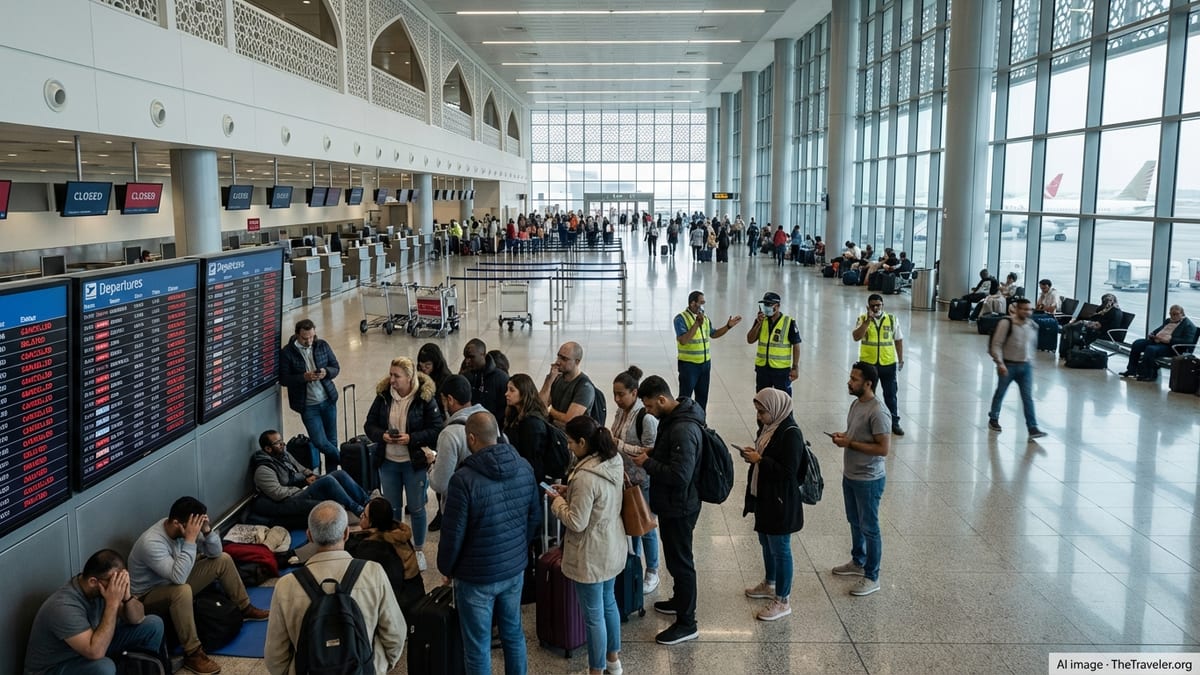
Travelers at King Abdulaziz International Airport in Jeddah faced extensive disruption today as a wave of delays and cancellations hit departures and arrivals, affecting dozens of services operated by Saudia, Flynas, Flyadeal, Emirates, Air India and other carriers on busy domestic and regional routes.
Get the latest news straight to your inbox!
Operational Turbulence Hits Major Saudi Gateway
King Abdulaziz International Airport, the primary aviation hub for Jeddah and a key gateway for pilgrims traveling to Mecca, experienced significant operational turbulence as a cluster of delays and cancellations rippled across its schedule. Publicly available live flight boards and third party trackers through the afternoon showed a sharp build-up of late departures and revised arrival times, with a smaller number of outright cancellations impacting both domestic and international traffic.
The airport serves as the main hub for national carrier Saudia and a home base or key station for low cost operators Flynas and Flyadeal, while also handling a heavy schedule from foreign airlines such as Emirates and Air India. The knock-on effect of even a limited number of cancellations in this kind of hub structure can lead to extended delays as aircraft and crew are repositioned, placing pressure on subsequent rotations to Riyadh, Dubai, Mumbai, Cairo and other high-demand destinations.
Recent weeks have already seen regional aviation strained by airspace restrictions and weather-related disruptions at multiple Middle Eastern hubs. Industry trackers and advisory platforms have highlighted elevated levels of schedule changes and rolling delays across Saudi carriers and their regional peers during this period, suggesting that the latest issues at Jeddah are part of a wider pattern of operational stress in regional networks.
While detailed causation for each individual delay is not immediately clear from public data, historical patterns indicate a mix of factors typically lies behind such disruption, ranging from congestion and crew availability to aircraft rotation challenges when previous flights run late.
Dozens of Flights Delayed, With Cancellations Rippling Through Network
By late afternoon, aggregated flight-status snapshots and schedule-monitoring services indicated more than seventy flights operating to or from King Abdulaziz International were running behind schedule, with departure or arrival times pushed back well beyond original slots. In addition, at least two services were marked as cancelled, removing capacity on already busy corridors and further complicating rebooking options for affected travelers.
Among the disrupted services were multiple Saudia operations, including regional and medium haul routes, together with flights operated by Flynas and Flyadeal on core domestic sectors such as Jeddah to Riyadh and other cities. Data from independent flight-tracking platforms also showed selected Saudia services from Jeddah to secondary Saudi destinations marked as cancelled, underscoring how even smaller routes can be hit when aircraft are reallocated or grounded for operational reasons.
Internationally, publicly visible schedules pointed to knock-on delays on services linking Jeddah with major regional hubs including Dubai and Cairo, as well as on long and medium haul flows connecting onward to South Asia. Airlines such as Emirates and Air India, which rely on timed connections at their own hubs, can face additional complexity when flights from Jeddah depart late, potentially forcing passengers into missed connections and overnight re-accommodation further down the line.
Based on patterns observed in previous disruption events at Jeddah and other Gulf and Red Sea hubs, industry analysts note that a concentrated block of delayed departures in a peak bank can easily push the overall tally of affected flights into the dozens, even when only a small fraction are formally cancelled.
Passengers Face Long Queues, Rebookings and Missed Connections
For travelers inside the terminals at King Abdulaziz International Airport, the operational disruption translated into long waits at check-in desks, security lanes and boarding gates, as well as crowded seating areas around departure zones. Social media posts and traveler forums frequently highlight how delays at Jeddah can build quickly during peak travel times, particularly for pilgrims and families traveling on connecting itineraries that involve tight transfer windows.
Passengers with onward connections through Riyadh, Dubai and Mumbai were especially exposed to missed onward flights, given the hub-and-spoke structure favored by carriers such as Saudia, Emirates and Air India. When a departure from Jeddah leaves significantly behind schedule, travelers may arrive too late to board their next sector, forcing airlines to seek alternative routings or provide hotel accommodation when necessary and in line with local passenger rights regulations.
Travel rights and compensation frameworks for disrupted flights from Saudi Arabia vary depending on routing and the airline’s jurisdiction. For itineraries touching the European Union or the United Kingdom, passengers may benefit from stronger protection regimes that can, in certain cases, provide financial compensation for long delays or cancellations, especially when the operating carrier is subject to EU261 or UK261 rules. For purely regional or domestic itineraries, reimbursement and care obligations depend mainly on local regulations and each airline’s policy.
Consumer advisory platforms have in recent months reported growing traveler frustration about response times from airline customer service channels after major schedule disruptions in the region. Travelers commonly describe long waits on hotlines and slow processing of refund or voucher requests when large numbers of passengers seek assistance simultaneously.
Carriers Adjust Schedules as Regional Airspace and Capacity Strain Persist
The latest disruption at Jeddah comes against a backdrop of heightened strain on airline schedules across the Middle East. Recent months have seen multiple carriers in the region, including Saudia, Flynas, Flyadeal and Emirates, publish advisories about temporary suspensions, extended reroutings and schedule changes on selected routes as a result of airspace limitations, operational constraints and capacity bottlenecks at key hubs.
Industry data and public statements from airlines earlier this year indicated that some services to and from neighboring states had been temporarily suspended or capped, while others were rerouted or operated with extended block times to account for closed or restricted air corridors. These measures can ripple into day to day operations, with aircraft spending longer in the air or on the ground than originally scheduled, and with crews facing more complex duty-time planning.
Analysts note that Saudi Arabia’s ongoing expansion of its aviation sector, with ambitious growth plans for both existing carriers and new entrants, is taking place within a global environment where aircraft availability, maintenance slots and trained crew remain tight across many markets. When combined with seasonal peaks in religious and leisure travel, such constraints can increase the likelihood of localized disruption at busy airports like King Abdulaziz International.
Carriers operating at Jeddah have in the past pointed to investment in new terminals, upgraded baggage systems and improved air traffic management as key tools to boost resilience. However, recent episodes of multi-hour delays and clusters of cancellations across the wider region underline that infrastructure upgrades alone may not fully insulate passengers from operational shocks tied to regional geopolitics, weather or global supply chain issues.
Advice for Affected Travelers and Those Yet to Depart
For passengers whose flights from Jeddah are delayed or cancelled, consumer advocates consistently recommend checking live flight status through airline apps and independent trackers, and monitoring email and mobile notifications for rebooking details. Where immediate online options are limited, travelers often report better outcomes by seeking assistance at dedicated rebooking desks inside the terminal rather than waiting solely for call centers to respond.
Travelers connecting onward through Riyadh, Dubai, Mumbai or Cairo are advised to pay particular attention to minimum connection times and to allow for additional buffers when booking future trips that involve transfers through Jeddah during high-demand periods. Flexible tickets and travel insurance that explicitly covers missed connections or extended delays can provide an extra layer of protection when schedules are volatile.
Passengers impacted by the current disruption are encouraged to keep documentation of boarding passes, delay notifications and receipts for reasonable expenses such as meals or overnight accommodation, as these may be required when submitting claims under airline policies or applicable passenger rights rules. Some independent claims services and legal platforms also provide tools to assess potential eligibility for compensation, especially on itineraries touching jurisdictions with strong consumer protection laws.
With operational pressures across the region likely to persist in the coming weeks, aviation observers expect airlines serving King Abdulaziz International Airport to continue fine-tuning schedules and capacity. Travelers planning to fly via Jeddah are therefore urged to remain vigilant about schedule changes in the days leading up to departure and to build extra time into their itineraries where possible.