


More news on this day
Turkey is entering a new phase in rail modernisation as its high speed network stretches deeper into Anatolia, connecting more provincial cities and reshaping how residents and visitors move across the country.
Get the latest news straight to your inbox!
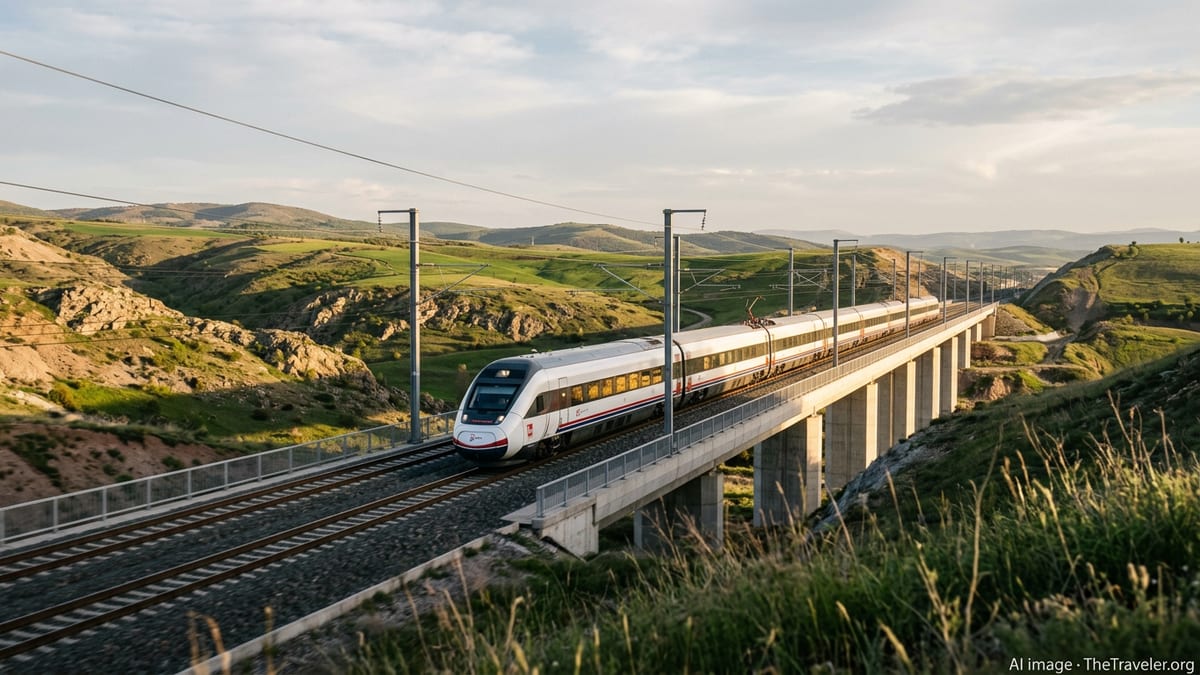
A fast-growing high speed backbone across Turkey
Publicly available information shows that Turkey’s rail network now extends to nearly 14,000 kilometres, with more than 2,200 kilometres operating as high speed lines. These routes connect core population centres such as Istanbul, Ankara, Konya, Eskişehir and Sivas, providing an alternative to domestic flights and long-distance buses.
Data from recent market intelligence reports indicates that high speed and higher speed projects account for the majority of new rail construction nationwide. Turkey has several thousand kilometres of additional corridors at various stages of development, from final design to active construction, underscoring a long-term strategy to shift more passenger traffic to rail.
For travellers, the maturing network translates into shorter journey times and more predictable schedules on some of the country’s busiest corridors. Routes such as Ankara to Istanbul and Ankara to Konya already function as flagships for the system, with multiple daily departures and purpose-built high speed infrastructure.
The expansion comes as global tourism to Turkey continues to recover and diversify beyond traditional coastal destinations. Faster overland connections between cities in Central Anatolia, the Aegean and the Marmara region are expected to reshape domestic itineraries, making multi-city rail journeys increasingly practical for international visitors.
New links: Ankara–Sivas and the push into Central Anatolia
One of the most influential recent additions to the network is the Ankara–Sivas high speed line, which opened in 2023 and has since become an important eastward extension from the capital. Official statistics released this spring indicate that the route has carried well over two million passengers in its first three years of operation, highlighting strong demand for faster east–west rail travel.
The line shortens journey times between Ankara, Yozgat and Sivas, reducing long overnight or multi-stage trips to a matter of hours. This is particularly significant for Central Anatolian cities that previously relied heavily on road transport, giving residents a new option for reaching the capital and, via onward connections, Istanbul.
Service frequencies on the Ankara–Sivas corridor have been adjusted to match seasonal peaks, with Turkish media reporting additional summer departures to accommodate holiday traffic. The pattern illustrates how high speed rail is becoming part of the country’s broader tourism and mobility planning, rather than serving only business or government travel.
The Ankara–Sivas line also serves as a foundation for further extensions toward Erzincan and eastern provinces, projects that are under planning and construction. If completed as envisaged, these links would bring high speed or higher speed services significantly closer to the Black Sea and eastern border regions, opening new overland routes for both domestic and foreign travellers.
Ankara–Izmir, Bursa and the westward corridor to the Aegean
On the western side of the country, the planned Ankara–Izmir high speed line is emerging as one of Turkey’s most closely watched rail projects. Public statements and project documentation describe a 500-kilometre corridor designed to cut the rail distance between the capital and the Aegean metropolis by around 200 kilometres compared with the existing route, with a target opening in stages later this decade.
The line is set to include new stations at intermediate cities such as Afyonkarahisar, Uşak and Manisa, drawing a string of inland hubs into the high speed network. For tourism, this could prove transformative, tying spa towns, heritage sites and smaller urban centres more tightly to both Ankara and Izmir’s international airport and cruise traffic.
Further north, Bursa is also slated to join the high speed system. Ministry announcements indicate that works are advancing on a connection that will plug Bursa into the Ankara–Istanbul corridor, with service to the city centre envisaged around 2026. As one of Turkey’s largest industrial and historical cities, Bursa’s integration is expected to generate substantial additional ridership and open new possibilities for rail-based city breaks from Istanbul.
Together, the Ankara–Izmir line and Bursa link form part of a broader westward strategy that aims to knit the Aegean, Marmara and Central Anatolia regions together with high speed infrastructure. For visitors accustomed to flying into Istanbul and remaining on the coast, the evolving network could enable loop itineraries that combine inland UNESCO sites, mountain landscapes and coastal resorts by rail.
International connections and the European gateway
Turkey’s high speed ambitions also include new international corridors. Work is progressing on the Halkalı–Kapıkule line, a project designed to create a fast rail spine from Istanbul’s European side to the Bulgarian border. Publicly available planning documents describe the corridor as a mixed-traffic, high standard line that will ultimately link with European Union networks.
For travellers, a completed Istanbul–Kapıkule route would make it easier to incorporate Turkey into longer overland journeys between Central Europe and the eastern Mediterranean. Combined with existing and planned services within the country, passengers could eventually travel from cities like Sofia, Bucharest or Budapest to Istanbul and onward to Ankara or Izmir with reduced journey times and fewer transfers.
At the same time, upgraded cross-border infrastructure is expected to support freight flows between Europe and Asia, improving overall network viability. Although freight does not use the same operating patterns as high speed passenger trains, the shared investment in track, signalling and electrification contributes to the economic case for continued rail expansion.
Regional projects in eastern Turkey, including planned links toward the Caucasus and the Middle East, remain at various stages of study and development. As these projects evolve, they may eventually complement the high speed system by providing onward options for long-distance travellers who prefer rail to air where possible.
Implications for domestic travel and tourism
The rapid growth of Turkey’s high speed network is already reshaping domestic travel behaviour. Reports indicate that routes such as Ankara–Istanbul have diverted significant passenger volumes from intercity buses, while providing a more time-competitive alternative to short-haul flights when station access and security times are taken into account.
For tourism planners, the changing map presents both opportunities and challenges. Cities newly served by high speed trains can market shorter weekend stays and themed rail itineraries, while established destinations need to adapt to travellers arriving directly by train rather than via domestic flights through Istanbul’s airports.
Industry analyses suggest that over the coming decade, Turkey intends to continue prioritising high speed and higher speed lines, with long-term targets measured in tens of thousands of kilometres of upgraded or newly built track. The scale of this ambition positions the country as one of the most active rail builders in its wider region.
For travellers considering Turkey in the coming years, the evolving high speed network may become as central to trip planning as the country’s airports and highways. As new lines open and timetables expand, the possibility of exploring multiple regions by rail in a single journey is likely to grow, broadening the ways visitors experience the country’s diverse landscapes and cities.