


More news on this day
A major rail incident near Bedford in central England has left a train driver dead and dozens of passengers injured after two southbound services collided on a busy main line toward London, according to early reports from British media and rail operators.
Get the latest news straight to your inbox!
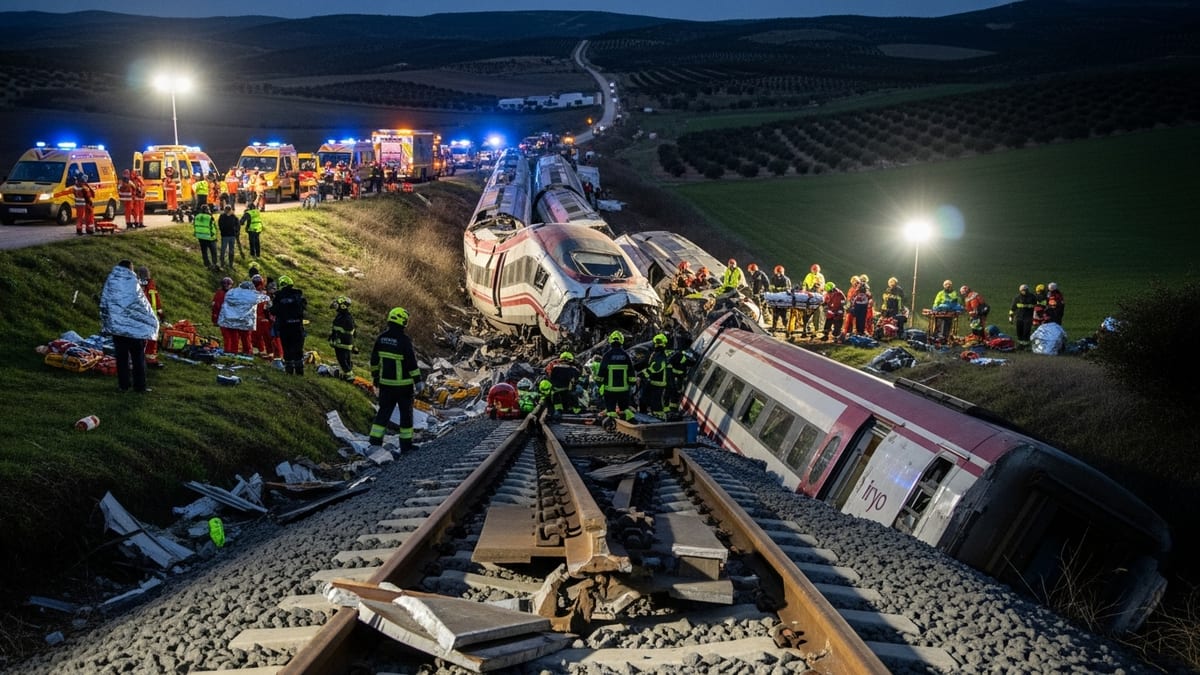
Collision on Key Commuter Route South of Bedford
Publicly available information indicates that the crash occurred on Friday afternoon on the Midland Main Line just south of Bedford, a critical corridor linking the East Midlands with London St Pancras. Two southbound East Midlands Railway services, one reported to be running from Corby and another from Nottingham, were involved in the collision as they headed toward the capital.
Initial accounts from national and regional outlets describe a forceful impact that left at least one train derailed and carriages badly damaged. Images shared on social platforms and republished by news sites show crumpled rolling stock, tilted coaches and debris scattered along the ballast, underscoring the severity of the crash.
Rail services on the route were immediately halted, with all lines reportedly blocked between Bedford and stations further south as emergency crews attended the scene. Passengers on other services in the area described lengthy standstills and diversions as rail operators attempted to manage the disruption across one of the country’s busiest intercity corridors.
As of the latest public updates, rail traffic through the affected stretch remains severely constrained, and travelers have been urged to check live departure boards and operator statements before setting out.
Casualties Mount as Major Incident Declared
Reports compiled from multiple news organizations indicate that the driver of one train died at the scene, making the crash one of the most serious rail accidents in the United Kingdom in recent years. The same reports state that around 89 people have been injured in total, with approximately 33 classified as seriously injured following initial medical assessments.
Ambulance services, fire crews and specialist hazardous area response teams were deployed in significant numbers after the collision was declared a major incident. Nearby hospitals in Bedfordshire and surrounding counties began receiving casualties with a range of trauma injuries, while some patients were treated on site in temporary triage areas set up beside the tracks.
Accounts from passengers relayed through media coverage describe scenes of confusion and shock inside the carriages immediately after impact, with some travelers assisting others to move through smoke, broken glass and twisted metal to reach exits. Rescue efforts were complicated by the location of the trains on an open stretch of line, requiring emergency vehicles to access the site along rail service roads and adjacent fields.
Authorities have not yet released comprehensive details on the condition of those seriously hurt. Public information suggests that the casualty figures may be updated as hospitals complete further evaluations.
Emergency Response and Disruption for Travelers
According to published coverage, the collision triggered a large-scale multi-agency response involving local emergency services, national rail incident teams and specialist rail accident personnel. Lighting rigs and heavy equipment were transported to the location to assist with stabilizing carriages, extracting passengers and beginning the complex process of clearing wreckage from the tracks.
Buses were quickly arranged to replace suspended rail services between key stations on the Midland Main Line, but the scale of the disruption meant significant delays and cancellations for both long-distance and commuter passengers. Travelers heading to and from London St Pancras, Leicester, Nottingham, Derby and other East Midlands destinations have been advised that journey times may be considerably extended.
Rail operators have been issuing rolling updates on social channels and station announcement systems, recommending that only essential travel be attempted on the affected route while recovery and investigation work continues. Some intercity services have been rerouted where possible, though capacity on diversionary lines remains limited.
For international visitors and domestic tourists relying on rail connections through Bedford to access London and other parts of England, the incident underscores the importance of building flexibility into travel plans and monitoring live travel information, especially during periods of service disruption.
Early Focus on Signaling and Train Movements
While it is too early for definitive answers, preliminary commentary in the rail press has pointed to train movements and signaling on the busy section of line south of Bedford as a likely focus of the formal investigation. Early reports suggest that both trains involved were traveling in the same direction toward London, which raises questions over spacing, speed, communication and the functioning of safety systems on the route at the time of the crash.
Specialist investigators from the national rail accident investigation body are expected to examine on-train data recorders, trackside equipment, signal sequences and control room logs to piece together the moments leading up to the collision. The performance of braking systems, the condition of the track and points, and any reports of prior faults or incidents in the area are also likely to receive close scrutiny.
Publicly available information about recent rail safety initiatives in the United Kingdom notes continuing work to upgrade train protection systems and reduce the risk of collisions on main lines. The Bedford crash is likely to intensify debate over the pace of these improvements, especially on routes that combine high passenger volumes with dense timetables.
Any interim safety recommendations arising from the early stages of the investigation could prompt temporary operating changes on similar stretches of railway, both on the Midland Main Line and elsewhere in the national network.
Implications for Passengers and Rail Safety
The Bedford crash has immediate implications for thousands of passengers who depend on the route each day for work, education and leisure travel. As services gradually resume, travelers may encounter altered timetables, reduced capacity and ongoing engineering activity at and around the crash site.
For the wider rail industry, the incident is likely to become a key reference point in discussions about rolling stock design, crashworthiness and the resilience of the signaling and control systems that govern busy main lines. Safety advocates and passenger groups are expected to call for a transparent and thorough investigation, with clear public communication of findings and any recommended reforms.
The collision also highlights the importance of emergency preparedness across the network. Media coverage of the response near Bedford has drawn attention to the coordination between frontline emergency staff, rail incident officers and local communities that provided support to stranded passengers.
As more details emerge in the coming days, travelers planning rail journeys through central England are being encouraged to stay alert to updates and to allow additional time for connections, particularly where onward flights, ferries or long-distance trips depend on the Midland Main Line.