


More news on this day
Several weeks after a Canadian National freight train jumped the tracks near the Hickman–Carlisle county line in western Kentucky, large pieces of twisted rail, toppled cars and damaged bridge sections continue to dominate the remote cleanup zone, with recovery operations still reshaping local travel and freight routes.
Get the latest news straight to your inbox!
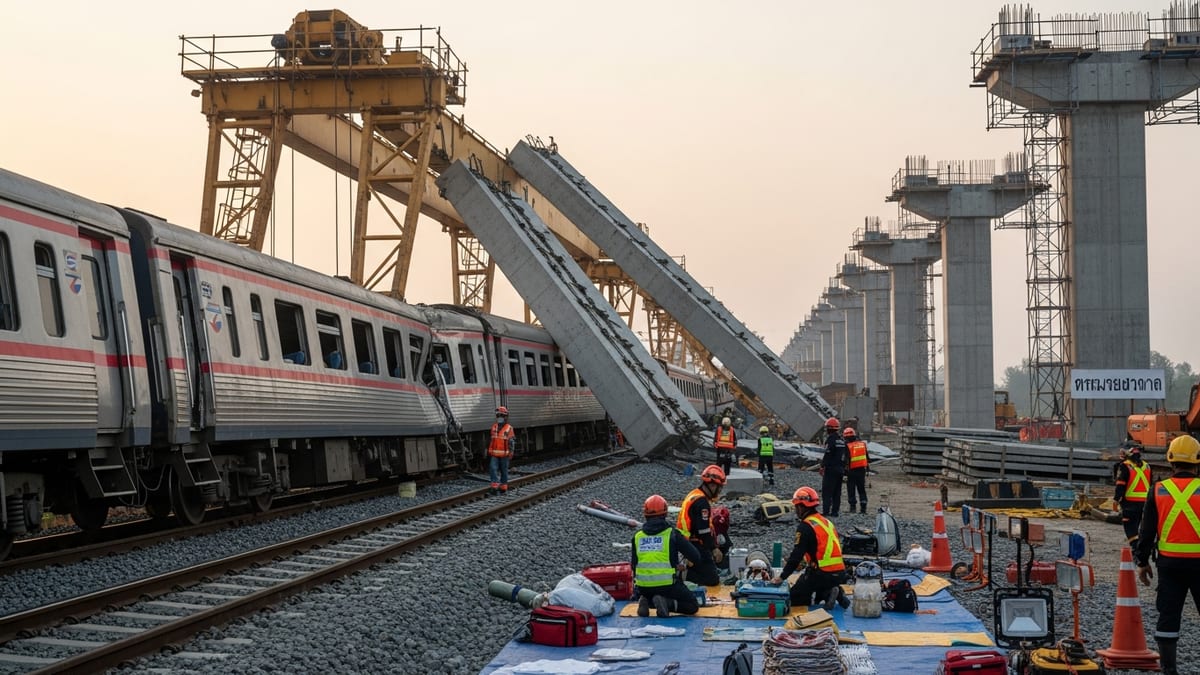
Derailment in Remote Woods Complicates Recovery
The late-night derailment on May 31 involved two locomotives and roughly 30 railcars leaving the tracks in a heavily wooded area near the end of Peery Road, south of Arlington, according to published regional coverage and emergency management summaries. The mixed-freight train was traveling on a Canadian National line that threads through low-lying farmland and timber between Hickman and Carlisle counties, far from major population centers.
Publicly available information indicates that the wreck scattered cars down an embankment and along a rail bridge, bending steel rail and damaging the elevated structure. Images distributed by local news outlets show strings of hopper and box cars on their sides, with ballast and cargo spilling into the surrounding brush. The combination of steep terrain, dense trees and limited road access has slowed the pace of heavy-lift operations.
Reports describe crews having to rely on specialized rail cranes and off-road equipment staged along Peery Road and temporary work pads. Moving that machinery into the site has required repeated closures and traffic controls on nearby routes, as contractors shuttle between the derailment zone and staging areas closer to U.S. 51.
Track and Bridge Repairs Keep Traffic Disrupted
Updates from transportation and emergency agencies show that reconstruction is focused on both the rail line and a damaged railroad bridge at the site. CN-hired contractors are replacing track structure, rebuilding ballast and realigning rail as the derailed cars are removed. The bridge has drawn particular attention, with photos highlighting twisted spans and dislodged components that must be repaired before normal freight traffic can resume.
Public notices from the Kentucky Transportation Cabinet indicate that U.S. 51 has been periodically blocked between KY 288 and KY 80 to allow heavy equipment and oversized loads to access the derailment location. Those rolling closures have affected drivers using the north–south corridor along the Mississippi River, adding detours and travel time for residents, commercial haulers and visitors moving through this corner of the state.
Peery Road itself remains closed near the end of the paved section where emergency vehicles, cranes and low-boy trailers turn off toward the tracks. Local agencies have advised that the road will stay shut until rail and bridge work reach a point where the staging area is no longer needed, a timeline that remains fluid as contractors uncover additional damage.
Cargo, Safety Concerns and Environmental Monitoring
According to published coverage summarizing initial assessments, the derailed train was hauling a mixture of aggregate, automotive-related freight and nonhazardous chemical products. Early on, attention focused on two tank cars thought to be carrying hazardous materials, but follow-up reviews determined that those cars did not present a risk that would require evacuations in surrounding communities.
No injuries have been reported among train crew members or nearby residents. Even so, the size of the derailment and the presence of chemical shipments prompted environmental checks and ongoing site monitoring. State and local agencies routinely evaluate soil and drainage pathways after similar freight incidents to watch for fuel leaks, lube oils from locomotives or product releases that could move toward streams or agricultural land.
Western Kentucky has seen a series of transportation-related disruptions in recent years, from barge strikes and bridge closures along the Mississippi and Ohio rivers to highway incidents and other derailments elsewhere in the state. The Hickman County wreck fits into a broader pattern of infrastructure stresses that draw attention to rail safety practices and the resilience of key freight corridors.
Longer-Term Impact on Rail and Regional Travel
Regional rail traffic remains constrained as cleanup and rebuilding continue. Passenger alerts issued in the first days after the derailment showed service disruptions along the broader north–south corridor, and publicly available timetables indicate that freight movements have been rerouted where possible while the Hickman County section stays out of service. Such detours can add travel time and logistical complexity for shippers moving goods between the Gulf Coast, the Midwest and distribution hubs farther north.
For local travelers, on-and-off closures of U.S. 51 and nearby secondary roads have become a recurring part of daily life since the incident. Drivers heading to work, school or medical appointments have had to watch for detour signs and schedule extra time, a familiar experience in a region where river levels, bridge work and industrial activity often dictate when and how people can get around.
Public information from transportation planners underscores the importance of this corridor for both highway and rail freight along the Mississippi River. The stretch near Hickman supports agricultural exports, barge and port operations, and overland trucking networks that cross between Kentucky, Tennessee and neighboring states. A protracted outage on the rail line concentrates more demand on parallel roads and waterways, increasing pressure on already aging infrastructure.
Cleanup Timeline Remains Open-Ended
While wreckage removal has made visible progress, with some railcars already cut up or hauled away, regional broadcasters report that crews are still working around the clock on site stabilization, bridge repairs and track reconstruction. The heavily damaged bridge span, in particular, is likely to dictate the final reopening date for full rail service through the area.
Weather and river conditions may also influence the pace of work. Western Kentucky routinely contends with heavy rains and high water along nearby river bottoms, factors that can complicate crane operations, footing for work crews and the movement of replacement materials. Even after the last derailed car is cleared, engineers must complete inspections and testing before trains can roll at normal speeds.
For now, the Hickman County derailment zone remains an active construction-style site, marked by the sound of cutting torches, idling equipment and pile-driving. Travelers along U.S. 51 and residents on surrounding rural roads continue to encounter signs of the long-running recovery, a reminder that large-scale freight disruptions in remote areas can take weeks or months to fully resolve.