


More news on this day
A train driver has died and dozens of passengers have been injured after two London-bound services collided near Bedford in central England, prompting major disruption for rail travelers at the height of the summer getaway period.
Get the latest news straight to your inbox!
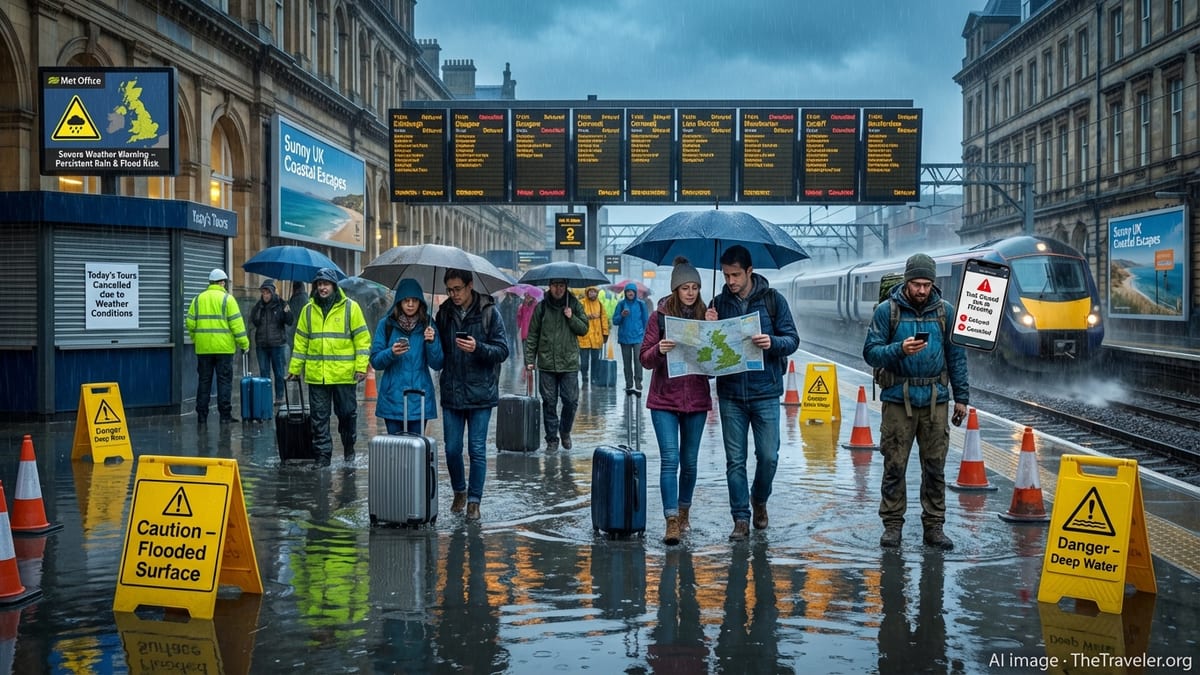
Collision on Busy London Corridor
According to published coverage, the collision occurred on the evening of Friday 19 June on a key stretch of the Midland Main Line north of London, when two southbound passenger services came into contact near the town of Bedford. Both trains were reported to be heading toward London St Pancras, one from Corby and another from Nottingham, placing hundreds of commuters and leisure travelers on board at the time of the impact.
Images and accounts shared in news reports describe crumpled carriages, shattered windows and passengers thrown forward by the sudden jolt. Initial information referenced a significant emergency response, with rail services on the route quickly suspended as rescue teams reached the line.
Publicly available information indicates that a train driver died at the scene. Dozens of passengers suffered injuries ranging from minor cuts and bruises to broken bones and serious trauma, with several transported to hospitals in the wider Bedfordshire and north London area.
A major incident was declared for the surrounding area, reflecting the scale of the response and the number of people needing medical assessment and assistance at the lineside and nearby reception points.
Impact on Rail Travel and Holiday Plans
The timing and location of the collision are having an outsized effect on travel plans for domestic and international visitors. The Midland Main Line is a primary gateway between London and the East Midlands, feeding long distance services from cities such as Nottingham, Derby, Leicester and Sheffield, as well as connecting with regional routes toward the Peak District and beyond.
In the hours after the crash, operators halted services through the affected stretch of track, with some trains terminating early and others diverted where infrastructure allowed. Passengers already en route from northern cities toward the capital faced missed connections to London airports, Eurostar services and evening departures from other London terminals.
Travelers planning weekend city breaks or onward journeys across Europe have been advised, in published advisories, to check for updated timetables, alternative routes via other main lines, and extended journey times. Replacement road transport on surrounding motorways and local roads is expected to be congested, adding to delays for those attempting to re-route around the closed section of railway.
Hotels in Bedford, Luton and parts of north London are likely to see short-notice bookings from passengers forced to overnight after missed connections, while tourism businesses at both ends of the route may experience cancellations and late arrivals as the disruption continues.
Emergency Response and Passenger Accounts
Reports from the scene indicate that a large number of medical and rescue resources were deployed, including ambulance crews, specialist incident teams and an air ambulance. Fire and rescue services worked with rail staff to stabilize the rolling stock, assist trapped passengers and assess any risks from fuel, electricity or debris on the line.
Passengers quoted in media coverage describe a sudden, powerful impact followed by confusion as lights flickered and carriages filled with dust. Some travelers helped fellow passengers with visible injuries, improvised bandages using clothing and moved toward exits while waiting for rescue teams to arrive.
Those with minor injuries were treated at the scene or taken to local facilities for further checks, while more seriously hurt passengers were transported to major hospitals. Rail staff assisted with coordination on the platforms and worked to keep passengers informed as information about onward transport slowly emerged.
Travelers who were not physically hurt nonetheless faced long waits beside the track or in temporary holding areas, with many reporting missed flights and late arrivals for family events, work commitments and holiday plans across the United Kingdom and abroad.
Investigation and Safety Focus
Specialist rail investigators are expected to examine a wide range of potential contributory factors, including train movements, signalling, track conditions, braking performance and any communications between drivers and control centers before the collision. Data from onboard recording systems and lineside equipment will play a central role in reconstructing the sequence of events.
Past rail inquiries in the United Kingdom have highlighted issues such as low rail adhesion in poor weather, signalling misunderstandings and technical failures in safety equipment as factors that can escalate routine incidents into serious collisions. The current investigation is likely to draw on those findings while examining whether the Bedford crash reveals new vulnerabilities on the busy route into London.
Publicly available statements from rail industry representatives and oversight bodies emphasize that passenger rail in Britain maintains a strong overall safety record, yet each serious incident prompts detailed scrutiny of operating practices, staff training and emergency planning. Particular attention is typically given to how quickly trains were brought to a halt, the effectiveness of evacuation procedures and communication with passengers.
Any interim safety recommendations arising from the early stages of the inquiry may lead to temporary restrictions on speed, altered timetables or technical checks on similar rolling stock, which could prolong disruption for travelers even after full line reopening.
Guidance for Travelers Planning UK Rail Journeys
For visitors and residents planning to travel through central and eastern England in the coming days, publicly available travel updates recommend allowing additional time, building in flexible connections and considering alternative lines where practical. Routes via the West Coast Main Line and East Coast Main Line may absorb some displaced demand but could become significantly busier at peak periods.
Travelers with advance purchase tickets for services affected by the Bedford collision are typically offered options such as rebooking on later trains, accepting alternative routes or seeking refunds, depending on the operator’s policies. Those with fixed onward flights or cruise departures are advised in consumer guidance columns to contact airlines, cruise lines and insurers as soon as possible to discuss options.
The incident is also likely to influence future trip planning for some visitors to the United Kingdom, particularly those combining rail journeys with time-sensitive events. Travel advisors often suggest building generous buffers between long distance rail legs and international departures, and this crash north of London provides a stark illustration of how unexpected disruptions can cascade through even carefully arranged itineraries.
As the investigation progresses and the line gradually returns to normal operation, rail users across the UK and abroad will be watching closely for lessons that may further strengthen safety on one of Europe’s most densely used passenger networks.