


More news on this day
Atlas Ocean Voyages is enhancing its expedition programming in the Southern Ocean, adding renowned wildlife expert and television personality Ron Magill to a series of Antarctica and Falklands sailings designed to spotlight the region’s extraordinary biodiversity and fragile ecosystems.
Get the latest news straight to your inbox!
High-Profile Partnership in the Southern Ocean
According to recent announcements from the line and trade coverage, Magill is set to join select Atlas Ocean Voyages itineraries that explore the Antarctic Peninsula and the Falkland Islands, regions known for dense penguin colonies, prolific seabird life and regular whale sightings. The collaboration aims to appeal to travelers who prioritize in-depth learning and close-up wildlife encounters alongside the comforts of a small expedition yacht.
Magill, best known to many viewers from wildlife television programming and his long career in zoological conservation and education, is expected to contribute a range of onboard presentations focused on animal behavior, habitat protection and responsible photography around sensitive species. Publicly available information indicates that his participation will be concentrated on peak austral summer departures, when wildlife activity is at its most intense and daylight hours are extended.
The decision to feature a widely recognized wildlife specialist aligns with a broader trend across the expedition cruise sector, in which operators are competing to secure high-profile scientists, authors and photographers as guest experts. For Atlas Ocean Voyages, which operates small-capacity expedition yachts in polar waters, the partnership is positioned as an additional differentiator in a crowded Antarctic marketplace.
Industry reports suggest that Magill’s name recognition could help attract first-time expedition travelers who are familiar with his media work but have not previously considered a voyage to the White Continent. The collaboration also reflects a strategy to deepen the educational component of Atlas itineraries at a time when travelers are asking more questions about environmental impact and wildlife welfare in remote destinations.
Antarctica and Falklands Itineraries Under the Spotlight
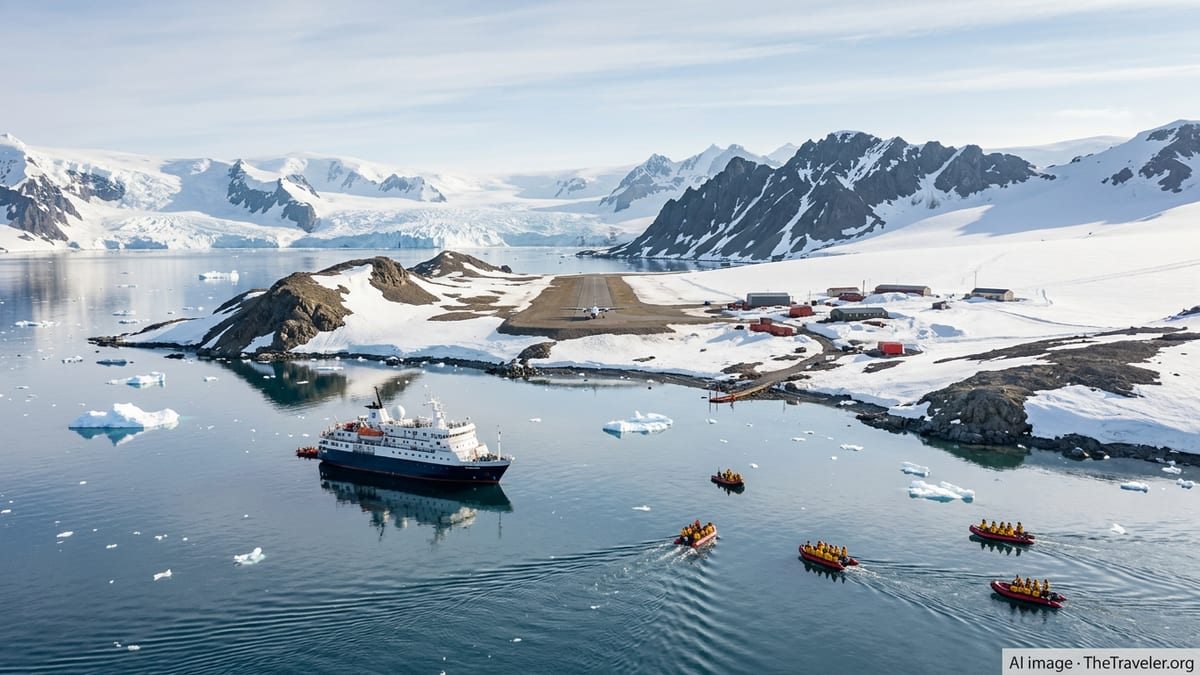
The itineraries scheduled to feature Magill focus on two of the Southern Hemisphere’s most wildlife-rich regions: the Antarctic Peninsula and the Falkland Islands. Atlas Ocean Voyages promotional materials describe voyages that combine classic Antarctic highlights, such as iceberg-dotted bays and penguin rookeries, with calls in the Falklands, where large colonies of albatross, petrels and multiple penguin species nest on windswept headlands.
Typical expedition routes in this area traverse the Drake Passage from South America before reaching the Antarctic Peninsula, where landings and Zodiac excursions are used to access shorelines and narrow channels. From there, sailings that include the Falklands generally return north via the Scotia Sea, adding stops that can include remote settlements and wildlife reserves known for their concentration of birdlife and marine mammals.
Atlas Ocean Voyages markets its Antarctic product around small-ship advantages, emphasizing reduced guest capacity, a high guide-to-guest ratio and flexible daily programming that can be adjusted in response to weather, ice conditions and wildlife activity. Published materials outline experiences such as Zodiac safaris, guided shore hikes and optional kayaking, as well as occasional polar plunges for guests interested in entering the near-freezing water under supervision.
The inclusion of Magill is expected to complement this format by layering additional interpretation onto existing outings. While expedition leaders and naturalists already provide commentary on glaciology, seabirds and marine mammals, the presence of a widely known wildlife communicator is being framed as an added draw for guests who value detailed storytelling about the animals they are observing.
Focus on Conservation Messaging and Responsible Travel
Publicly available information about Magill’s previous work indicates that he has long emphasized conservation, habitat preservation and ethical wildlife viewing in his educational outreach. Bringing those themes into an Antarctic and sub-Antarctic context aligns with growing attention on how tourism can balance access to pristine environments with the need to protect them.
Atlas Ocean Voyages, like other members of the expedition cruise segment operating in Antarctica, highlights adherence to industry guidelines that govern guest numbers ashore, distances from wildlife and biosecurity protocols such as boot cleaning and gear decontamination. Company documents and independent briefings on Antarctic tourism practices show that these measures are designed to minimize disturbance to nesting colonies and reduce the risk of introducing non-native species into fragile ecosystems.
With a recognizable wildlife expert onboard, the line is expected to amplify messaging around those protocols, helping guests understand why restrictions on approach distances, noise levels and drone use are enforced. Educational sessions can also place individual experiences, such as watching penguins molt or whales feed, within broader conversations about climate change, fishing pressures and marine protected areas in the Southern Ocean.
Travel analysts note that travelers increasingly evaluate expedition brands through the lens of perceived environmental credibility. By foregrounding conservation-focused experts and transparent operating practices, operators hope to reassure guests that their presence in remote regions contributes to awareness and advocacy rather than simple consumption of once-in-a-lifetime scenery.
Elevating Onboard Enrichment and Guest Experience
Beyond lectures and formal presentations, enrichment programming on Antarctic expeditions typically extends into informal interactions in lounges, on open decks and during Zodiac outings. Reports on Atlas Ocean Voyages’ style of operation describe an “après expedition” atmosphere, where guides and specialists mingle freely with guests after daily landings and briefings.
Magill’s participation is expected to integrate into that culture, with opportunities for travelers to ask individual questions about photography techniques, animal behavior and conservation issues that may not be covered in larger group sessions. This type of engagement can be particularly valuable for guests interested in producing their own visual records of the journey while avoiding practices that stress wildlife, such as crowding, flash use or blocking access routes.
The company’s promotional emphasis on culinary quality, included beverages and a high staff-to-guest ratio suggests that Atlas continues to position its yachts as premium but informal platforms for exploration. Within that framework, branded partnerships and guest expert appearances function as added-value elements rather than standalone attractions, integrated into a schedule that still prioritizes time ashore and on the water.
Travel trade coverage indicates that expedition lines are tailoring these enrichment offerings to appeal to specific interest groups, from amateur photographers to birdwatchers and marine-life enthusiasts. Featuring a figure whose career has been built around communicating the drama and complexity of animal life appears designed to resonate strongly with those segments.
Competitive Context in the Antarctic Cruise Market
The decision to partner with Magill arrives at a time when competition for Antarctic cruise bookings remains intense. A growing number of expedition-capable vessels has entered the market over the past several years, giving travelers more choice across price points, ship sizes and onboard styles.
While price promotions and loyalty programs remain significant tools for attracting guests, industry observers point to distinctive programming as an increasingly important factor for standing out. Aligning with well-known experts, photographers and environmental organizations allows companies to craft a narrative around depth of experience, not solely around itineraries and inclusions.
Atlas Ocean Voyages operates in this arena with a fleet of small expedition yachts positioned toward the higher-comfort end of the market, competing with established polar brands as well as newer entrants. Its partnership with a widely known wildlife communicator signals a continued investment in enrichment that matches the expectations of guests paying premium fares for immersive, education-forward travel.
For prospective travelers comparing operators, the presence of a familiar expert on specific departures may be one of several considerations alongside ship design, safety record, environmental credentials, cabin availability and overall value. As awareness of Antarctic tourism’s footprint grows, collaborations that foreground conservation and credible interpretation are likely to remain central to how expedition cruises are marketed and perceived.