


More news on this day
Air travel through Dubai and Abu Dhabi is again facing disruption, with Emirates, Etihad Airways and flydubai recording delays and cancellations on key Gulf and Indonesian routes as volcanic ash in Jakarta and ongoing regional tensions reshape flight schedules.
Get the latest news straight to your inbox!
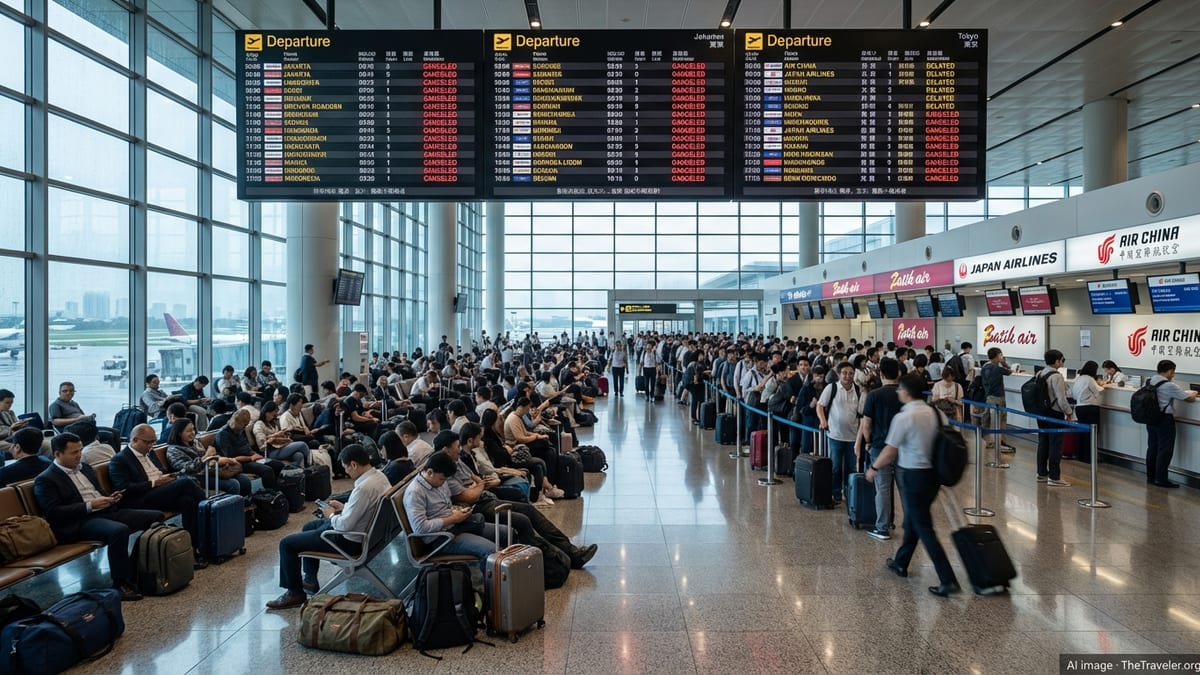
Jakarta airport closure triggers Dubai–Indonesia disruption
Operations between the UAE and Indonesia have been significantly affected after volcanic ash from Indonesia’s Anak Krakatau led to the temporary closure of Jakarta’s Soekarno-Hatta International Airport. Publicly available airline advisories show that services between Dubai and Jakarta have been cancelled or delayed over several days as ash clouds drifted across the capital’s airspace.
Emirates has listed multiple Dubai–Jakarta rotations as cancelled for September 6 and 7, including EK356 and EK358 from Dubai and EK357 and EK359 from Jakarta, with affected passengers offered rebooking options and advised to monitor flight-status pages before travelling to the airport. Customers connecting via Dubai to Jakarta are currently not being accepted for travel from their origin points until further notice, according to the carrier’s online travel updates. ([emirates.com](https://www.emirates.com/ae/english/help/travel-updates/?utm_source=openai))
Information published by Etihad Airways and cited in regional media indicates that Abu Dhabi–Jakarta flights have also experienced delays as a result of the Jakarta airport closure, compounding a broader pattern of schedule changes across Zayed International Airport. Passengers heading to or from Indonesia are being urged by airlines and airports to verify timings on the day of departure and to keep contact details updated for any short-notice changes. ([gulfnews.com](https://gulfnews.com/business/aviation/uae-flights-status-emirates-etihad-air-arabia-flydubai-delays-and-cancellations-indonesia-travel-disrupted-1.500664722?utm_source=openai))
Gulf routes see rolling delays and selective cancellations
While Indonesia-related disruption has drawn attention, services on core Gulf routes are also under pressure. Recent operational snapshots from Dubai International and Abu Dhabi’s Zayed International show a series of delays and selective cancellations on flights to regional hubs such as Bahrain and Kuwait, affecting operations by Emirates, flydubai and Air Arabia alongside other carriers. ([gulfnews.com](https://gulfnews.com/business/aviation/uae-flights-status-update-emirates-etihad-air-arabia-flydubai-delays-cancellations-indonesia-flights-disrupted-1.500665476?utm_source=openai))
Coverage from UAE-based outlets indicates that flydubai has cancelled or adjusted some Bahrain and Kuwait services in recent days, while Air Arabia has pulled several Sharjah and Abu Dhabi departures on the same corridors. At Dubai International, early-morning departures to destinations including Hanoi, Seoul, Taipei and a number of Indian cities have also recorded minor delays, highlighting how regional and operational factors are combining to create a patchwork of disruption rather than a uniform shutdown. ([gulfnews.com](https://gulfnews.com/business/aviation/uae-flights-status-update-emirates-etihad-air-arabia-flydubai-delays-cancellations-indonesia-flights-disrupted-1.500665476?utm_source=openai))
Data compiled by local media for the first week of September suggests that nearly 20 flights to regional destinations were delayed or cancelled in a single 24-hour period, involving Etihad Airways, flydubai and Air Arabia among others. The majority of services are still operating, but with increased risk of last-minute timing changes, particularly on Middle East routes intersecting with busy evening and overnight banks at the UAE hubs. ([khaleejtimes.com](https://www.khaleejtimes.com/business/uae-flights-delayed-cancelled-emirates-etihad-flydubai?utm_source=openai))
Security advisories and airspace warnings shape Gulf operations
The latest operational challenges are unfolding against a backdrop of heightened geopolitical risk across the wider Gulf region. An updated conflict-zone bulletin from the European Union Aviation Safety Agency has extended guidance on flying over Gulf airspace until at least the end of September, citing ongoing tensions linked to the US–Iran standoff. According to published coverage, this has prompted a number of non-Gulf airlines to continue suspending or rerouting services to and from the UAE. ([gulfnews.com](https://gulfnews.com/business/aviation/uae-flight-update-today-emirates-etihad-air-arabia-status-europe-extends-gulf-airspace-warning-1.500658875?utm_source=openai))
Separately, recent US travel advisories have placed the UAE, Saudi Arabia, Jordan and Oman in a category that urges travellers to reconsider non-essential trips, referring in part to risks from drone and missile activity and the potential for sudden commercial flight disruption. While major Gulf carriers such as Emirates, Etihad and flydubai remain largely operational, the combination of foreign advisories and regional airspace risk assessments is adding complexity to network planning and route economics. ([gulfnews.com](https://gulfnews.com/business/aviation/uae-flights-status-update-emirates-etihad-air-arabia-flydubai-delays-cancellations-indonesia-flights-disrupted-1.500665476?utm_source=openai))
Aviation analysts quoted in regional outlets note that while Gulf carriers have extensive experience managing conflict-zone contingencies, longer routings, changes to flight levels and the need for greater schedule padding can contribute to knock-on delays, particularly during peak travel periods. For passengers, this means that itineraries that rely on tight connections through Dubai or Abu Dhabi may be more vulnerable to misconnection if upstream flights encounter airspace-related holds or diversions. ([gulfnews.com](https://gulfnews.com/business/aviation/uae-flight-update-today-emirates-etihad-air-arabia-status-europe-extends-gulf-airspace-warning-1.500658875?utm_source=openai))
Passenger impact: shifting schedules, limited clarity
For travellers, the most immediate effect of the current disruption is uncertainty. Reports from Dubai and Abu Dhabi highlight scenes of busy terminals where most flights continue to operate, but with information screens frequently updating as volcanic ash developments in Indonesia and regional operational constraints ripple through daily schedules. Minor delays on one leg can result in aircraft and crew arriving late for subsequent services, amplifying the impact beyond directly affected destinations. ([gulfnews.com](https://gulfnews.com/business/aviation/uae-flights-status-update-emirates-etihad-air-arabia-flydubai-delays-cancellations-indonesia-flights-disrupted-1.500665476?utm_source=openai))
Publicly available guidance from Emirates and flydubai stresses the importance of checking flight status close to departure, completing online check-in where possible and arriving at the airport with additional time to clear formalities. Airlines are also urging passengers to ensure email and mobile contacts in bookings are accurate so that rebooking options or gate changes can be communicated quickly. ([emirates.com](https://www.emirates.com/ae/english/help/travel-updates/?utm_source=openai))
Travel industry observers say that flexible booking policies and the ability to re-route via alternative hubs are becoming increasingly valuable on routes touching the Gulf, particularly for long-haul passengers connecting between Europe, Asia and Australasia. With Indonesia’s volcanic ash situation evolving and regional security dynamics still fluid, aviation planners expect further short-notice adjustments before schedules stabilize. ([gulfnews.com](https://gulfnews.com/business/aviation/uae-jakarta-flights-update-emirates-etihad-flights-cancelled-delayed-after-volcanic-ash-disrupts-airport-1.500665494?utm_source=openai))
What travellers to Gulf and Indonesian destinations should watch
Passengers booked on upcoming flights between the UAE and Indonesia or Gulf neighbours are being advised, through airline and media updates, to monitor three main factors: the operational status of Jakarta’s Soekarno-Hatta airport, any new airspace guidance affecting Gulf transit corridors, and airline-specific travel advisories that may restrict acceptance of onward connections to disrupted destinations. A single change in any of these areas can quickly feed through to departure boards in Dubai, Abu Dhabi and Sharjah. ([emirates.com](https://www.emirates.com/ae/english/help/travel-updates/?utm_source=openai))
For now, schedules published by Emirates, Etihad and flydubai show that most services across their global networks are still running, but with greater emphasis on real-time updates and rolling advisories. Industry coverage indicates that carriers are keeping contingency plans under review, adjusting flight times, aircraft deployment and routings as conditions evolve. Travellers are being encouraged to stay informed through official channels and to build additional flexibility into their plans when connecting through Gulf hubs in the coming days. ([gulfnews.com](https://gulfnews.com/business/aviation/uae-flights-status-update-emirates-etihad-air-arabia-flydubai-delays-cancellations-indonesia-flights-disrupted-1.500665476?utm_source=openai))