

More news on this day
Dubai’s Civil Aviation Authority has received 90 passenger complaints within a month of launching a new aviation consumer guide and digital complaints service, providing an early test of the emirate’s refreshed framework for protecting air travellers.
Get the latest news straight to your inbox!
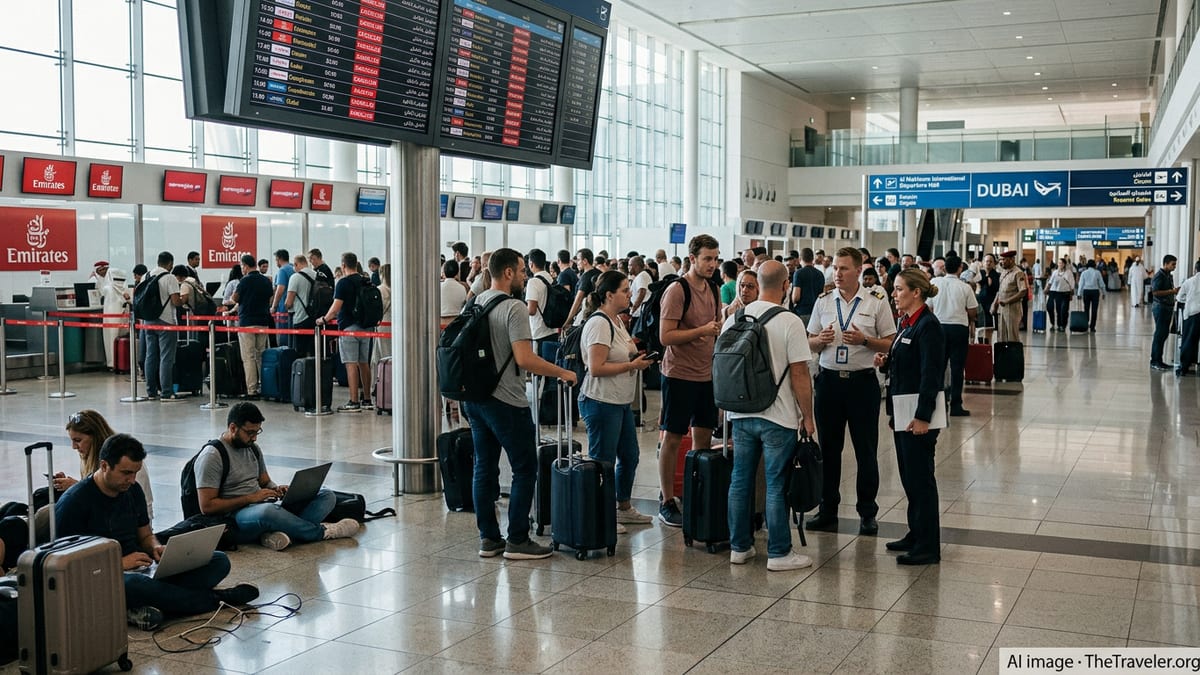
New Consumer Guide Quickly Put to the Test
Publicly available information shows that the Dubai Civil Aviation Authority (DCAA) unveiled its Aviation Consumer Welfare Guide and associated complaints service on April 28, 2026, positioning the tool as a central reference for passenger rights and airline obligations in the emirate. The guide sets out what travellers can expect when flights are delayed or cancelled, when baggage is lost, or when itineraries are changed at short notice.
Within weeks of the launch, local coverage indicates that around 90 passengers had already used the platform to file grievances related to disruptions, refunds and service standards. The volume highlights both strong early awareness of the service and significant pent-up demand from travellers seeking clearer redress mechanisms when journeys do not go as planned.
The complaints channel sits alongside existing airline and travel agent processes, but it is designed as a structured, regulator-managed route for escalation when passengers feel their cases are not being handled adequately. The figure of 90 complaints in the first month is being viewed by observers as an operational stress test for the new framework rather than an indication of systemic failure.
Aviation analysts note that launching a consumer tool at a time of heightened regional travel disruption was always likely to generate a rapid flow of cases, as passengers look for more transparent timelines on refunds, rebookings and compensation.
How the New Framework Changes the Passenger Experience
The Aviation Consumer Welfare Guide formalises the relationships between passengers, airlines and licensed travel agents operating in Dubai. According to published summaries, it clarifies when travellers are entitled to care such as meals and accommodation, when rebooking must be offered at no additional cost, and under what circumstances monetary compensation or refunds may apply.
The directive also introduces defined responsibilities for airlines and agents, including expectations around response times and communication. In practice, this is intended to reduce the uncertainty that often surrounds itinerary changes, particularly when a booking involves multiple carriers or an intermediary such as an online travel platform.
Passengers are encouraged by official guidance to first attempt resolution with the airline or agent before approaching the DCAA. If a dispute persists, the complaint can then be logged through the authority’s digital portal, which allows users to submit documents, track progress and receive outcomes in a single interface.
Industry specialists suggest that this layered approach aligns Dubai with global trends in aviation oversight, where regulators act as mediators and standard-setters rather than first-line customer service desks, while still providing a visible and accessible backstop for consumers.
Digital Complaints Channel Becomes a Focal Point
The digital service introduced alongside the guide has quickly become central to how passengers interact with the new framework. Reports indicate that travellers can file complaints related to delays, cancellations, denied boarding, baggage issues and refund disputes, as well as lodge comments on customer service quality.
The registration of 90 complaints in the first month underlines how digital tools can rapidly aggregate consumer experiences across multiple airlines and agents. This early dataset is expected to help regulators identify recurring pain points, whether they stem from slow refund processing, inconsistent handling of disruptions or confusion over fare conditions.
Observers point out that the platform also carries a signalling effect for market participants. A transparent escalation path, backed by a sector regulator, can encourage airlines and intermediaries to resolve issues earlier in the customer journey in order to avoid formal cases that may require detailed responses or lead to corrective recommendations.
For travellers, the visibility of a government-backed portal appears to provide added reassurance that disputes will at least receive structured review, even if outcomes such as refunds or compensation still depend on contractual terms and the circumstances of each case.
Rising Travel Demand and Persistent Disruption Pressures
The launch of the consumer guide coincides with another period of strong passenger traffic through Dubai’s airports, where volumes remain at or near record levels. At the same time, ongoing geopolitical tensions and weather-related events in the wider region have contributed to a higher incidence of schedule changes, diversions and missed connections.
Published coverage on recent travel disruption shows that passengers have faced a mix of outright cancellations, rolling delays and changes to routings, often with limited advance notice. These conditions have increased the likelihood of disputes over hotel stays, meal vouchers and partial refunds, creating fertile ground for a complaints system to be tested intensively from day one.
Travel industry commentators note that global supply chain constraints, tight aircraft availability and staffing challenges in some markets have limited airlines’ flexibility to recover from operational shocks. In this context, clearer rules around duty of care and communication can help to mitigate passenger frustration, even when airlines cannot avoid disruption altogether.
The first 90 complaints logged under Dubai’s new system are therefore being viewed in the context of wider regional and global volatility, rather than as a standalone reflection of local carrier performance.
What the Early Complaint Numbers May Signal
While 90 complaints across a month represent a modest fraction of the millions of passengers moving through Dubai’s aviation hub, consumer advocates see the early figures as an important benchmark for tracking how effectively the new directive is being applied in practice. Over time, trends in complaint volumes, resolution times and case outcomes are expected to inform refinements to both the guide and airline policies.
Analysts suggest that a short-term rise in reported issues can be a sign of improved accessibility rather than declining service, particularly when a new channel is introduced. As awareness stabilises, regulators and industry stakeholders will be watching whether the mix of complaints shifts from basic information gaps to more complex contractual disputes.
The ability of the DCAA and market participants to respond efficiently to the initial 90 cases may also influence public confidence in the system. Clear communication of outcomes, even when resolutions do not fully meet passenger expectations, is seen as critical to establishing the credibility of the complaints framework.
For now, the early volume of grievances lodged since the consumer guide was issued underscores a simple reality for one of the world’s busiest aviation gateways: travellers are increasingly informed about their rights, and they are prepared to use new tools to assert them when journeys go wrong.