

More news on this day
Air travel across North America has lurched into another day of disruption as around 40 flights are grounded and more than 600 departures delayed across Georgia, Colorado, California, Massachusetts and Ontario, leaving passengers stuck in long lines and crowded gate areas at major hubs in Atlanta, Denver, San Francisco, Boston Logan and Toronto.
Get the latest news straight to your inbox!
Storm Systems Converge on Already Stretched Networks
Publicly available aviation and weather data for May 21 and May 22 indicate that a fresh round of storm cells rolling across the central and eastern United States has reduced airport capacity and slowed traffic flows at multiple hubs. Thunderstorms and gusty winds around Atlanta and Denver, in particular, have limited the number of aircraft that can safely depart or arrive per hour, creating rolling delays that build through the day as aircraft and crews fall out of position.
Federal aviation status boards and daily air traffic summaries point to weather disruptions in Boston and San Francisco as well, with flow-control programs and ground delays instituted to manage congestion. These programs restrict departures into affected airports and effectively act as a partial brake on the national network, leading to queues of delayed flights even at airports not directly hit by storms.
In Canada, flight-tracking platforms show Toronto Pearson struggling with its own mix of thunderstorms and volume-related bottlenecks, adding to the tally of grounded and delayed flights across the continent. Because Toronto is a key connecting point for transborder and long-haul services, disruptions there ripple into schedules on both sides of the border.
While the total number of affected flights is far below the worst nationwide meltdowns recorded in recent years, the concentration of disruption at such critical hubs has amplified the impact on travelers. A grounded or heavily delayed departure in Atlanta or Denver can cascade into missed connections that strand passengers in far-flung spoke airports late into the evening.
Atlanta, Denver and San Francisco Emerge as Hotspots
Data from real-time airport status dashboards show Atlanta’s Hartsfield Jackson International coping with slower operations as thunderstorms pass through the region, triggering traffic management initiatives that reduce arrival and departure rates. As the world’s busiest passenger airport by volume, even modest slowdowns in Atlanta can quickly translate into long lines at security, crowded concourses and gate changes that leave travelers scrambling.
Denver International is facing its own challenges as fast-moving spring storms sweep across Colorado’s Front Range. Recent coverage has documented ground stops and departure holds when winds shift rapidly or thunderstorms move over the airfield, sharply restricting operations for periods of time. Flights into Denver from across the United States and Canada have been forced into holding patterns or delayed on the ground, which in turn affects onward journeys for passengers connecting through the hub.
On the West Coast, San Francisco International continues to show a heightened vulnerability to weather-related delays. Publicly available performance data highlight that a significant share of delays at the airport are unscheduled, often linked to low cloud ceilings, coastal winds and the tightly choreographed use of its parallel runways. As delays mount in San Francisco, departures from other cities bound for the Bay Area are held or rescheduled, adding to the national disruption picture.
With 40 flights grounded outright and hundreds more operating behind schedule across these major hubs, passengers are reporting extended waits at gates and frequent last-minute timing changes. The clustering of problems at Atlanta, Denver and San Francisco has made it harder for airlines to find spare aircraft and crews to plug gaps elsewhere in their networks.
Boston and Toronto Highlight Cross-Border Ripple Effects
In the Northeast, Boston Logan International has entered the mix of affected airports as gusty winds and storm bands complicate operations. Federal air traffic outlooks for the region have flagged potential delays at Boston as weather systems move through New England, prompting airlines to pad schedules and hold some departures on the ground until conditions improve. These measures reduce the risk of airborne congestion but push departure times further into the day, intensifying evening peak pressures.
Boston’s role as both a domestic and transatlantic gateway magnifies the disruption. A delayed departure to a major European hub, for example, can strand passengers who arrived from smaller U.S. cities on early feeder flights, while late inbound aircraft from Europe can in turn force adjustments to onward domestic sectors. Publicly reported delay statistics show that Boston has historically recorded one of the higher proportions of late operations among large U.S. airports, underscoring its sensitivity to weather and airspace constraints.
North of the border, Toronto Pearson is experiencing its own backlog of delayed departures and arrivals. Flight-tracking dashboards show clusters of late-running services on transborder routes to and from U.S. hubs as thunderstorms and volume limits complicate scheduling. For travelers with multi-leg itineraries spanning both countries, a problem at Toronto can interact with bottlenecks at U.S. hubs, making rebooking more complex and lengthening total journey times.
The combination of pressure points at Boston and Toronto illustrates how quickly conditions at a few critical nodes can affect travel across large swaths of North America. Even airports with relatively clear local weather can find themselves caught up in the knock-on effects when their key partners and connection points slow down.
Passengers Face Long Waits and Limited Rebooking Options
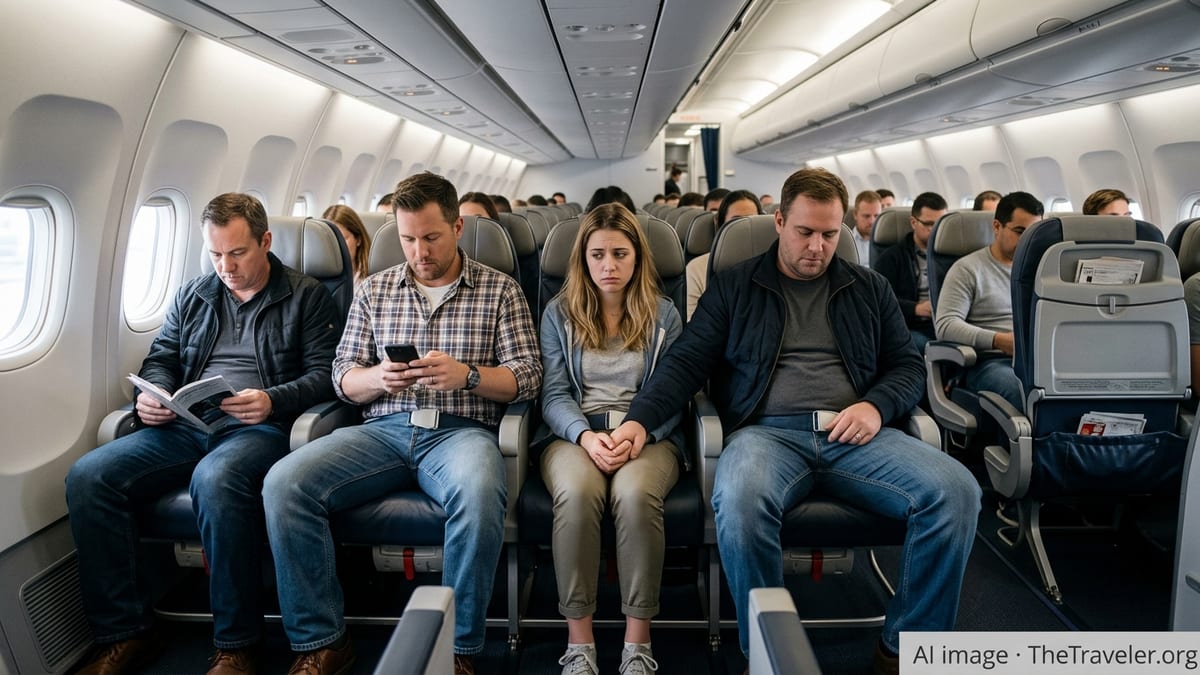
For travelers on the ground, the statistics translate into hours spent in terminals and a scramble for scarce alternative seats. Images and accounts shared publicly show crowded gate areas in Atlanta and Denver as passengers wait for updates, while some report multiple rolling departure time changes stretching over much of the day. With around 613 departures facing delays across the affected regions, rebooking onto earlier flights is often impossible.
Airlines have been leaning on digital tools and self-service kiosks to manage the disruption, encouraging travelers to use mobile apps to track their flights and explore re-routing options. However, when storms and capacity limits hit several major hubs simultaneously, there are only so many viable alternatives. Seats on later services fill quickly, and crew duty-time limits can force additional cancellations late in the day when staff reach regulatory working-hour caps.
Consumer advocates note that while many carriers provide meal vouchers or hotel accommodations in cases of lengthy delays caused by controllable factors, weather-related disruptions generally fall outside those obligations. As a result, passengers stuck overnight due to storms at hubs such as Denver or Boston may find themselves paying out of pocket for food and lodging, particularly when nearby hotels raise rates in response to sudden demand.
Published advisory material from regulators and travel organizations consistently urges passengers to monitor flight status before leaving for the airport, travel with essentials in carry-on bags and build extra time into tight connections, especially during storm-prone spring and summer months. Travelers connecting through busy hubs in Georgia, Colorado, California, Massachusetts or Ontario are being reminded that a seemingly minor delay on one leg can quickly escalate into missed connections when large portions of the network are under weather-related strain.
Systemic Vulnerabilities Exposed Yet Again
The latest wave of disruptions has renewed attention on the structural fragility of North American air travel in the face of increasingly volatile weather and tight airline scheduling. Industry and government reports over recent years have documented how a relatively small share of airports account for a disproportionate volume of delay minutes, with Atlanta, Denver, San Francisco and Boston frequently appearing on lists of facilities bearing heavy congestion pressure.
Analyses of long-term performance data suggest that unscheduled delays now make up a dominant share of lost time at several large hubs, indicating that schedule buffers and traditional planning assumptions are often inadequate when storms repeatedly sweep through key corridors. The concentration of flights and connections at a limited number of mega-hubs means that any capacity reduction at those airports rapidly spreads across carriers and regions.
Travel data from recent seasons further show that passengers increasingly expect some level of disruption during peak storm periods, with many building a cushion day into longer trips or opting for the first departure of the morning to reduce exposure to knock-on delays. Advisory documents compiled after previous severe-weather events have highlighted steps such as booking longer connection windows, favoring nonstop flights where possible and considering travel insurance for itineraries that cannot easily be rescheduled.
As the latest figures of 40 grounded flights and 613 delayed departures circulate, the current episode serves as another reminder that air travel remains highly sensitive to the combined effects of weather, airspace constraints and finely tuned airline networks. With the busy summer season approaching, observers note that how carriers and airports absorb and learn from these disruptions will be central to whether the system can avoid a repeat of the most severe gridlock episodes seen in recent years.