

More news on this day
Hundreds of U.S. travelers faced unexpected overnight stays and missed connections on May 22 as Newark Liberty International Airport recorded 179 delayed departures and 62 cancellations, disrupting major United, Republic, American and partner-operated flights across London, Chicago, Boston and other key routes.
Get the latest news straight to your inbox!
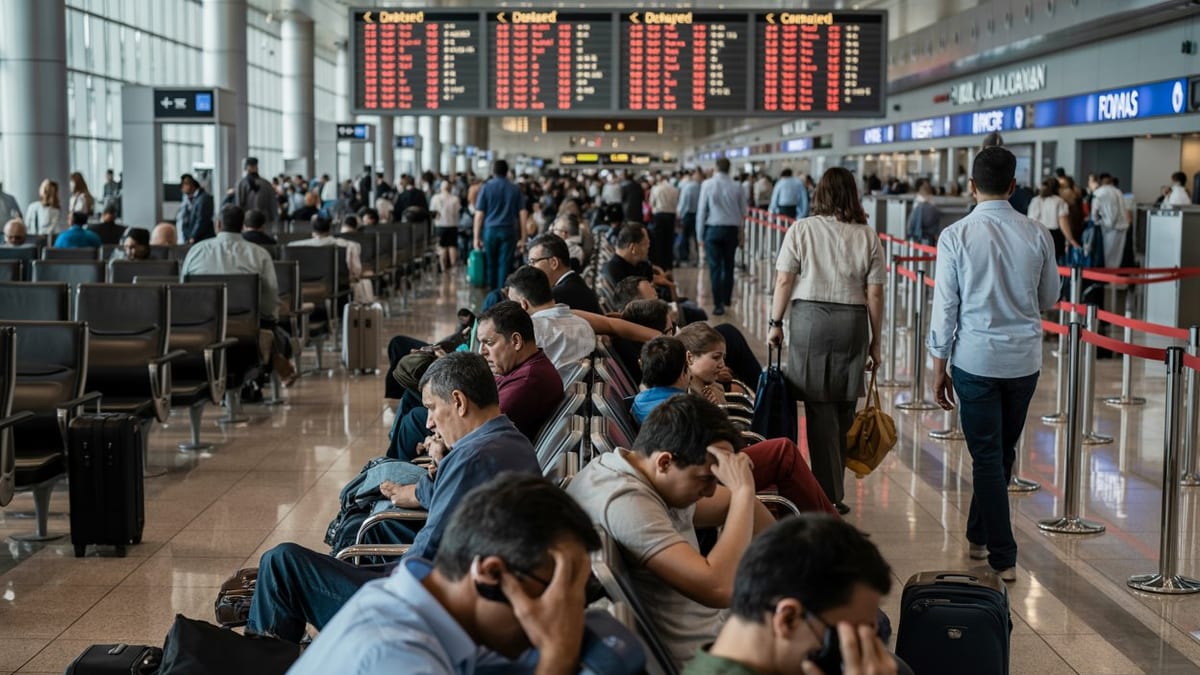
Heavy Disruptions Hit A Key Northeast Hub
Operational data and flight tracking platforms show Newark Liberty among the most disrupted U.S. hubs on Friday, with more than 240 flights either delayed or cancelled as the busy summer travel period ramps up. The disruption figure, including 179 delays and 62 cancellations, placed Newark near the top of national congestion tables for the day and created visible backlogs throughout its three passenger terminals.
Publicly available airport boards during the midday and evening peaks showed departure banks dense with late-running services, particularly on United Airlines, which operates a major hub at Newark. Additional delays for Republic Airways flights operating under regional brands and for American Airlines services contributed to long lines at rebooking counters and customer service desks.
Reports from stranded passengers and independent aviation trackers indicate that delays were concentrated in the late afternoon and evening periods, when congestion at busy East Coast and Midwest hubs typically peaks. As the backlog built, even flights scheduled to depart on time were drawn into rolling disruption as aircraft and crews failed to return to gates as planned.
By the end of the day, Newark’s on-time performance had dropped sharply compared with recent averages, adding another difficult day to what has been a challenging spring at one of the country’s most delay-prone airports during high-demand periods.
Ripple Effects Across London, Chicago, Boston And Beyond
The disruption at Newark quickly spread across the network, affecting some of the airline system’s most heavily traveled business and leisure routes. Tracking data shows that multiple London Heathrow services, including long-haul departures commonly operated by United and its partners, were delayed or subject to rolling schedule changes. Passengers bound for the United Kingdom reported missed onward rail connections and overnight rebookings.
Shorter-haul trunk routes to Chicago O’Hare and Boston Logan, typically served by a mix of mainline and regional aircraft, were also hit with notable delays. Flight status feeds on key Newark to Chicago and Newark to Boston services showed stacked departure times and creeping delays attributed to late-arriving inbound aircraft and congestion in departure queues.
Further knock-on effects were reported across secondary cities connected via Newark, including destinations in the Midwest and Southeast that rely on timely connections at the hub. Travelers on multi-leg itineraries found that even modest delays on the first segment from Newark could result in missed late-night onward flights from Chicago, Boston or other intermediate points.
In several cases, flights departing from Europe and other long-haul origins were held on the ground or placed into holding patterns near their arrival time windows as Newark’s arrival flow slowed. This contributed to additional crew duty-time pressures and aircraft rotation challenges, feeding back into departure disruptions later in the day.
United, Republic And American Among The Most Affected Carriers
With Newark serving as a primary hub for United Airlines, the carrier appeared particularly exposed to Friday’s operational strain. Public schedules list United as operating a large majority of departures from the airport, including flagship transatlantic links to London as well as high-frequency services to Chicago, Boston and other domestic centers. When Newark’s departure flow falters, United’s network and its regional partners are often among the first to feel the impact.
Republic Airways, which flies regional jets on behalf of major brands, also featured prominently on the disrupted boards, with multiple feeder flights delayed or cancelled. These smaller-link services are critical for funneling passengers from smaller U.S. markets into Newark’s long-haul network, and their disruption can leave travelers stranded far from home or final destinations.
American Airlines and other U.S. carriers with a smaller presence at Newark also saw select services affected, particularly on overlapping routes into Boston, Chicago and key East Coast cities. While these airlines have secondary hubs and alternative routings, the sudden strain at Newark limited same-day rebooking options and forced some travelers onto next-day departures.
Aviation performance statistics from the U.S. Department of Transportation show that, in general, carriers such as United and Republic operate with cancellation rates broadly in line with national averages, but congestion at slot-restricted hubs can quickly erode those metrics on peak travel days. The pattern seen on May 22 fits a broader trend of isolated, high-impact disruption days that contrast with otherwise improved reliability across much of the system.
Weather, Construction And System Strain Drive Recurring Delays
Although a single underlying cause was not immediately clear, the pattern of disruption at Newark on May 22 aligns with familiar pressure points at the airport. Published coverage and historical analyses frequently cite weather-related air traffic management initiatives, limited runway capacity and airspace complexity around the New York metropolitan area as recurring contributors to large spikes in delays.
Newark has been undergoing phased infrastructure work, including major rail access upgrades and continuing projects linked to terminal redevelopment. While these efforts are aimed at improving long-term reliability, they can temporarily complicate passenger flows and ground operations, especially during peak arrival and departure banks when small slowdowns quickly ripple through packed schedules.
Traffic control advisories issued for Northeastern airspace in recent weeks have often referenced volume constraints and thunderstorms as reasons for imposing ground delay programs at major hubs. When such programs are in effect, departure slots can be pushed back in blocks, which in turn delays aircraft and crews from returning to Newark in time for subsequent rotations later in the day.
An increase in overall passenger volumes heading into the Memorial Day travel period has further tightened margins at busy hubs. Industry forecasts point to near-record numbers of U.S. travelers over the late May weekend, leaving operations with little spare capacity to absorb even moderate weather or staffing challenges without visible disruption.
Stranded Passengers Face Limited Options And Long Queues
As the scale of delays and cancellations became evident, travelers at Newark reported growing lines at airline service counters, crowded gate areas and limited same-day rebooking options. With many later flights fully booked in advance of the holiday period, even passengers whose flights were only slightly delayed sometimes saw their onward connections vanish as tight layovers evaporated.
Accounts shared on social media and online forums describe families sleeping in terminal seating areas, business travelers working from floor outlets near gates and international passengers struggling to rebook long-haul seats that had already been heavily sold. With airport hotels around Newark reportedly filling early due to the disruption, some travelers resorted to lodging further from the airport or stayed overnight in the terminal.
Consumer advocates regularly advise passengers caught in such events to monitor airline apps closely, explore rebooking through partner carriers when possible and document expenses in case partial reimbursement or insurance claims are available. At capacity-constrained hubs like Newark, however, options can narrow quickly once widespread delays begin, particularly for large groups or those requiring specific seat configurations.
For many of the travelers disrupted on May 22, the fallout continued into the weekend as they attempted to recover lost vacation time or salvage business meetings. The episode underscores how a single day of unusually heavy disruption at a key hub can cascade across airlines and continents, affecting journeys well beyond the New York region.