


More news on this day
With jet fuel markets under strain from refinery closures, war-related supply shocks and rising demand, many travellers are asking whether their long-planned holidays could be grounded at short notice or suddenly become more expensive.
Get the latest news straight to your inbox!
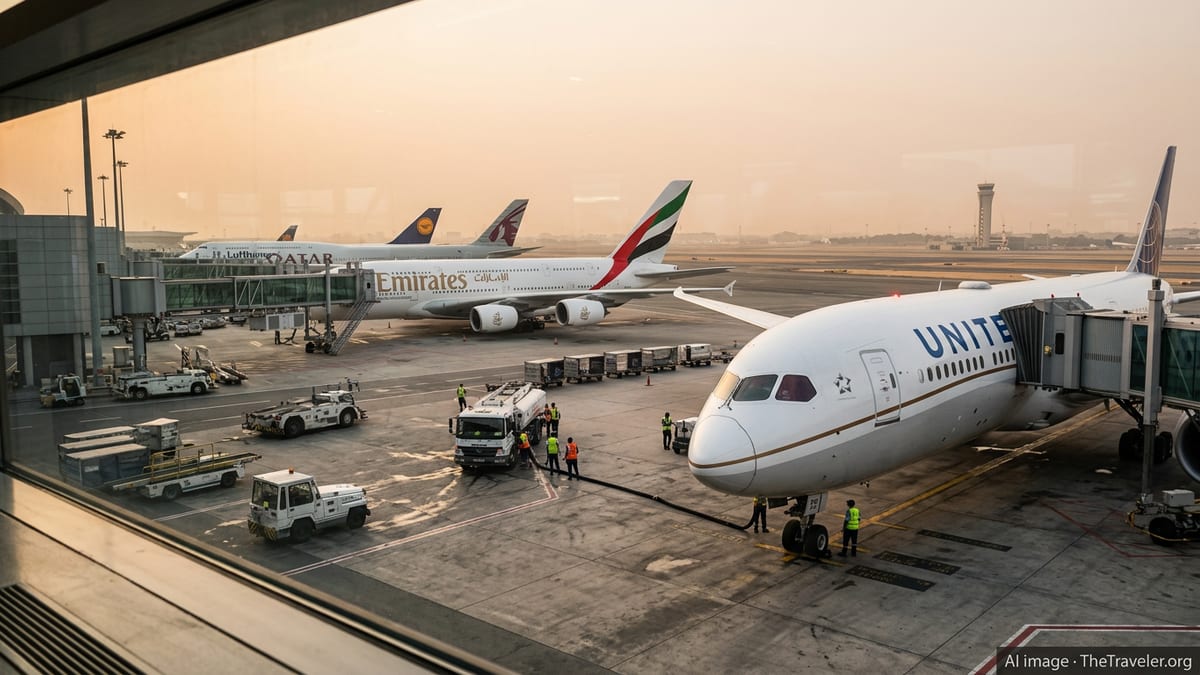
Jet fuel supply strains are real, but mass cancellations are not inevitable
Jet fuel markets in 2026 are under unusual pressure, particularly in Europe and parts of Asia. Industry briefings from aviation bodies and commodity analysts describe a widening jet fuel deficit in Europe as local refineries close and airlines rely more heavily on imports. Recent analysis from energy researchers indicates that Europe’s supply cushion has thinned significantly compared with pre‑pandemic norms, leaving airports more exposed to shocks such as disruptions in the Middle East.
Reports from energy price agencies show that jet fuel has become more expensive relative to crude oil, with so‑called crack spreads remaining elevated. Global averages compiled by airline industry groups suggest that refinery‑gate jet prices have hovered close to 2024 levels in recent months rather than retreating to the cheaper fuel seen earlier in the decade. For carriers operating long‑haul routes, fuel remains one of the largest single operating costs.
Despite these pressures, there is no broad shutdown of commercial flying. Publicly available airline schedules still show a robust summer timetable on transatlantic and intra‑European routes, although some carriers have quietly trimmed frequencies on thinner or more marginal services. Analysts describe the risk not as a universal grounding of aircraft, but as a patchwork of potential disruptions in regions where supply chains are tightest.
For most leisure travellers, that means flights are more likely to operate, but with higher prices and less slack in the system. If further geopolitical shocks hit key refining or shipping routes, targeted cancellations at particular hubs are possible, yet experts generally characterise a complete collapse of holiday flying as unlikely.
Where shortages are most likely to hit this summer
The risk of jet fuel shortages is not evenly spread across the globe. Europe stands out as particularly vulnerable because of structural changes in its refining sector. Industry briefs published in late 2025 and 2026 highlight that a series of refinery closures has left the region increasingly dependent on imports of aviation fuel from the Middle East, Asia and the United States, creating longer and more fragile supply lines.
Energy market coverage this spring has pointed to constrained flows from the Gulf region into Europe, alongside export limits from some Asian suppliers. Trade press reports suggest that, in some recent weeks, European jet imports have been concentrated from just one or two exporting countries, underscoring the lack of redundancy in the system. Parallel concerns have emerged over military demand in Europe, as defence operations draw on shared fuel infrastructure that also supplies civilian airports.
Asia faces its own pinch points. Travel demand across major Asian hubs has rebounded faster than some analysts previously forecast, increasing jet fuel consumption, while export restrictions in key refining nations have tightened regional supply. Localised shortages have already been reported at certain airports in recent years, occasionally forcing airlines to tanker extra fuel from other cities or adjust schedules.
By contrast, North America generally appears less exposed to outright shortages, thanks to large refining capacity and relatively self‑contained supply networks. However, the region is not immune to price volatility. Reports from US government energy agencies show that while jet fuel imports may fluctuate, domestic production has so far met demand, meaning American travellers are more likely to feel the impact through higher fares than through fuel‑related cancellations.
Will airlines cancel my holiday because of fuel problems?
Airlines have several tools to manage fuel shocks before they resort to cancelling flights. Many carriers hedge a portion of their fuel needs using financial contracts, smoothing out short‑term price spikes. When supply tightens, airlines may also reshuffle capacity: switching to more fuel‑efficient aircraft, consolidating lightly booked departures into a single flight, or trimming the most marginal routes from their schedules.
Recent coverage in European and international media shows that some airlines have already announced selective route cuts and reduced frequencies on less profitable services in order to conserve fuel and focus on core markets. In several cases, these adjustments have been framed as responses to both higher fuel costs and softer demand on certain routes, rather than as evidence that fuel is physically unavailable.
If supply at a particular airport becomes constrained, airlines can sometimes mitigate the impact by tankering extra fuel from other airports, arranging alternative suppliers or scheduling technical stops to refuel. These measures are inconvenient and can lead to delays, but they are designed to keep most flights operating.
For holidaymakers, the upshot is that isolated cancellations or timetable changes are possible, especially at smaller or more remote airports, but a widespread wave of fuel‑driven cancellations remains a risk scenario rather than a lived reality. Travellers booked on busy leisure routes to major hubs are more likely to see higher prices and crowded planes than empty departure boards.
Will I be asked to pay extra if fuel prices spike?
Whether passengers face extra charges depends on the airline, the route and the timing of purchase. Many carriers now bundle fuel costs into the base fare rather than listing a separate fuel surcharge, adjusting prices dynamically in response to market conditions. When jet fuel becomes more expensive, these airlines typically raise fares for new bookings, which is why advance purchase often becomes more important during volatile periods.
Some airlines, particularly in certain international markets, still publish explicit fuel surcharges as a separate line item on tickets. According to publicly available fare rules, these surcharges can be revised periodically based on benchmark jet fuel prices. In practice, this usually applies to tickets issued after a change is announced. Once a ticket is fully paid and issued, the total price is generally locked, and any later increase in surcharges applies only to future sales.
Consumer advocates note that airlines cannot normally demand an additional payment from passengers after purchase simply because fuel has become more expensive, at least on itineraries covered by standard consumer protection regimes in North America and Europe. There are limited exceptions on some long‑haul package holidays or in jurisdictions where contracts explicitly allow price adjustments, but these clauses are typically regulated and must be clearly disclosed at the time of booking.
The more immediate impact for most travellers is therefore at the search stage rather than at the boarding gate. As fuel costs rise, future departures are likely to be priced higher, promotional sales may be scarcer, and the cheapest fare classes can sell out more quickly.
If my flight is cancelled, what are my rights and options?
When cancellations or severe delays do occur, the cause rarely matters to the traveller standing in a long queue at the airport. Yet the reason can make a difference to the compensation and assistance available. In many jurisdictions, consumer protection rules distinguish between disruptions within an airline’s control and those considered extraordinary circumstances, such as airspace closures or certain security events.
Fuel‑related disruption often sits in a grey zone. If an airline cancels flights primarily for commercial reasons, such as reducing capacity because fuel is too expensive for a lightly booked route to be viable, regulators in some regions may view that as a decision within the airline’s control. In those cases, passengers can generally expect rebooking or refunds, and in some markets may be entitled to additional compensation and care, including meals and overnight accommodation.
However, if a government‑ordered shutdown of key fuel pipelines or a sudden embargo leads to abrupt fuel shortages at an airport, carriers might argue that cancellations stem from extraordinary circumstances. Under those conditions, local rules may limit cash compensation while still requiring airlines to offer rebooking or refunds. Legal interpretations can vary, and several high‑profile disruption cases in recent years have prompted clarification from regulators and courts on where the boundary lies.
Regardless of the technical classification, consumer agencies consistently advise travellers to read airline conditions of carriage carefully and to consider travel insurance that covers schedule disruption. Policies differ widely, but many will reimburse additional accommodation costs or non‑refundable ground arrangements if a cancelled flight forces a change of plans, whether or not the root cause is a jet fuel crunch.