


More news on this day
Passengers traveling through Dubai and other Gulf hubs are facing a fresh round of timetable upheaval, as Emirates, Etihad Airways and flydubai contend with delays while Air France prolongs suspensions on several Middle East routes amid ongoing regional tensions.
Get the latest news straight to your inbox!
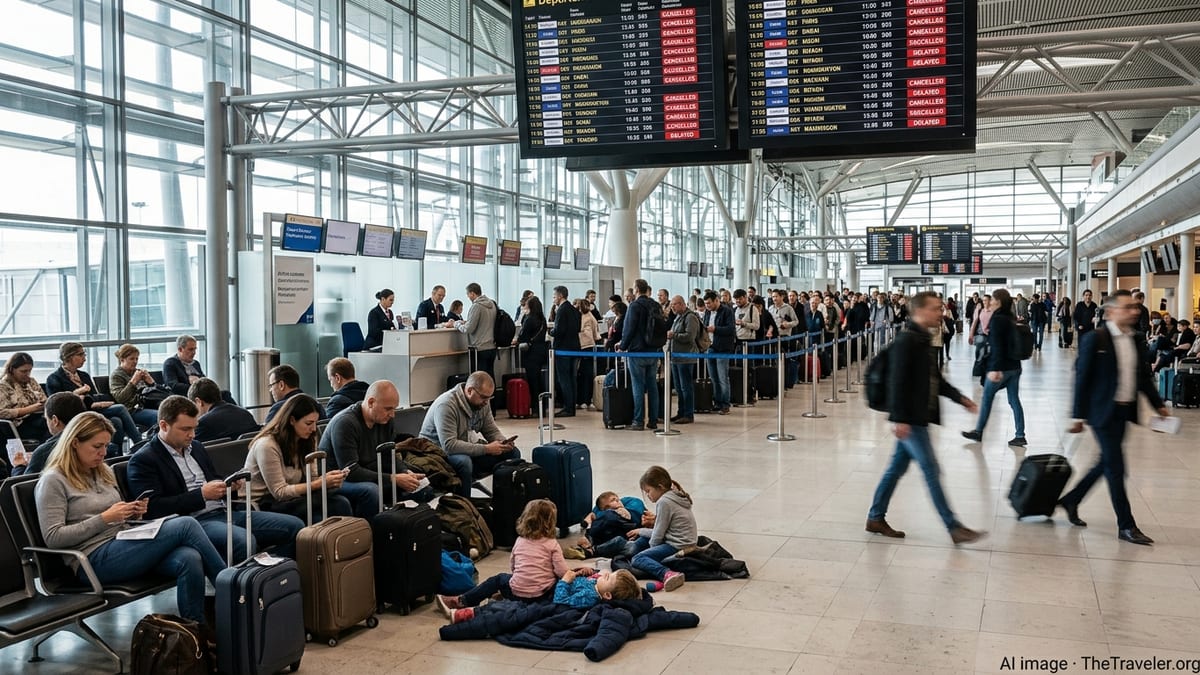
UAE carriers keep flying but face rolling delays
Operations at Dubai International Airport and Abu Dhabi’s Zayed International Airport remain broadly intact, with Emirates, Etihad Airways and flydubai continuing to operate the vast majority of scheduled services. Recent operational data compiled by travel-compensation platforms and regional media indicates, however, that travelers are encountering scattered delays and a limited number of cancellations each day, particularly on busy long-haul and regional connections.
Reports from 9 and 10 September highlight pockets of disruption as airlines navigate shifting airspace constraints linked to the broader Middle East security situation, as well as occasional weather and staffing pressures. Emirates and Etihad flights have generally departed, but some services have operated behind schedule, extending connection times for passengers using the Gulf as a transit hub between Europe, Asia and Africa.
Flydubai, which focuses heavily on short- and medium-haul services across the Gulf and wider region, has kept much of its network available. Routes to Kuwait, Bahrain and other neighboring markets remain largely in operation, according to regional aviation coverage, although the carrier is also dealing with knock-on effects from congestion and rerouted traffic across Middle Eastern airspace.
For travelers, the result is a mixed picture: most flights still operate, but the risk of extended waits at departure gates or missed onward connections has increased. Industry observers recommend that passengers build in longer transfer windows and monitor live departure boards closely on the day of travel.
Air France extends Dubai and regional route suspensions
In contrast to Gulf-based rivals, Air France has opted to keep parts of its Middle East network on hold. The airline’s published summer 2026 schedule and subsequent updates show an extended suspension of services linking Paris Charles de Gaulle with Dubai and Beirut, reflecting a cautious stance on regional airspace risk and airport accessibility.
Travel-industry advisories and airline-tracking platforms report that the full suspension of Paris–Dubai flights has now been prolonged until at least mid-September, with some sources specifying 15 September as the earliest potential resumption date. Passengers booked on these services have been offered rerouting or refunds under European consumer-protection rules when eligible, with many rebooked on alternative carriers or indirect routings via other hubs.
The halt to Dubai and Beirut comes on top of earlier schedule changes covering Tel Aviv and Riyadh. According to recent analysis of Air France’s network, flights to Riyadh and Tel Aviv are operating on adjusted timetables, while Beirut and Dubai remain temporarily suspended as part of a wider response to the evolving security environment in the Gulf and Levant regions.
Publicly available information indicates that the airline is prioritizing capacity growth on routes to North and South America and across Asia during the 2026 summer season, while keeping a reduced or paused presence in select Middle Eastern markets. The strategy underscores the degree to which regional tensions have reshaped long-haul planning for major European carriers.
Regional tensions and airspace constraints ripple across schedules
The latest round of disruption is closely tied to the broader crisis affecting Middle Eastern airspace, including conflict-related risks around the Strait of Hormuz and in parts of the Gulf and Levant. Aviation outlook studies and logistics bulletins published in recent months describe airlines repeatedly adjusting routings to avoid higher-risk corridors, often adding extra flight time and fuel burn to maintain separation from sensitive areas.
For hub carriers such as Emirates and Etihad, small changes in routing or airspace availability can cascade quickly across daily schedules. Longer flying times affect aircraft rotation, crew duty limits and airport stand availability, raising the likelihood that even minor upstream delays will result in missed slots or late departures later in the day. On peak travel dates, this can translate into queues at check-in and longer waits at boarding gates even when flights are not formally canceled.
European and Asian carriers with more limited exposure to the Gulf have in many cases opted for broader suspensions rather than constant retiming. Airlines including Air France and several regional competitors previously announced pauses on services to cities such as Dubai, Abu Dhabi, Doha, Riyadh and Beirut, with some extensions now running into late October and, for isolated routes, into late 2026. This divergence in strategy has left travelers weighing the predictability of operating Gulf carriers against the perceived risk of last-minute cancellations by foreign airlines.
Industry analysts note that airspace closures and reroutes do not affect all flights equally. Services that can be reoriented along alternative corridors may continue with modest schedule padding, while routes more directly exposed to contested zones, or to airports facing intermittent restrictions, are more likely to be suspended outright until conditions stabilize.
What passengers connecting via Dubai and Abu Dhabi should expect
For travelers booked on Emirates, Etihad or flydubai in the coming days, published schedules point to continued operations but with a greater likelihood of delay than under normal conditions. Passenger-rights specialists advise that anyone transiting through Dubai or Abu Dhabi should rely on airline apps and airport websites, rather than printed itineraries, to confirm real-time departure and arrival times.
Travel guidance from compensation and claims services emphasizes the importance of checking flight status repeatedly in the 24 hours before departure and again before leaving for the airport. Because disruption can spread quickly when a single aircraft or crew goes out of rotation, a flight showing on time in the morning can still slip later in the day. Longer queues at security and check-in are also possible when multiple delayed flights overlap.
Travelers originating in Europe on Air France and other carriers that have suspended Dubai or wider Middle East services may find they are automatically rebooked via different hubs, such as Istanbul, Doha or major European gateways that still operate to the Gulf. In some cases, passengers choose to cancel entirely and claim refunds where regulations allow, especially if their trip is discretionary rather than essential.
Those who decide to proceed with their journeys are being urged by consumer advocates to keep documentation of delays, communications from airlines and any out-of-pocket expenses. This paperwork can be crucial later when filing claims for reimbursement or care under local or regional passenger-rights frameworks.
Travel planning outlook for the coming weeks
Looking further into September and October, industry projections suggest that the situation will remain fluid. Air France’s extended suspension of Dubai and Beirut, combined with ongoing adjustments by other European and Asian airlines, points to a cautious approach that may only gradually unwind if airspace risk assessments improve.
Gulf-based carriers appear determined to preserve their hub roles despite the operational headwinds, continuing to fine-tune schedules while keeping most routes open. Aviation consultancies highlight that these airlines benefit from deep experience in managing volatility in the region, although they remain vulnerable to sudden shifts in security assessments or regulatory guidance which could necessitate further changes at short notice.
For leisure and business travelers alike, the net effect is a travel environment that demands closer monitoring and greater flexibility than in previous years. Flexible tickets, comprehensive travel insurance and contingency plans for missed connections or forced overnights are increasingly recommended by travel advisors for anyone routing through Dubai, Abu Dhabi or neighboring hubs.
Observers expect that airlines will continue reviewing their Middle East operations on a rolling basis, sometimes providing only short lead times on extensions or reversals of suspensions. Until there is clearer visibility on regional stability, passengers can expect Dubai and wider Middle East air travel to remain more prone to disruption than other major global corridors.
Gulf News coverage of UAE flight delays and Air France’s Dubai suspension
Air France 2026 summer schedule and Middle East adjustments
Euronews overview of Air France Middle East route suspensions
AirHelp advisory on UAE delays and Air France’s extended Dubai halt