


More news on this day
International air travel to Dubai is slowly recovering after months of disruption linked to conflict and airspace closures across the Middle East, but schedules remain far from normal and many long-haul carriers are still operating reduced or suspended services into the emirate.
Get the latest news straight to your inbox!
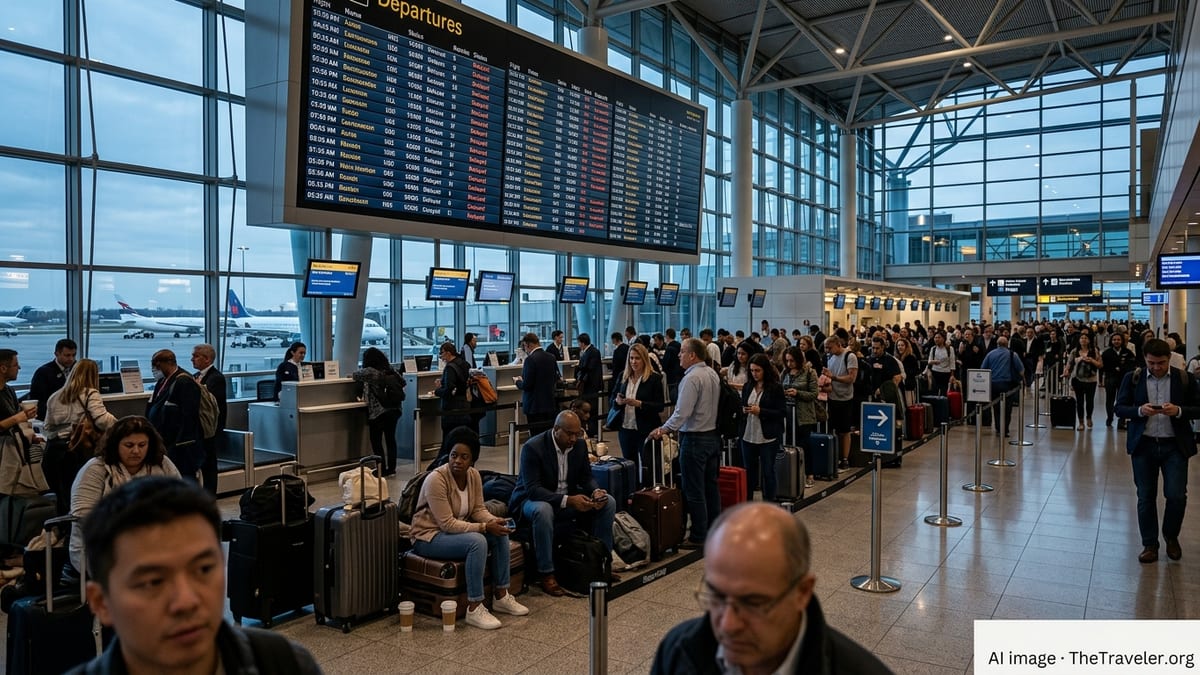
Dubai airport moves from shutdown to limited operations
Dubai International Airport, one of the world’s busiest hubs, experienced a series of shutdowns and partial closures earlier in 2026 as regional tensions escalated and airspace over several Middle Eastern countries was restricted or closed. Reports indicate that large sections of airspace over Iran, Iraq and neighboring territories were temporarily unavailable to civilian traffic, forcing airlines to cancel or divert services and prompting a brief suspension of operations in Dubai.
By late March and into the second quarter of the year, publicly available airport data and media coverage showed that Dubai International had shifted from total suspension to limited operations, with a reduced number of arrivals and departures and longer routings to avoid higher risk zones. Flight paths into the Gulf were reconfigured, adding time and fuel costs, and placing pressure on already stretched airline networks.
Travel industry analyses published in May and June describe Dubai’s aviation and business sectors as having largely returned to in-person and on-site activity, but still operating below pre-crisis flight capacity. Airlines using Dubai as a transit node have been rebuilding schedules in phases, leaving travelers to navigate a patchwork of resumed, rerouted and cancelled flights.
Middle East travel warnings remain in place
The improving operational picture at Dubai’s airport comes against a backdrop of ongoing travel warnings for the wider region. Updated advisories from the United States and other governments in June continue to urge heightened caution for trips to parts of the Middle East, citing terrorism risks, potential for renewed conflict and the possibility of sudden airspace changes.
The United Arab Emirates itself is currently listed under stronger cautionary levels in several national advisory systems, reflecting both regional spillover risk and the impact of previous aerial incidents that temporarily closed Dubai’s airspace earlier in the year. Neighboring states, including Israel, Qatar, Saudi Arabia, Iraq and Iran, are subject to even stricter guidance in many cases, which shapes how airlines plan routes and frequencies into Gulf hubs.
Security assessments also continue to reference the vulnerability of civil aviation infrastructure and the possibility of further disruptions. Analysts note that while negotiations aimed at reducing tensions around critical chokepoints such as the Strait of Hormuz could eventually ease operational constraints, airlines are currently planning for a prolonged period of elevated risk and irregular schedules.
Have airlines resumed flights to Dubai?
For passengers, the key question is whether flights to Dubai have actually resumed. Major Gulf-based carriers have restored a significant share of services, although often with altered routings and occasional short-notice adjustments. Emirates and flydubai are operating to and from Dubai with generally regular schedules, while cautioning that some flights may take longer or be retimed because of detours around restricted airspace.
Foreign airlines have taken a more conservative approach. Several large European and North American carriers initiated broad suspensions of Dubai and broader Gulf services at the height of the crisis and have since been slow to return. Publicly posted updates from airline groups show that some flights to Dubai remain suspended well into the northern summer season, and in a few cases timetables indicate that services will not resume until late 2026.
Other international airlines have chosen to operate sporadic or seasonal rotations rather than full daily schedules, using aircraft and crews where security assessments and commercial demand allow. This has resulted in sharp differences between carriers: travelers booking with Gulf-based airlines may find more options into Dubai, while those preferring European or US brands may still face limited availability or complex multi-stop routings.
Patchwork of suspensions, reroutes and waivers
The wider Middle East air travel picture remains fragmented. Multiple carriers that do not rely on Dubai as a primary hub have extended their suspensions on selected Middle Eastern routes while reopening others, leading to a shifting matrix of available connections. In some cases, airlines that previously served Dubai nonstop from Europe, North America or Asia now recommend connecting via alternative hubs, or they have consolidated flights so that only a subset of former frequencies operate.
Travel waivers introduced in late winter to cover Dubai and other Middle East destinations remain in effect for some airlines, allowing passengers to rebook or reroute journeys without change fees if their flights are cancelled or heavily disrupted. Industry reports note that this flexibility has been extended several times as airspace restrictions and security alerts have persisted beyond initial projections.
At the same time, there are signs that the most acute wave of cancellations has passed. Flight-tracking analyses and traveler reports in June point to a gradual increase in the number of daily departures from Dubai, even as specific long-haul routes stay grounded. The combination of active waivers, partial resumptions and rolling schedule changes means that travelers are frequently advised to verify their booking status close to departure.
What travelers should expect when flying via Dubai
For would-be visitors and transit passengers, the current situation can be summarized as cautiously operational rather than fully normal. Dubai’s airports are open and handling large numbers of travelers again, but the network around them is still shaped by conflict-related constraints. Reduced frequencies on some routes, longer flight times due to rerouting and a higher risk of last-minute timetable changes are all part of the new reality.
Travel organizations and airline advisories emphasize several practical steps. Passengers are encouraged to avoid traveling to the airport without a confirmed, operating flight; to monitor booking management tools and airline apps closely; and to be prepared for gate changes, departure delays and adjusted itineraries. Because government advisories and airline risk assessments can shift quickly, even trips booked weeks in advance may look different by the time of travel.
Despite the uncertainty, industry data suggests that Dubai is regaining its role as a major global connection point, particularly for traffic between Europe, Africa and Asia. The pace at which international carriers restore their full pre-crisis schedules will depend heavily on how the regional security picture evolves over the coming months, but for now, commercial flights to and through Dubai have resumed on a broad, if still fragile, basis.