


More news on this day
Passengers travelling to or through Dubai and other major Middle Eastern hubs are being urged to check their flight status frequently, as airlines extend cancellations and reroute services in response to escalating US–Iran attacks and evolving airspace warnings across the Gulf.
Get the latest news straight to your inbox!
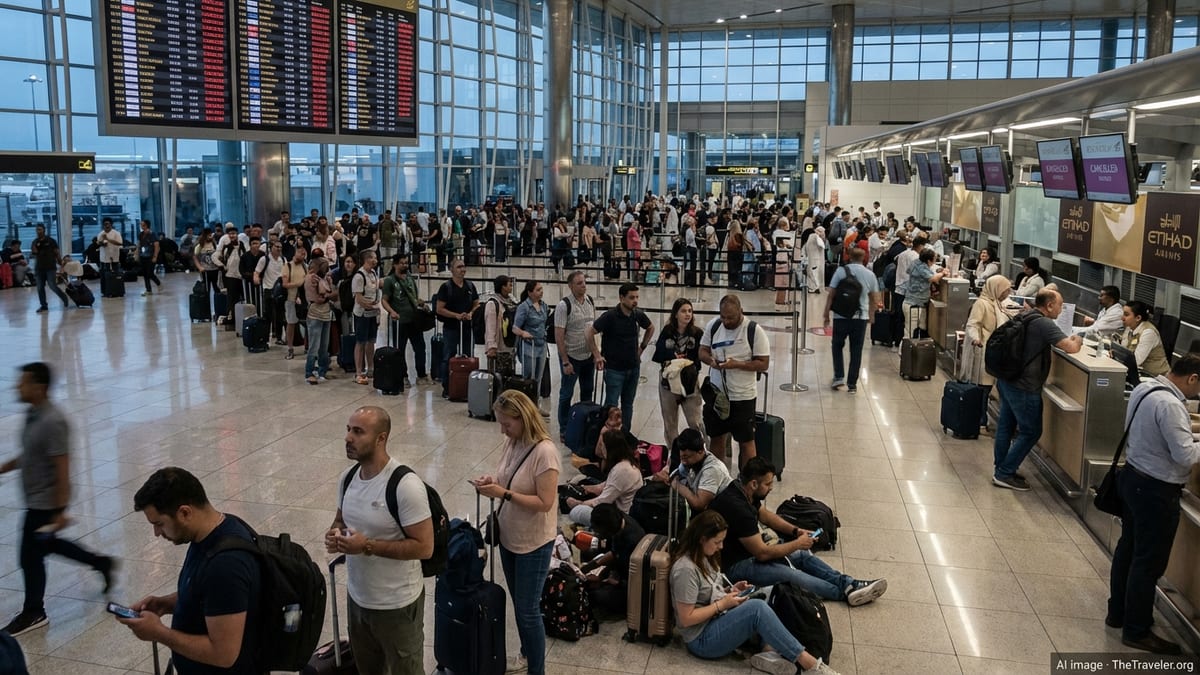
Gulf hubs under pressure as conflict escalates
After months of sporadic disruption linked to the 2026 Iran war, renewed US strikes on Iranian targets and retaliatory attacks have once again placed Dubai and neighbouring Gulf hubs at the center of a fast-changing aviation situation. Publicly available information shows that thousands of flights across the wider region have already been affected this year, with airspace closures, missile incidents and drone activity periodically forcing diversions and groundings.
Recent reports indicate that strikes and attempted strikes around the Strait of Hormuz and Gulf energy infrastructure have heightened risk assessments for airlines operating in and out of the United Arab Emirates, Qatar, Kuwait and Bahrain. Aviation analysts note that while airports such as Dubai International remain operational, the combination of military activity and shifting no-fly zones has created a complex environment for flight planning.
Regional carriers that rely on hub-and-spoke networks centered on Dubai, Abu Dhabi and Doha are particularly exposed, given their dependence on overflying Iranian and Iraqi airspace to connect Europe, Asia, Africa and the Americas. Industry commentary suggests that each new round of attacks forces planners to redraw routings, secure alternative overflight permissions and adjust schedules at short notice.
Airlines extend suspensions and reroute services
European and Asian airlines have been among the first to significantly adjust their Middle East operations as the latest round of US–Iran hostilities unfolds. According to recent coverage, Air France has suspended flights to and from Dubai, Riyadh and Beirut for several days, with services from Riyadh scheduled to resume around July 25 and flights to Dubai expected to restart closer to July 27 or July 28, subject to ongoing security reviews and route approvals.
Other foreign carriers have also pulled back. Travel industry reports indicate that a number of European budget airlines have halted services to major Gulf destinations or are operating reduced schedules, particularly on routes that would normally overfly Iran, Iraq or adjacent conflict-affected areas. Some airlines are choosing longer detours to avoid sensitive airspace, increasing flight times and operating costs while limiting capacity on certain days.
Within the region, disruption has been concentrated on services to states closest to recent attacks. Coverage from Gulf-based outlets shows that Emirates, Etihad, flydubai and Air Arabia have temporarily cancelled or adjusted selected flights to Kuwait, Bahrain, parts of Saudi Arabia and Lebanon in recent days, citing operational and safety considerations. Schedules to Tehran, Iraqi cities and some Levant destinations had already been curtailed earlier in the conflict and remain under review.
At the same time, not all airlines are cutting services entirely. Reports from the UAE and Qatar describe a patchwork picture in which some carriers maintain near-normal schedules to many destinations, even as others suspend operations or delay resumption dates. This uneven response reflects differing risk assessments, fleet capabilities and regulatory requirements in home markets.
EASA conflict-zone advisory intensifies airspace concerns
An important driver of the latest disruption has been updated guidance from European regulators. According to recent travel and aviation coverage, the European Union Aviation Safety Agency has issued a conflict-zone advisory warning airlines about a high-risk environment for civil aviation over the UAE, Bahrain, Kuwait, Qatar and nearby Gulf waters following the breakdown of a previous US–Iran ceasefire.
The advisory urges European operators to avoid specific portions of Gulf airspace until at least late July, prompting many carriers to suspend direct services into key hubs or to design routings that skirt affected flight information regions. Safety specialists note that such advisories are not binding worldwide, but tend to influence risk calculations well beyond Europe, as insurers and corporate travel departments update their own policies.
In parallel, specialist airspace-monitoring platforms continue to flag the Emirates, Qatar, Kuwait and parts of Oman as higher-risk zones for overflight, citing ongoing military activity and the potential for miscalculation involving civil aircraft. Historical data from earlier phases of the 2026 conflict show that previous rounds of airspace closures in the Gulf produced thousands of cancellations in a matter of days, underscoring how quickly conditions can change.
The result for passengers is a situation in which flights may still appear on booking engines or timetables, but remain vulnerable to late adjustments as airlines respond to new risk assessments, regulator guidance or changes in military activity. Travellers are being reminded that schedules several days ahead are particularly subject to change.
Dubai operations remain active but fluid
Despite the headline-grabbing cancellations, Dubai International Airport and other major UAE airports continue to handle large volumes of traffic. Airport departure boards and live updates monitored by local media show that the majority of flights are still operating, with many departures leaving on time and most long-haul connections proceeding as planned, especially on routes that can avoid the most sensitive airspace.
However, the mix of operating and cancelled flights means that passengers cannot assume their journey is unaffected. Reports from travel advisories and airline notices highlight pockets of disruption, such as suspended services from certain European cities, reduced frequencies on routes into Kuwait and Bahrain, and shifting departure times as aircraft are reallocated. Some foreign carriers that initially paused services earlier in July have since returned to Dubai with modified schedules, while others have extended suspensions into the final week of the month.
Within the Gulf, there is also a ripple effect as airports manage onward connections. Flight adjustments to Beirut, Amman, Doha and regional secondary cities can complicate itineraries for travellers who use Dubai as a transfer point. Even where flights operate, longer routings around restricted airspace may extend journey times and narrow connection windows, increasing the risk of missed onward flights.
Local coverage suggests that on-the-day experience at Dubai International can vary considerably. Some passengers report relatively smooth journeys with only minor delays, while others have encountered last-minute gate changes, extended layovers or the need to rebook after an upstream cancellation disrupted their connection.
Advice for passengers: monitor, confirm, arrive early
Travel industry advisories across the region are consistently urging passengers booked on flights to, from or via Dubai and other Middle East hubs to take a proactive approach in the coming days. Airlines are encouraging customers to monitor their booking status through official apps and websites, sign up for flight-alert services where available, and recheck schedules repeatedly in the 24 hours before departure.
Public guidance from Gulf-based carriers and airports emphasizes the importance of arriving at the airport earlier than usual to allow for potential congestion at check-in and security, particularly during peak travel periods. With some services being consolidated or retimed, queues may be longer than expected as airlines handle rebookings and additional customer-service inquiries at their desks.
Passengers whose flights are cancelled are generally being offered a combination of free rebooking, travel vouchers or refunds, depending on the airline and fare rules. Travel writers and consumer advocates advise reviewing fare conditions carefully, keeping receipts for any out-of-pocket expenses, and contacting travel insurers to understand coverage for delays and cancellations linked to conflict-related disruptions.
Above all, travellers are being reminded that the situation remains fluid as US–Iran attacks and responses continue across the region. Even if a flight is operating at the time of booking, subsequent developments in the conflict or fresh regulatory advisories can trigger new schedule changes. Regularly checking flight status and official airline communications is emerging as the most reliable way for passengers to navigate an uncertain period for Middle East air travel.