


More news on this day
Flight schedules across Dubai and the wider Middle East remain fragile as the United States and Iran move toward signing a landmark peace accord, raising hopes of a sustained reopening of key air corridors after months of severe disruption.
Get the latest news straight to your inbox!
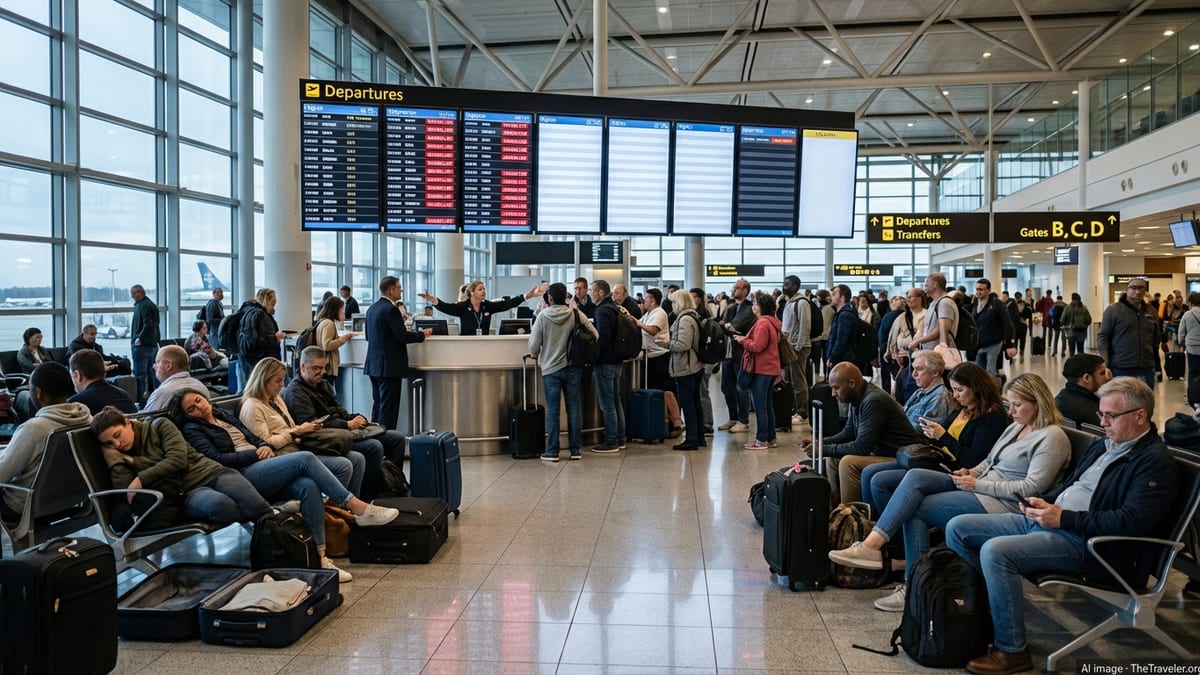
From war-triggered shutdowns to cautious reopening
Commercial aviation in the Gulf region has been under intense strain since late February, when airstrikes on Iran and subsequent missile salvos across the Gulf prompted an unprecedented wave of airspace closures. Multiple Middle Eastern states, including the United Arab Emirates, Iran, Iraq and others, restricted or shut portions of their airspace, and major hubs such as Dubai and Abu Dhabi saw large numbers of cancellations and diversions.
Industry assessments describe the February airspace cascade as one of the largest synchronized shutdowns in modern commercial aviation, with thousands of flights cancelled in the first days alone and carriers forced into lengthy detours via Saudi Arabia, Egypt or Central Asia. Operations at Dubai International Airport, normally among the world’s busiest, were heavily curtailed as airlines navigated evolving security restrictions and missile risk corridors.
Through April and May, partial ceasefires and diplomatic efforts allowed a phased reopening. Data from aviation risk briefings and logistics bulletins indicates that Dubai’s traffic gradually climbed back toward pre-crisis levels, with daily movements at times approaching normal patterns even as overflight restrictions persisted elsewhere in the region.
Despite this recovery, route planners have continued to factor in sudden closure scenarios. Advisories issued in recent weeks underline that key flight information regions in the Gulf remain subject to short-notice restrictions, obliging airlines to hold contingency fuel, maintain flexible crew rosters and keep alternative routings ready.
Peace framework raises hopes for more stable airspace
Against this backdrop, the emerging peace framework between Washington and Tehran is viewed across the aviation sector as a potential turning point. Publicly available information from regional and international media indicates that a ceasefire agreement has been electronically signed, with a formal ceremony expected in Geneva and a stated objective of fully reopening the Strait of Hormuz and associated air and sea lanes.
The accord is presented as a framework rather than a comprehensive settlement, setting out a 60 day period for further negotiations on issues including Iran’s nuclear activities while beginning to roll back wartime measures such as the naval blockade and tight controls on maritime traffic. For airlines and airports, the most immediate implication lies in the anticipated relaxation of risk thresholds over the Gulf’s congested skies.
Analysts cited in recent coverage suggest that if the ceasefire holds and restrictions on Hormuz-area operations are lifted, carriers could progressively restore the most direct great circle routings between Europe, North America and Asia that rely on Gulf overflights. This would reduce flight times, fuel burn and crew duty complexity compared with the extended detours that have become common during the crisis.
However, expert commentary also stresses that the peace process remains fragile, with parallel conflicts involving regional actors and non-state groups still capable of triggering localized flare ups. Airlines are therefore expected to move cautiously, aligning schedule changes with updated risk assessments and government advisories rather than with political announcements alone.
Dubai’s hub status under pressure but resilient
Dubai’s role as a global connecting hub has been particularly affected by the turmoil. During the height of the conflict, long haul carriers from Asia, Europe and North America suspended or rerouted flights to avoid the most exposed corridors, and some temporarily halted direct services into Dubai altogether. Travelers reported long delays, missed connections and last minute rerouting via alternative hubs in Saudi Arabia, Turkey and Europe.
As ceasefire arrangements took hold, Dubai International and Al Maktoum airports worked their way back toward higher operating capacity. Sector reports from aviation consultants and logistics providers indicate that by mid March, Dubai’s traffic volumes had recovered to a level close to pre conflict norms, even though not all foreign airlines had reinstated their full schedules.
Within the region, point to point demand into Dubai from nearby Gulf and Middle Eastern markets has helped sustain load factors despite weaker long haul flows. Hospitality and travel industry digests describe a pattern in which regional visitors, including those arriving overland from Abu Dhabi, Sharjah and Saudi Arabia, partially offset the decline in transit passengers during the height of the airspace closures.
Dubai’s flag carrier and its low cost affiliates have meanwhile adjusted capacity, redeploying aircraft to more resilient regional and South Asian markets when necessary and trimming frequencies on some European routes while overflight constraints persisted. The prospective peace deal could enable a gradual reversal of these shifts, but network decisions are likely to lag behind political milestones until risk premiums fall more decisively.
Continuing disruption for passengers across the Middle East
For travelers, the cumulative impact of months of disruption has been significant. Since the onset of hostilities, many passengers have faced cascading cancellations, extended layovers and uncertain rebooking options as airlines attempt to keep crews and aircraft within revised safety envelopes. Reports from late February and March describe passengers stranded at airports from Dubai to London and across South and Southeast Asia as carriers rerouted or grounded services at short notice.
Some national aviation authorities in Asia and Europe initially designated large portions of Middle Eastern airspace as high risk, prompting airlines to avoid broad swathes of the region, even beyond the immediate conflict zones. This led to notably longer flight times on routes linking Europe with India and Southeast Asia, as well as on services between North America and the Indian subcontinent.
Recent operational summaries suggest that while overall disruption has eased compared with the early months of the crisis, irregular operations remain above normal. Select routes into and over the Gulf continue to see tactical diversions and delays when military activity spikes or when risk ratings are temporarily raised in response to political developments or intelligence assessments.
Travel risk advisories continue to recommend that passengers with itineraries touching Dubai, Doha, Abu Dhabi or other Gulf hubs monitor airline communications closely, allow additional connection time and remain prepared for schedule changes, particularly ahead of key diplomatic milestones in the emerging peace process.
What to expect if the peace deal is signed
If the United States and Iran proceed to a formal peace signing as indicated by multiple public reports, aviation and travel specialists broadly anticipate a phased normalization rather than an immediate return to pre war operations. Restrictions on certain air corridors, particularly those adjacent to sensitive military assets, may be lifted incrementally as confidence in the ceasefire deepens and verification mechanisms take hold.
Carriers are likely to prioritize the restoration of high demand long haul connections that depend on efficient Gulf routings, such as links between Europe and Australasia and between North America and South Asia. Over time, this could translate into more nonstop options through Dubai and neighboring hubs, reduced reliance on secondary detour airports and shorter block times.
Nevertheless, the experience of the past months suggests that airlines, insurers and regulators will not quickly forget the scale of the recent disruption. Industry observers expect that war risk surcharges, route diversification strategies and enhanced contingency planning will remain part of the operating landscape in the Middle East even if a durable US Iran accord is reached.
For now, Dubai’s recovery as an aviation and tourism hub appears closely tied to the trajectory of the peace process. Each step toward formalizing the accord creates additional space for airlines to rebuild schedules and for travelers to regain confidence in Gulf routing, but the region’s skies are likely to stay under unusually close scrutiny for some time.