


On paper, the hike to Grotto Falls in Great Smoky Mountains National Park looks almost effortless: a short 2.6-mile round trip, modest elevation gain, and an “easy” rating in most guidebooks. Yet every day in peak season, you will see winded hikers, kids melting down, and flat-soled sneakers slipping on wet rock. The disconnect comes from one underestimated part of the route: the final, rocky, root-laced, constantly wet approach right around the falls itself.
Get the latest updates straight to your inbox!
Why an “Easy” 2.6-Mile Hike Feels Harder Than Expected
Most visitors glance at the numbers and relax. Grotto Falls, reached via the Trillium Gap Trail off the Roaring Fork Motor Nature Trail, is commonly described as an easy to moderate 2.6-mile round trip with roughly 580 feet of elevation gain. That sounds like a gentle family stroll, especially compared with steeper Smokies hikes such as Rainbow Falls or Alum Cave. In reality, the trail climbs steadily almost the entire 1.3 miles to the falls, and first-time visitors often underestimate what that “gentle but steady” description means when combined with humidity, crowds, and uneven footing.
After leaving the trailhead parking area along Roaring Fork, the path quickly narrows into classic Smokies singletrack, weaving through old-growth hemlock and passing small streams. The first half-mile is mostly packed dirt and feels tame. It is easy to forget that you are gaining hundreds of feet of elevation. The kind of effort that feels fine when you start can feel very different on the way back, especially for visitors unused to walking more than a mile or two at home.
By the time you near the falls, many hikers are already breathing harder than they expected. Add in Gatlinburg’s summer temperatures, which often top 80 degrees by mid-morning with high humidity, and even a modest climb can feel draining. That is when the underestimated part of the trail appears: a short but deceptively tricky approach where the packed dirt gives way to slick rock, roots, and flowing water.
The Real Challenge: The Wet, Rocky Approach Around the Falls
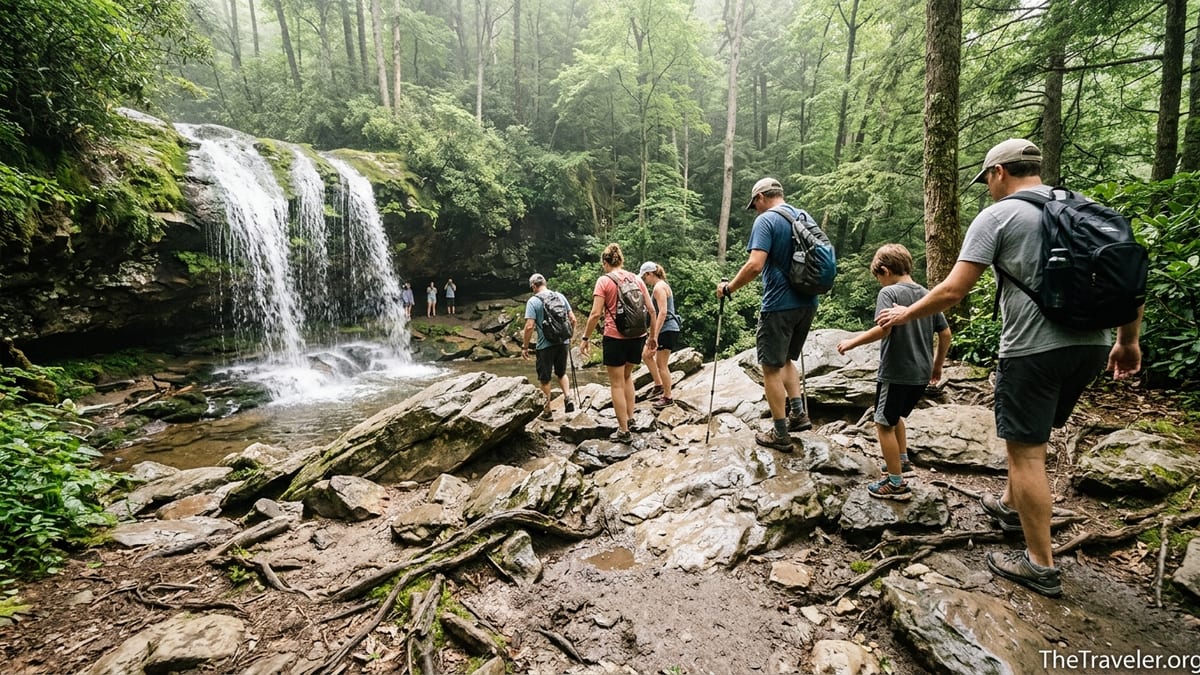
The section most people underestimate is the last 150 feet or so as the Trillium Gap Trail squeezes past Grotto Falls. Guide descriptions often mention “rocky footing” and “slick conditions,” but it is easy to skim past those words when you are focused on the photo-ready promise of walking behind a waterfall. In practice, this short stretch is where you will see the most hesitation, minor slips, and nervous faces, especially after rain or during spring snowmelt.
As you round the final bend, the sound of Trillium Gap Creek grows louder and the trail tilts slightly toward the water. The dirt underfoot breaks up into uneven stones and exposed roots, many perpetually damp from the falls’ spray. On busy days, hikers often queue along this narrow section, picking their way across slick rocks just inches from small drop-offs into the creek. Parents with small children frequently pause here, trying to decide whether to press on or turn around.
The path skirts the right side of the waterfall, forcing you to cross boulders that are constantly coated in mist. Even in dry weather, the combination of algae, moss, and fine spray creates a surface more like polished glass than rough rock. Trail reports regularly describe “icy in winter” conditions at this exact spot, but even summer visitors are surprised by how little traction they have when they step onto dark, wet stone in worn-out sneakers or flat-soled fashion sandals.
Complicating things further, the approach is just wide enough in places for a single hiker, so passing or turning around can feel awkward. When you factor in tripods, big daypacks, and dogs on leash, that short stretch becomes the technical crux of the hike. It is not mountaineering, but it is far more serious than the “easy waterfall walk” many visitors imagined when they left their cabin in Gatlinburg.
Roots, Mud, and Stream Crossings: The Middle Miles That Sap Energy
Although the wet rocks around the falls are the most obviously hazardous, many first-time visitors underestimate how tiring the middle section of the hike can be. Between about 0.5 and 1.1 miles from the trailhead, the Trillium Gap Trail becomes rockier and rootier, with several small stream crossings. Most are simple step-over creeks or log bridges, but they require attention and balance, especially after heavy rain when water may be running over the trail itself.
Imagine a family from Cincinnati heading out in early June. They reach the first creek, where stepping stones sit an inch or two below a shallow flow of cold water. The parents cross easily in trail shoes, but their teenager in smooth-soled canvas sneakers misjudges a step and ends up with one foot soaked. That single misstep turns every subsequent muddy patch into a potential slip, and by the time they reach the rocky approach at the falls, they are tired and less confident on their feet.
The trail’s root networks are another hidden challenge. Decades of foot traffic have polished and exposed tangles of hemlock roots along the corridor. These are not dangerous in isolation, but when combined with fatigue, distraction, or a child tugging on your hand, they become ideal tripping hazards. Hikers stopping at Parkside Cabin Rentals or a Gatlinburg outfitter the next day often name this middle stretch as the one that “felt longer than it looked on the map.”
Because the hike is relatively short, many visitors do not pack trekking poles or even think about traction. Yet on a wet April morning, a simple pair of budget-friendly trekking poles from a Gatlinburg outdoor shop can make a notable difference in confidence navigating roots, mud, and shallow water crossings before reaching the more serious wet rock around the falls.
Crowds and Parking: Overlooked Stress Before You Ever Hit the Trail
The underestimation often starts before boots touch dirt. Grotto Falls is one of the most popular day hikes off the Roaring Fork Motor Nature Trail, and the official parking lot at the Trillium Gap trailhead is relatively small compared with demand. On a typical summer Saturday, it is not unusual for the lot to fill by 9 a.m., with additional cars lining the narrow roadside in both directions.
Many first-time visitors do not anticipate the stress this creates. Navigating the one-way Roaring Fork Motor Nature Trail, finding a legal place to park on a shoulder that might barely fit your rental SUV, and then backing into traffic while other cars queue behind you can raise heart rates long before the climb begins. Travelers who left their Gatlinburg hotel at 10 a.m. expecting an easy half-day stroll may find themselves starting their hike closer to midday, under stronger sun and in thicker crowds.
Crowds on the trail itself change the experience in subtle ways. The narrow, rocky approach near the falls can turn into a human traffic jam. You might have to wait several minutes for groups ahead to take photos behind the curtain of water, or for visitors with small children to carefully pick their way across the slick rocks. This stop-and-go movement breaks your rhythm and can make the final approach feel more precarious, as you are forced to stand still on damp, uneven footing while others file past.
In practical terms, this means the effort level is not just about the 580 feet of vertical gain. It is also about mental bandwidth. Managing parking, navigating one-way roads, being patient in a line of hikers on slick rock, and supervising kids or older relatives combine to make the whole excursion more taxing than the numbers suggest. Visitors who plan for this in advance, arriving early or late in the day and setting realistic expectations, consistently report a more enjoyable outing.
Seasonal Conditions: How Weather Transforms the Final Approach
Another reason hikers underestimate that final stretch around Grotto Falls is how dramatically it changes with the seasons. In midsummer, the area feels like an air-conditioned cave, with cool spray drifting across mossy stone and children laughing as they dash behind the falls. In late autumn or early spring, that same mist can chill a sweaty hiker quickly, and wet rock becomes noticeably more treacherous in the cold.
In winter and early spring, park materials specifically highlight the potential for ice at Grotto Falls. Even on days when the trailhead is merely chilly, the temperature near the falls can be lower, and the perpetual spray may freeze into a nearly invisible sheen on the rock slabs you need to cross. Locals often describe it as “walking on glass.” Microspike-style traction devices, which you can find in Gatlinburg outdoor shops for a moderate price, are not strictly necessary for the hike overall but can make the last steps far safer on icy days.
After heavy summer thunderstorms, small rivulets often run across the approach path itself. Mud from upstream washes over the rock, creating a slick, clay-like film that can defeat even good hiking shoes. Hikers who checked the weather only for rain, not for how it might affect the falls’ spray and runoff, are often caught off guard. Conversely, on dry October afternoons, when the water volume is relatively low and temperatures are mild, the same stretch may feel only mildly challenging.
Because conditions are so variable, the smartest visitors treat the last piece of the trail as a short technical section whose difficulty can range from easy to borderline hazardous depending on recent weather. They watch for National Park Service updates about Roaring Fork Motor Nature Trail’s seasonal opening and any temporary closures, then build flexibility into their plans in case the access road or trail conditions change.
Footwear, Gear, and Technique: Small Choices With Big Consequences
The single factor that determines how stressful the final approach to Grotto Falls feels is usually footwear. On summer weekends, you will see everything from flip-flops and white fashion sneakers to sturdy trail runners and waterproof mid-cut boots. The difference in how confidently hikers move across wet rock and roots is dramatic. Visitors who grab a pair of lightly lugged trail shoes from big-box stores in Pigeon Forge or Gatlinburg, often for less than the cost of a restaurant lunch, routinely say afterward that it was money well spent.
Good tread is more important than stiff soles or high ankles. A breathable trail runner with aggressive rubber lugs grips wet stone far better than a smooth-soled street shoe, even though both might feel comfortable on pavement. Waterproofing can help with shallow puddles and stream splashes, but in warm weather many hikers prefer quick-drying, non-waterproof shoes paired with moisture-wicking socks so that occasional soaks are less of a problem.
Simple technique also plays a role. On the slick approach to the falls, shorter steps and three-point contact help. Many experienced Smokies hikers place one foot, test it with a slight weight shift, then commit fully only when they feel the sole grab. They avoid black, algae-coated rock surfaces and choose lighter-colored, rougher patches whenever possible. Parents often position themselves slightly downhill of their children, ready to steady them if a foot slips toward the creek.
Lightweight trekking poles, which can be rented from some local outfitters or bought inexpensively in town, turn the tricky approach into something more like a staircase. Used properly, they offer two extra points of contact on wet stone, reduce the risk of a twisted ankle, and add confidence for hikers who may not have ventured onto a rooty mountain trail in years.
Planning a Realistic Timeline Around the Tricky Section
Because Grotto Falls is relatively close to downtown Gatlinburg, many visitors slot it into a half-day window: a late breakfast, a quick drive up to Roaring Fork, the hike, then an afternoon attraction like the SkyLift Park or aquarium. That schedule can work, but only if you allow enough buffer time for the tricky approach at the end and the return hike back to the car.
A realistic plan for most first-time visitors is to budget about 2 to 3 hours total for the entire outing from car back to car, even though the actual walking time for a fit hiker might be closer to 90 minutes. This extra margin accounts for driving the narrow, often slow-moving Roaring Fork Motor Nature Trail, searching for parking, adjusting gear at the trailhead, pausing for rest breaks on the climb, and then moving carefully across the wet rocks near the falls while waiting for other visitors to pass.
For example, a couple staying in a centrally located Gatlinburg hotel who leaves town at 8 a.m. may reach the trailhead around 8:30, depending on traffic and photo stops on Roaring Fork. If they hike at a moderate pace with two or three short breaks, they might reach the falls around 9:15. Allowing 20 to 30 minutes to enjoy the waterfall, navigate the slick approach cautiously, and take photos behind the curtain of water, they could be back at the car by about 10:30. Add a few minutes to exit the motor trail, and they are back in town by late morning.
Families with small children or older relatives should plan on the longer end of the range. Moving a nervous grandparent or a toddler across wet boulders without rushing takes time. Building that time into your schedule up front reduces the temptation to hurry through the most hazardous section of the trail when you realize you have lunch reservations waiting back in Gatlinburg.
The Takeaway
What most first-time visitors underestimate about the Grotto Falls Trail is not the distance or even the uphill climb. It is the short, deceptively technical stretch right around the waterfall itself, where wet rock, roots, and narrow footing collide with heavy crowds and variable weather. This is where smooth-soled shoes, tight timelines, and unrealistic expectations turn a gentle family hike into a stressful balancing act.
By treating that final approach as a distinct, potentially challenging segment rather than just “the last few steps to the photo spot,” you stack the odds in your favor. Arrive earlier or later in the day to avoid the heaviest crowds. Wear footwear with real trail traction instead of street shoes. Give yourself a generous time window so that you can move slowly across slick rock, especially if you are hiking with kids or older relatives. Finally, adjust your mindset: Grotto Falls may be one of the Smokies’ friendlier waterfall hikes, but like every mountain trail, it demands respect for terrain and conditions.
Do those things, and the hardest part of the Grotto Falls Trail becomes a memorable highlight rather than an unwelcome surprise. You will step behind the cool curtain of water, feel the spray on your face, and look back along the narrow, wet path you just navigated with the satisfaction of having truly earned the view.
FAQ
Q1. How long does the Grotto Falls hike really take for most visitors? For most first-time visitors, a realistic estimate is 2 to 3 hours total from car back to car, including driving the Roaring Fork Motor Nature Trail, finding parking, hiking to the falls and back at a moderate pace, and spending time enjoying the waterfall.
Q2. Is the Grotto Falls Trail suitable for young children? Many families hike it with children, but adults should be prepared to closely supervise kids, especially on the final wet, rocky approach around the falls. Confident walkers in sturdy shoes usually do well, while toddlers may need to be carried in a child carrier for the trickiest section.
Q3. Do I need hiking boots, or are regular sneakers enough?Regular sneakers with smooth soles often slip on the wet rocks and roots near the falls. Lightweight hiking shoes or trail runners with good tread make the approach much safer and more comfortable, especially after rain.
Q4. Is it safe to walk behind Grotto Falls?Walking behind the falls is a highlight of the hike and is generally safe if you move slowly, watch your footing, and avoid climbing on slick boulders. Conditions can change with weather, so use extra caution in winter or after heavy rain when rocks may be icy or extremely slippery.
Q5. When is the best time of day to hike Grotto Falls to avoid crowds?Early morning and late afternoon are typically the least crowded times. Starting your hike before 8:30 a.m. or after 3 p.m. usually means easier parking and fewer people on the narrow, rocky approach near the waterfall.
Q6. Are trekking poles helpful on the Grotto Falls Trail?Trekking poles are not required but can be very helpful, especially on the rooty middle section and the slick rocks near the falls. Many visitors find that even inexpensive, collapsible poles increase their stability and confidence.
Q7. Is the trail open year-round?The Trillium Gap Trail to Grotto Falls is generally open year-round, but access via Roaring Fork Motor Nature Trail is seasonal and can also be affected by temporary closures. Winter conditions near the falls can be icy, so always check current park updates before you go.
Q8. Can I take a stroller on the Grotto Falls Trail?The trail is not suitable for strollers. Roots, rocks, narrow sections, and the wet, uneven terrain near the falls make it difficult and unsafe for wheeled devices. Child carriers or backpacks are a better option for young children.
Q9. How difficult is the elevation gain for someone not used to hiking?The roughly 580 feet of elevation gain is moderate but feels more demanding than many first-timers expect, especially in summer heat and humidity. Taking frequent short breaks, drinking water, and not rushing will help visitors who are less accustomed to uphill walking.
Q10. What should I do if the rocks near the falls feel too slippery?If you do not feel confident on the wet rocks, there is no shame in stopping just short of the slickest section. You can still enjoy a great view of the waterfall from slightly farther back, then return along the trail at your own pace without risking a fall.