


More news on this day
Passengers flying through Dubai and Abu Dhabi are facing fresh disruption this week as Emirates, Etihad Airways and flydubai adjust schedules in response to volcanic ash in Indonesia and ongoing airspace tensions across the Gulf.
Get the latest news straight to your inbox!
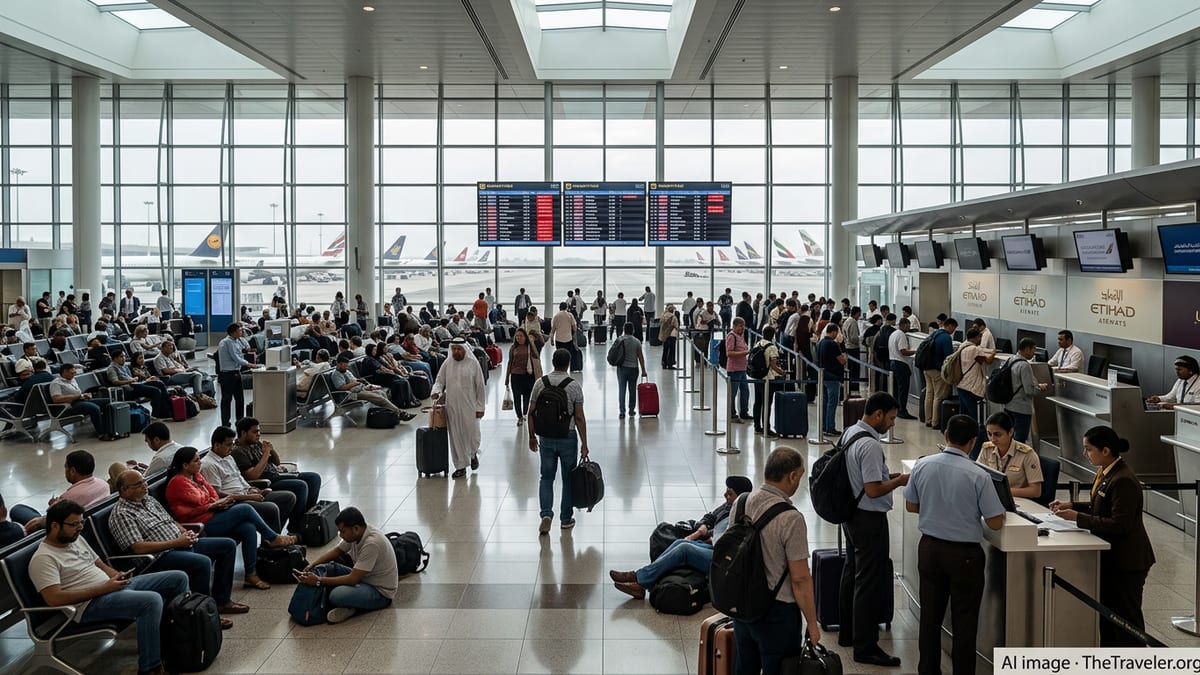
Jakarta flights hit by Anak Krakatau volcanic ash
Services between the United Arab Emirates and Indonesia have been among the hardest hit, after ash from the Anak Krakatau volcano prompted the temporary closure of Jakarta’s Soekarno Hatta International Airport. Publicly available airline updates and regional media reports show that multiple Emirates and Etihad flights on the busy Dubai and Abu Dhabi to Jakarta routes have been cancelled or delayed since 5 September.
According to the latest travel advisory on Emirates’ website, a series of Dubai Jakarta rotations, including EK356, EK358 and their return services EK357 and EK359, have been cancelled on dates from 6 to 8 September as the airline responds to the airport closure and subsequent phased reopening. Travellers booked on these flights are being advised to monitor flight status tools and email notifications closely for rebooking options and timing changes.
Coverage in UAE outlets also indicates that Etihad’s Abu Dhabi Jakarta operations have been disrupted, with services such as EY475 from Jakarta to Abu Dhabi reported as delayed while Indonesian authorities manage airport capacity and safety checks as ash conditions evolve. Reports from Indonesian aviation officials suggest that several airports across the country, not just in Jakarta, have experienced temporary shutdowns, leading to knock on effects for regional and long haul connections.
Industry reporting from The National and Gulf based news sites notes that hundreds of flights within Indonesia and on international routes have been affected since the weekend, with the country’s transport ministry estimating that large numbers of passengers have seen travel plans changed. For UAE carriers that rely on Jakarta as a key Southeast Asian hub, the impact is being felt both by origin destination travellers and by those using Dubai and Abu Dhabi for onward connections to Europe, the Middle East and Africa.
Gulf routes to Kuwait and Bahrain face rolling schedule changes
At the same time, airlines across the Gulf continue to manage a volatile operating environment linked to regional security tensions and intermittent airspace restrictions. Recent coverage in regional business media highlights ongoing schedule adjustments for services between UAE hubs and nearby destinations including Kuwait and Bahrain, as carriers respond to changing risk assessments and official advisories.
Reports from Gulf based outlets describe Emirates, Etihad and other regional airlines cancelling or consolidating selected flights into Kuwait City and certain Saudi Arabian airports at various points over recent weeks. In some instances, services have been temporarily suspended for several days before being reinstated as conditions allow, contributing to uncertainty for passengers with near term travel plans.
Flydubai, which operates an extensive short haul network from Dubai International, has also seen individual flights to Gulf cities such as Bahrain and Kuwait cancelled or retimed at short notice, according to published schedules and media round ups. While the bulk of the airline’s program continues to operate, travellers are being encouraged in public advisories to allow extra time at the airport, complete online check in where possible and verify departure times on the day of travel.
Analysis pieces from regional newspapers suggest that the pattern of disruption across Gulf routes is uneven, with some days passing with relatively minor delays while others see clusters of cancellations as airspace access and operational risk thresholds are reassessed. For passengers, this has created a travel environment in which tickets remain valid but itineraries may shift within hours of departure, particularly on shorter regional sectors.
Emirates, Etihad and flydubai publish rolling travel updates
In response to the fast changing situation, UAE carriers have been maintaining rolling travel updates on their official channels, outlining specific flights affected by cancellations and extended delays. Emirates’ travel advisory pages list impacted Dubai Jakarta services over several consecutive days in early September, with clear indications of which flight numbers are not operating and guidance for passengers not to travel to the airport unless they have confirmed new arrangements.
Etihad Airways has similarly issued online notices highlighting disruption on Indonesia routes and selected Gulf services, while stressing that the majority of its global network remains operational. Publicly available information indicates that the airline is prioritising rebooking for affected travellers and is adjusting departure times on a case by case basis as airports reopen or as routings around sensitive airspace are refined.
Flydubai’s updates, reflected in UAE aviation coverage, focus on individual flight numbers within its regional network that have been cancelled or significantly delayed, including services to Bahrain and Kuwait on particular days. The airline is directing customers to use digital tools to track last minute changes rather than relying solely on printed or previously issued itineraries.
Across all three carriers, the messaging in public advisories emphasises that schedules are subject to change at short notice. Travellers are being urged to ensure that contact details in bookings are up to date so that SMS and email alerts about cancellations, rebookings or rerouting options can be delivered quickly, particularly for those already in transit through Dubai or Abu Dhabi.
Knock on effects for connections across the Middle East and beyond
The combined impact of Indonesia’s volcanic ash disruption and evolving Gulf airspace constraints is being felt well beyond the immediate routes to Jakarta, Kuwait and Bahrain. As hub carriers, Emirates and Etihad feed large volumes of connecting traffic through Dubai International Airport and Abu Dhabi’s Zayed International Airport, meaning that schedule changes on a few sectors can cascade into missed onward connections to Europe, Africa and the wider Asia Pacific region.
Travel industry analysis published in regional business pages notes that even when long haul sectors are operating broadly on time, extended outbound delays from Jakarta or temporary suspensions to Gulf destinations can require wholesale reprotection of connecting passengers. This can include overnight stopovers, rerouting via alternative hubs or movement between partner airlines where inventory allows, particularly on heavily booked late summer and early autumn departures.
For flydubai, whose network overlaps with that of Emirates on some regional routes but also serves smaller cities across the Middle East, Central Asia and Eastern Europe, irregular operations on Gulf sectors can reduce the reliability of tight self planned connections. Commentators in local media advise that travellers combining low cost and full service tickets across different airlines should build in longer transfer windows in the current environment.
Some carriers serving the Gulf but based outside the region have also adjusted routings to avoid certain airspace, contributing to longer flight times and, in turn, tighter connection margins at major hubs. Published route tracking data cited in aviation reports shows selected European and Asian airlines adding extra flying time on routes over or near conflict zones, which can amplify the effects of even small ground delays.
What affected passengers can do now
For travellers booked on upcoming flights between the UAE and Indonesia or on short haul Gulf routes, publicly available guidance points to several practical steps. Passengers are encouraged to monitor airline websites and mobile apps on a regular basis in the days before departure, paying particular attention to flight specific advisories related to Jakarta, Kuwait and Bahrain.
Travel reports emphasise the importance of checking in online as early as possible and arriving at the airport well ahead of departure if a flight remains scheduled, as security checks and rebooking queues can be longer during periods of disruption. Where carriers offer flexible change policies or waivers for affected dates and destinations, customers may be able to move their travel to later in September without penalty, depending on fare rules.
Those connecting through Dubai or Abu Dhabi on separate tickets are being advised by travel commentators to allow greater buffer time between flights than they might normally plan, or to consider booking through itineraries on a single ticket where possible so that missed connections are handled under one reservation. Travel insurance policies that provide coverage for missed connections or significant delays may also help offset additional accommodation or rebooking costs, provided that policy conditions are met.
While operational updates from Emirates, Etihad and flydubai suggest that the majority of services are still running, the current mix of volcanic ash disruption and regional tension means that schedules can change quickly. For now, passengers using the Gulf’s major hubs, particularly on routes touching Indonesia and nearby Gulf capitals, face a period of heightened uncertainty and should plan their journeys with additional flexibility in mind.
The National: UAE travel advisory
Gulf News: UAE–Jakarta flights disrupted
Condé Nast Traveller Middle East: Dubai and Middle East flight disruption