


More news on this day
Dubai Police have issued a fresh advisory to UAE families travelling overseas this summer, warning that leaving children unsupervised in airports, hotels or tourist areas could expose them to serious safety risks and, in some countries, potential legal consequences.
Get the latest news straight to your inbox!
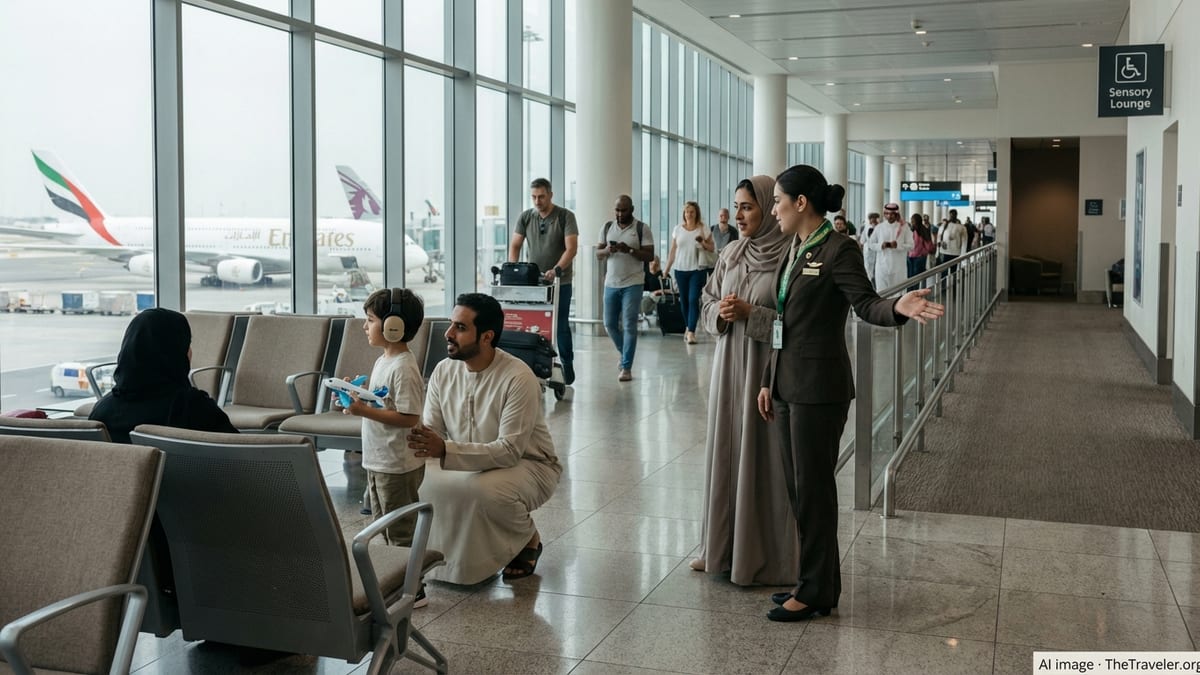
Summer exodus prompts renewed focus on child protection
Publicly available information from local media shows that the advisory coincides with the peak school holiday period, when large numbers of UAE residents depart for extended trips abroad. Police guidance highlights that child safety remains the responsibility of parents and guardians at all times, whether inside the country or during international travel.
Coverage in UAE outlets indicates that the Child and Women Protection Department at Dubai Police’s General Department of Human Rights has reiterated the legal and moral duty of families to protect minors. The reminder stresses that lapses in supervision while on holiday can be just as serious as incidents that occur at home.
Reports also note that the advisory forms part of a wider seasonal awareness drive, alongside campaigns on road safety, heat risks and online fraud. Authorities are using the start of the summer break as an opportunity to repeat core messages on child welfare, particularly in environments where parents may be distracted or unfamiliar with local regulations.
By framing the guidance as a travel-related alert rather than a domestic rule, the campaign seeks to reach families at the planning stage of their holidays, before they encounter crowded airports, lengthy transits and busy tourist attractions.
Warning: leaving children alone abroad can carry legal consequences
According to recent coverage in UAE newspapers, Dubai Police have cautioned that practices some parents may regard as harmless, such as leaving children alone in accommodation or briefly unattended in public spaces, can be treated as child neglect in certain countries. In those jurisdictions, such behaviour may trigger intervention by local child-protection agencies or law enforcement.
Reports on the advisory explain that the warning is not limited to extreme situations. Even leaving a child in a hotel room while adults dine elsewhere, or allowing young children to wander unsupervised in shopping centres and transit hubs, can fall foul of strict foreign regulations designed to prevent harm.
Legal analysis carried by regional media links the reminder to broader child rights frameworks, including the UAE’s own Federal Law on Child Rights, commonly known as Wadeema’s Law. That legislation criminalises exposing children to abandonment or unsafe conditions, and the new advisory stresses that similar or even tougher standards may apply in popular destination countries.
Families are therefore urged in public messaging to familiarise themselves with child protection laws at their destination before travel, review age thresholds for leaving children alone, and understand how local authorities respond to suspected neglect or endangerment.
Airports, hotels and tourist sites identified as high-risk settings
Published guidance on the campaign highlights particular concern around busy travel and leisure environments where children can become separated from their caregivers. Airports, land borders and large transport hubs are singled out as locations where brief distractions during check in, security screening or boarding can lead to children wandering off.
Media reports state that Dubai Police have also pointed to risks in hotel corridors, pools, lifts and entertainment areas when children move around without adult supervision. In unfamiliar buildings, minors may struggle to navigate back to their rooms or respond appropriately if they encounter strangers.
Tourist attractions such as theme parks, beaches, festivals and shopping malls are likewise classified as high-risk spaces, especially during peak hours. The advisory notes that crowded venues can make it harder to locate a missing child quickly, and that local staff may respond according to strict safeguarding protocols if they find a young child alone.
By mapping out these risk zones in advance, the campaign encourages families to agree supervision plans, designate meeting points, and ensure children know basic safety rules before they arrive at their destination.
Heat, vehicles and unattended children remain a critical concern
While the latest advisory is framed around international travel, it builds on years of UAE-wide campaigns addressing the dangers of leaving children unattended in vehicles during extreme heat. Previous coverage across the Emirates has documented fines and potential jail time for guardians who leave minors alone in cars, particularly during the hottest months.
Recent reports from multiple emirates describe intensified summer awareness drives that warn against leaving children in parked cars, stairwells or other confined spaces, pointing to the rapid rise in interior temperatures and the risk of suffocation. These efforts are often linked back to the country’s child rights law, under which exposing a child to such hazards can constitute severe negligence.
Current messaging around overseas travel appears to extend that principle to rental cars, tourist transport and airport parking abroad. The underlying aim, as reflected in published commentary, is to remind parents that a brief stop or errand is not a justification for leaving a child alone in any vehicle, regardless of the country or climate.
Safety campaigns additionally encourage travellers to plan journeys to avoid prolonged waits in hot conditions, carry adequate water and shade for children, and pay close attention during pick up and drop off at terminals, hotels and attractions.
Practical advice for UAE families travelling with children
Public information on the Dubai Police advisory sets out a number of practical measures for families preparing to travel. Parents are encouraged to keep emergency contact numbers easily accessible, including details for local emergency services and the nearest UAE embassy or consulate, in case they need rapid assistance.
Reports note that families are also advised to maintain constant communication with their children during trips. This includes ensuring older children know how to identify trusted officials in airports or tourist facilities, memorise key phone numbers, and understand what to do if they become separated.
Media coverage further highlights recommendations to use reputable, licensed travel providers and accommodation platforms when booking holidays. Although this element is primarily aimed at reducing exposure to fraud, it also has a child-safety dimension, as legitimate operators are more likely to follow recognised safeguarding standards.
Overall, the renewed travel warning positions child protection as an integral part of holiday planning for UAE residents. By foregrounding both safety and legal implications, the advisory seeks to ensure that summer breaks abroad remain enjoyable for families without putting children at unnecessary risk.