

More news on this day
Dubai’s tourism industry and travel businesses are preparing for a rise in UK visitor bookings after Britain eased its travel warning on the United Arab Emirates, a shift that market watchers say could accelerate the emirate’s already strong recovery in international arrivals.
Get the latest news straight to your inbox!
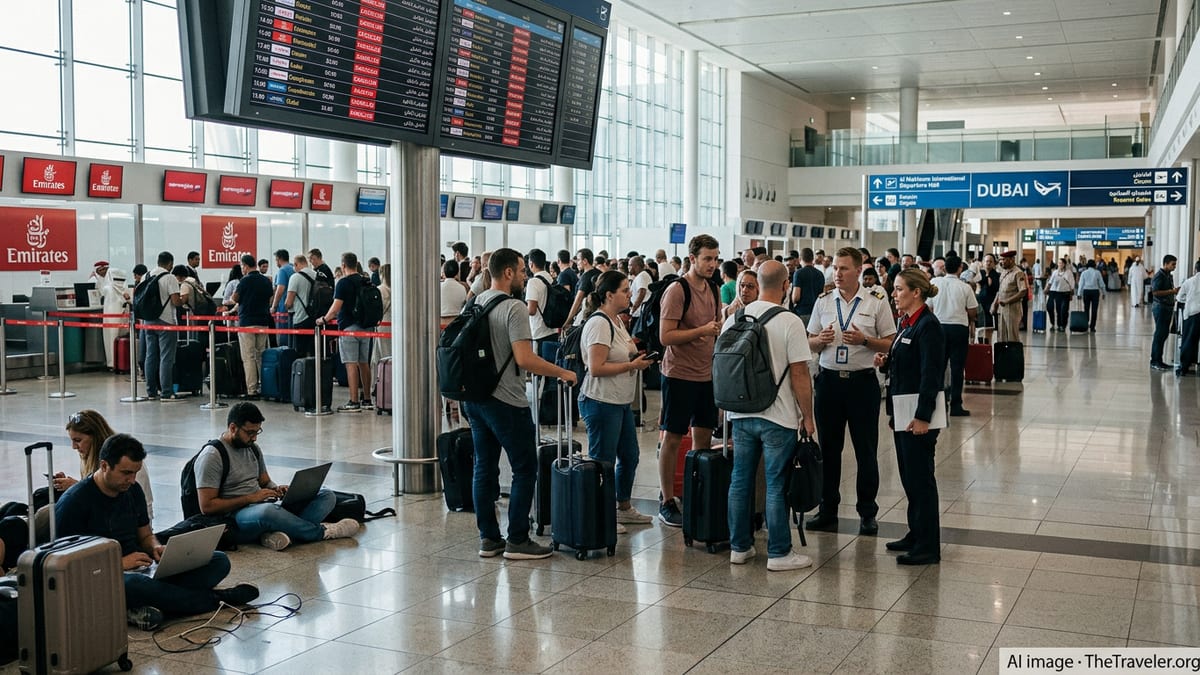
Travel advisory shift restores confidence for UK holidaymakers
The UK Foreign, Commonwealth and Development Office has updated its guidance on travel to the UAE, moving away from blanket warnings that had deterred many British holidaymakers and complicated insurance coverage. According to published coverage of the change, the updated advice reflects a reassessment of security and operational risks for British nationals travelling to popular hubs such as Dubai and Abu Dhabi.
For UK consumers, travel advisories are closely linked to the availability of comprehensive insurance, particularly for long‑haul destinations. Public information from British tour operators indicates that when the UK government advises against all but essential travel, many standard policies cease to provide cover. The easing of the UAE warning is therefore expected to remove a key barrier for travellers who had postponed or rerouted trips during the previous, stricter phase of advice.
Industry analysts note that Dubai remains a major gateway for UK travellers heading both to the Gulf and on to Asia and Africa, supported by frequent non‑stop services from London, Manchester, Birmingham and other airports. With formal travel advice now more closely aligned to on‑the‑ground conditions, travel companies are anticipating renewed demand from British leisure and business segments.
Travel forums and social media posts from the UK suggest that some consumers remain cautious after months of headlines about regional tensions and airspace disruptions. However, the removal of a broad “do not travel” message is seen by many commentators as a signal that routine tourism can resume, provided individual travellers monitor updates and follow standard risk‑management practices.
Dubai’s tourism momentum sets the stage for a UK boost
The easing of UK guidance comes at a time when Dubai is already reporting record visitor numbers. Data released by Dubai’s Department of Economy and Tourism for 2025 shows that the city welcomed about 19.59 million international overnight visitors, delivering a third consecutive record year for arrivals. The figures confirm Dubai’s status as one of the world’s busiest long‑haul destinations, powered by its role as an aviation hub and its broad mix of leisure and business events.
Official tourism statistics highlight the scale of the city’s hotel and short‑stay capacity, with more than 150,000 rooms across hundreds of properties and continued development of new inventory. Analysts observing the market state that this capacity expansion was planned on the assumption of steady growth from core source markets in Europe and Asia, including the UK. A recovery in British demand is therefore expected to support occupancies during both peak winter seasons and traditionally softer summer months.
Dubai also continues to attract large international conferences, exhibitions and incentive trips, segments in which UK and European corporates play a significant role. Independent economic commentary on Gulf tourism trends notes that the emirate’s meetings and events calendar typically strengthens in the fourth quarter, coinciding with cooler weather and major trade fairs. A friendlier UK advisory environment could make it easier for travel managers to secure approvals for delegates and clients attending these gatherings.
Regional analysts add that Dubai’s tourism performance has been resilient in the face of broader geopolitical uncertainty, in part due to diversified source markets and a long‑running push to position the city as a safe, modern and highly serviced destination. Additional inflows from the UK market would further underpin that strategy.
Airlines, hotels and tour firms recalibrate expectations
With the change in UK travel advice, airlines and hospitality operators are reassessing short‑term demand forecasts from Britain. Publicly available schedules show that Dubai‑based carriers already operate multiple daily frequencies on key UK routes, with the flexibility to adjust capacity through aircraft upgauging if forward bookings strengthen. UK and European airlines that connect into Dubai are also expected to revisit capacity plans as passenger confidence improves.
Travel trade commentary in the UAE suggests that inbound tour operators, destination management companies and online agencies are preparing targeted marketing campaigns for British travellers, highlighting flexible booking options and comprehensive insurance. Some UAE‑based firms that focus on UK and European markets have recently reported slower enquiry volumes due to higher airfares and risk perceptions, and many are hoping the advisory shift will mark a turning point for winter 2026 bookings.
Hotel groups with significant footprints in Dubai are likewise tracking search and booking patterns from the UK. Industry notes from regional consultants indicate that city hotels and beachfront resorts may respond with a mix of early‑booking discounts and value‑added offers, such as complimentary transfers or attraction tickets, to convert renewed interest into confirmed stays. The objective, analysts say, is to tap into pent‑up demand from British travellers who delayed Gulf holidays during the period of stricter guidance.
Smaller operators, including boutique hotels, excursion providers and independent tour companies, are also watching the UK market closely. Discussions in business forums for UAE tourism entrepreneurs describe the past few months as challenging, with softer bookings and higher marketing costs. Many such businesses view the UK advisory change as an opportunity to rebuild pipelines ahead of the next high season.
Competition and regional context shape demand outlook
The UK decision to ease its travel warning on the UAE comes amid ongoing shifts in global tourism flows linked to regional tensions and changing airline routings. Travel industry commentary from Europe points out that earlier disruptions to Gulf airspace had prompted some British travellers to reroute via alternative hubs or choose destinations closer to home. With operating conditions stabilising and official assessments moderating, Dubai is seeking to recapture part of that diverted demand.
At the same time, the UAE faces intensifying competition from rival long‑haul destinations that court British visitors, including Mediterranean resorts, Indian Ocean islands and parts of Southeast Asia. Analysts observe that Dubai’s relative advantages lie in its extensive flight network from the UK, streamlined visa rules for British passport holders, and a broad spectrum of accommodation at different price points.
Forward‑looking regional analysis also notes that the planned introduction of a unified Gulf tourist visa, covering multiple states in the Gulf Cooperation Council, could further increase the appeal of itineraries that start or end in Dubai for UK visitors. While implementation timelines are still being refined, industry specialists expect Dubai and Saudi Arabia to capture a significant share of incremental arrivals generated by such a scheme.
For now, market observers say the immediate effect of the UK advisory shift is likely to be most visible in enquiry levels to travel agents and direct searches for Dubai holidays. If those translate into firm bookings over the coming weeks, hotels, airlines and tourism businesses in the emirate could see a measurable uplift from one of their most important European source markets.