


Mention the New Jersey Pine Barrens and most people immediately think of the Jersey Devil, eerie night drives, and campfire stories. Yet the real Pine Barrens, a 1.1‑million‑acre sweep of forests, rivers, and historic villages, are far more compelling than any cryptid. For travelers willing to look past the folklore, this sandy, pine‑scented landscape becomes one of the most surprising outdoor destinations in the northeastern United States.
Get the latest updates straight to your inbox!
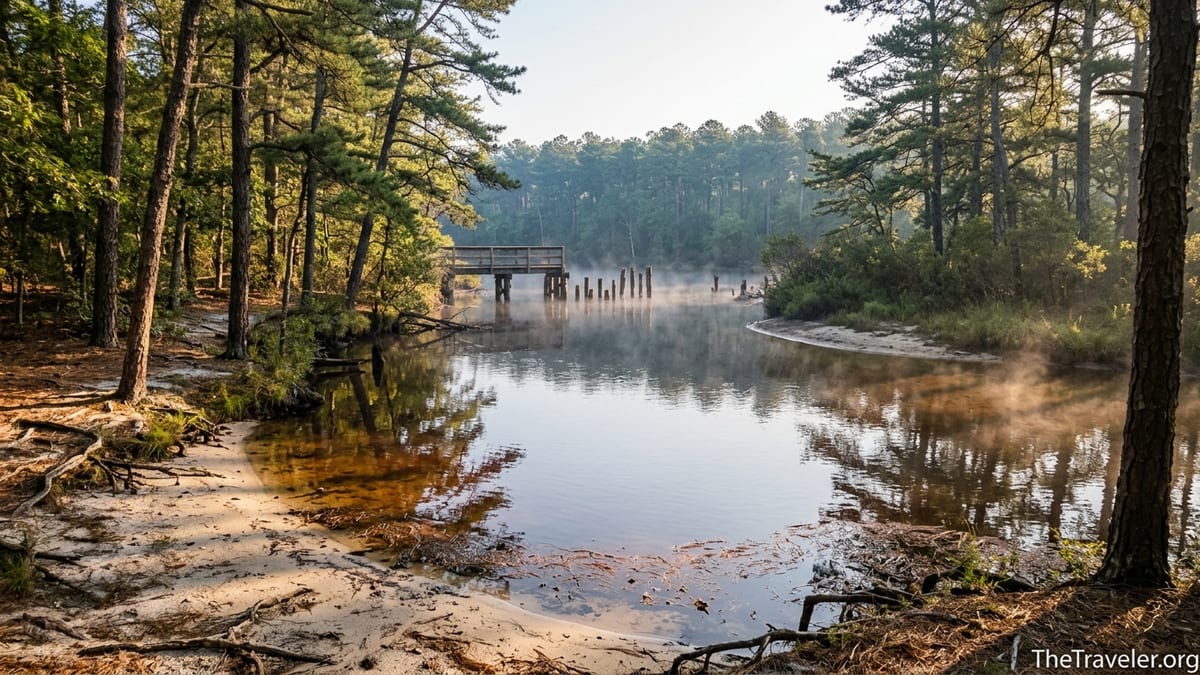
What the Pine Barrens Actually Are
The Pine Barrens, also known as the Pinelands, cover a vast portion of southern New Jersey, stretching roughly from the outskirts of Philadelphia toward Atlantic City and Cape May. Designated as the Pinelands National Reserve in the late 1970s, the region protects more than a million acres of largely undeveloped land in what is otherwise the nation’s most densely populated state. Driving in from the New Jersey Turnpike or the Garden State Parkway, the abrupt transition from suburbs and highways to endless pitch pines and sandy tracks can feel almost disorienting.
The name “barrens” comes from early European farmers who found the sandy, acidic soils unsuitable for traditional crops like wheat and corn. In reality, the land is anything but empty. Pitch pines, scrub oaks, Atlantic white cedars, carnivorous plants, and a web of rare orchids and wild blueberries have all adapted to these challenging conditions. Numerous rivers, such as the Mullica, Batsto, and Wading, flow with tea‑colored water that has been stained by tannins from cedar swamps. For paddlers and hikers, this network of waterways and trails is the backbone of any visit.
Today, much of the Pine Barrens is a patchwork of state forests and wildlife management areas. The largest single tract is Wharton State Forest, with over 115,000 acres of woods, rivers, and old industrial ruins spread around hubs like Batsto and Atsion. These are the places where most first‑time visitors park, pick up trail maps, and realize that the region is more about quiet exploration than dramatic overlooks or crowded boardwalks.
Geographically, the Pine Barrens sit within easy reach of major cities, which makes them surprisingly accessible for weekend trips. From Philadelphia, it is about an hour’s drive to trailheads at Atsion or Batsto. From mid‑state New Jersey or New York City, travelers often combine a Pine Barrens day of hiking or paddling with a night in Atlantic City or a shore town such as Long Beach Island, allowing for a contrast between deep woods and seaside neon.
Beyond the Jersey Devil: Folklore and Reality
The most famous story from the Pine Barrens is the legend of the Jersey Devil, a horned, winged creature said to haunt the woods since colonial times. Tales describe eerie cries in the night, cloven hoofprints in the sand, and glimpses of a bat‑winged figure gliding between treetops. A spate of newspaper reports in the early 1900s cemented the creature as part of regional folklore, and today you will find its silhouette on everything from hockey jerseys to roadside diner signs.
On the ground, however, travelers are far more likely to encounter deer, foxes, great blue herons, and barred owls than any supernatural beast. Rangers at Wharton State Forest or staff at visitor centers in Batsto and nearby towns are quick to smile when the subject comes up. Many of them have collected their own stories of strange noises or unexpected shapes in their headlights, but they also use the legend as a springboard to talk about real conservation issues, like wildfire management, habitat protection, and water quality in the region’s aquifer.
Folklore nonetheless shapes how people experience the Pine Barrens. Local outfitters who run night hikes or twilight paddles sometimes sprinkle in Jersey Devil lore between facts about cedar swamps and bog iron history. On fall weekends, pop‑up “Jersey Devil” tours may drive visitors down sandy forest roads that are perfectly ordinary by day but feel charged with possibility after dark. For many travelers, this blend of myth and reality becomes part of the charm, turning a routine walk in the woods into something that feels slightly more adventurous.
If you are curious about the legend but prefer a grounded approach, local libraries and historical societies around Hammonton, Tuckerton, and Galloway often stock regional history books that trace how the story evolved. Reading about the folklore while you sit beside a cedar‑stained stream at a quiet campsite can be more atmospheric, and more respectful of the landscape, than chasing jump scares on social media.
Landscapes You Can Actually Explore
Once you look beyond the stories, the primary reason to visit the Pine Barrens is the landscape itself. The region is remarkably flat, which makes it approachable for new hikers, families, and paddlers, but the details reward close attention. Trails around Atsion Lake or Batsto Lake lead through pitch pine forests where the sandy soil crunches underfoot and lowbush blueberries line the path. In low‑lying areas, you may enter dim Atlantic white cedar swamps where sunlight barely filters down and the ground feels springy with centuries of needles and peat.
One of the most popular access points is Batsto Village, a restored 18th‑ and 19th‑century industrial town set on Batsto Lake. Visitors commonly spend a morning wandering the mansion, general store, and workers’ cottages, then head straight from the parking lot onto trails such as the Batsto Lake loop or Tom’s Pond Trail. The latter combines views of the Batsto River with stretches of cedar swamp, offering travelers an easy half‑day hike without ever losing sight of the region’s history.
For those drawn to water, outfitter‑run canoe and kayak trips on the Batsto, Mullica, or Wading Rivers are a highlight. Typical day trips might cover 6 to 10 miles, allowing 4 to 6 hours on the water with ample breaks on sandy banks. Prices often range from roughly 50 to 75 dollars per person for boat rental, shuttle, and basic gear. The rivers are usually shallow and gently flowing, suitable for beginners as long as they are comfortable steering around fallen trees and sandbars. The reward is a front‑row seat to the “cedar water” streams that define the Pine Barrens, with reflections of pitch pines dancing on the tea‑colored surface.
If you prefer to explore by car, several scenic sand and gravel roads thread through Wharton State Forest and neighboring tracts. Many standard vehicles can handle the more compacted routes in dry conditions, but travelers should check with rangers about current road status and avoid deep ruts or water crossings. A common loop for first‑timers starts at Atsion, follows forest roads toward the historic Washington ruins, and then continues to Batsto Village, combining wide‑open pine stands with glimpses of old bogs and abandoned railroad grades.
Hidden History: Ironworks, Cranberries, and Blueberries
Long before modern travelers arrived with Gore‑Tex jackets and GPS apps, the Pine Barrens supported a dense patchwork of industry. Beginning in the 1700s, entrepreneurs harnessed the region’s bog iron deposits and vast pine forests to feed iron furnaces such as the one at Batsto. Charcoal burners cleared wood, colliers tended smoldering pits, and teams hauled raw materials along sandy wagon roads that now form the basis of today’s trails. When higher‑grade iron from Pennsylvania and elsewhere came to market, many of these furnaces declined, but their villages remained.
Batsto Village is the most visible survivor of that era. Its restored mansion, workers’ homes, and glassworks ruins reveal how a company town operated at the edge of the wilderness. Interpretive signs and seasonal guided tours walk visitors through the site’s evolution from iron to glassmaking and, later, to agriculture under the ownership of Philadelphia industrialist Joseph Wharton. On busy fall weekends, reenactors may demonstrate blacksmithing or traditional crafts, tying modern visitors into an industrial story that once fueled much of southern New Jersey’s economy.
As iron faded, cranberries and blueberries rose in importance. The region’s cool climate, abundant fresh water, and sandy soils proved ideal for bog cultivation. Villages like Whitesbog grew around cranberry operations, where workers built reservoirs, canals, and dikes to manage seasonal flooding. In the early 20th century, Whitesbog became the birthplace of the commercial highbush blueberry through the work of grower Elizabeth White and a USDA botanist, a development that still shapes grocery produce aisles today.
Modern visitors can still see the imprint of these agricultural landscapes. From certain forest roads in Wharton or Brendan T. Byrne State Forest, old cranberry bogs appear as rectangular ponds fringed with dikes and low vegetation. In autumn, seasonal tours run by local organizations may take travelers onto active bogs during harvest, where millions of floating berries form a crimson carpet. Even without joining a tour, simply pausing at a roadside farm stand for fresh cranberries, blueberry jams, or pies connects your trip to the region’s working history.
An Ecological Hotspot Hiding in Plain Sight
From an ecological standpoint, the Pine Barrens are far from ordinary. The same poor, acidic soils that discouraged colonial farmers created conditions for highly specialized plants and animals. Carnivorous plants such as pitcher plants and sundews trap insects in nutrient‑poor bogs. The bright green Pine Barrens tree frog, once considered for federal protection, finds a stronghold in these wetlands. In spring, warblers and other migratory songbirds pour through the forest canopy, using the region as a rest stop along the Atlantic Flyway.
Fire plays a central role in shaping this ecosystem. Pitch pine and scrub oak are adapted to periodic burns, and many of the forests you walk through are the product of centuries of natural and managed fire. The New Jersey Forest Fire Service conducts prescribed burns to reduce fuel loads and protect both communities and habitat. Travelers sometimes see blackened trunks and fresh green understory along roads and trails; this is not necessarily damage but part of a long ecological cycle. Learning to recognize these signs can make a routine hike feel like a living ecology lesson.
Water is another defining element. The tea‑colored streams winding through the Pines feed one of the largest sources of fresh groundwater in the region. Their unique chemistry supports specialized algae and aquatic insects that, in turn, sustain fish, turtles, and wading birds. On a summer paddle, you may notice how clear the water appears despite its dark color, and how sandy the river bottom feels underfoot when you step out to stretch your legs on a shallow bar.
For travelers, the ecological richness translates into practical considerations. Bug spray is essential from late spring into early fall, and long sleeves and pants help ward off both sun and ticks. Binoculars transform a simple walk into a birding excursion, especially at dawn or dusk around lakes like Atsion and Batsto. Even on a short visit, stopping to read interpretive panels or joining a scheduled nature walk with a local conservation group can deepen your understanding of why this landscape has become a protected reserve rather than just another housing development.
Planning a Visit: What Travelers Really Experience
Spending a day or weekend in the Pine Barrens is less about checking off famous landmarks and more about adopting a slower pace. A typical first‑time itinerary might start at Batsto Village, where parking, restrooms, and a small visitor center provide an easy entry point. After an hour or two exploring the historic buildings and exhibits, many travelers follow a short lakeside trail, then drive twenty to thirty minutes to Atsion Lake for a picnic, a swim in season, or a late‑afternoon paddle.
Lodging options directly inside the forest are basic but atmospheric. State‑run campgrounds around Atsion or Mullica River typically offer tent sites with picnic tables and fire rings but limited or no hookups. Nightly fees are often in the range of 20 to 30 dollars for New Jersey residents, slightly higher for non‑residents, which makes camping an affordable way to immerse yourself in the woods. Reservations are highly recommended for summer weekends and autumn foliage season, when local families and scout groups fill sites quickly.
For travelers who prefer a roof and hot shower, small motels in nearby towns like Hammonton, Egg Harbor City, or Chatsworth provide simple comfort within a 20‑ to 40‑minute drive of most trailheads. Some visitors choose to base themselves in Atlantic City or along the coast, where a broader range of hotels, casinos, and restaurants is available, then drive inland for day hikes or paddles. This pairing of wild forest days and bright‑lights evenings can be particularly appealing for mixed‑interest groups.
Food and supplies are part of the planning puzzle. Inside the forests themselves, services are minimal, so most travelers stock up in advance at supermarkets along Route 206 or Route 30. A cooler with water, sandwiches, and fruit goes a long way on long sandy roads with no convenience stores in sight. Scattered around the edges of the Pinelands, small diners, farm stands, and seasonal ice cream shops give an authentic taste of South Jersey, whether you are trying cranberry muffins, blueberry pancakes, or a simple plate of eggs and scrapple after a chilly morning hike.
Staying Safe and Respectful in a Wild Landscape
Although the Pine Barrens are relatively gentle compared with high mountains or desert canyons, their remoteness and maze of similar‑looking roads can surprise the unprepared. Cell service is patchy away from major highways, especially on forest roads between Atsion, Batsto, and smaller trailheads. Travelers should download offline maps, carry paper backups when possible, and tell someone their planned route if driving or hiking on less‑traveled tracks.
Weather deserves respect as well. Summer days often feel hotter than coastal areas, partly because sandy soils reflect heat and much of the terrain offers little shade outside the forests. Winter can be quiet and beautiful, but cold rain or wet snow turns some sand roads into difficult ruts. Layered clothing, waterproof footwear, and extra water are essential in all seasons. In shoulder seasons, temperatures can swing sharply between chilly mornings and warm afternoons, so a light jacket stashed in a daypack can make the difference between a comfortable hike and a miserable one.
Environmental etiquette is critical in such a sensitive ecosystem. Staying on designated trails protects fragile plants and prevents erosion on dunes and stream banks. Campers should follow standard Leave No Trace practices, including packing out all trash and using existing fire rings. Driving off established forest roads into bogs or wetlands, whether in a car or off‑road vehicle, can damage habitat and is often illegal. Rangers and conservation groups work hard to repair past damage from unauthorized vehicles, and travelers can support that effort simply by choosing routes carefully.
Wildlife encounters are usually peaceful but deserve common‑sense precautions. Black bears are present but rarely seen; more often, visitors spot white‑tailed deer, wild turkeys, and foxes at dawn or dusk. Keeping food secured at campsites and giving animals plenty of space helps maintain their natural behavior. In summer, mosquitoes and ticks are the most persistent “wildlife” issue, so repellent, long socks, and tick checks at day’s end should be part of every outing.
The Takeaway
The real story of the New Jersey Pine Barrens is less about a legendary monster and more about a living, working landscape that has managed to stay wild in the shadow of major cities. Travelers who arrive expecting only spooky vibes discover rivers gentle enough for first‑time paddlers, trails that young children can handle, and villages where the industrial past is preserved in weathered brick and cedar‑shingled roofs.
Whether you paddle a tea‑colored river past cranberry bogs, wander through the restored streets of Batsto Village, or listen to owls calling above your campsite in Wharton State Forest, the experience is one of quiet immersion rather than spectacle. The Jersey Devil may linger in road signs and souvenir shops, but the deeper reward lies in understanding how fire, water, and human history shaped this distinctive corner of New Jersey.
For travelers in the northeastern United States, the Pine Barrens offer an accessible escape that still feels genuinely wild. Come for the legend if you like, but stay for the rare ecosystems, the working farms, the star‑filled skies, and the sense that you have stepped into a different rhythm of life, only an hour or two from home.
FAQ
Q1. Are the Pine Barrens safe to visit for first-time hikers?
Yes, the Pine Barrens are generally safe for beginners who prepare properly. Choose marked trails near hubs like Batsto or Atsion, carry a map, bring plenty of water, and start with shorter routes so you are back at your car well before dark.
Q2. Can I visit the Pine Barrens without a car?
Reaching trailheads and villages is difficult without a vehicle because public transportation into the forest is limited. Some visitors take a train or bus to nearby towns such as Hammonton or Atlantic City, then use a rental car or rideshare for the final leg into areas like Wharton State Forest.
Q3. What is the best time of year to explore the Pine Barrens?
Spring and fall are often ideal, with cooler temperatures, fewer insects, and colorful foliage. Summer offers warm water for paddling and swimming but also brings heat and mosquitoes, while winter provides solitude and clear views for those prepared for cold weather.
Q4. Do I need special permits to hike or paddle in the Pine Barrens?
Day hiking on marked trails in state forests usually does not require a permit, but overnight camping and some river trips do. Outfitters often include necessary permissions in their trip price, while campers reserve sites and pay fees through the state park system in advance.
Q5. Is cell phone service reliable in the Pine Barrens?
Service is strong near major highways and towns but becomes patchy or nonexistent on remote forest roads and deep in the woods. Travelers should not rely solely on navigation apps and are wise to download offline maps or carry printed directions and trail guides.
Q6. Are there family-friendly activities besides hiking?
Yes, families often enjoy easy paddling trips with outfitters, picnicking and swimming at lakes like Atsion, visiting historic Batsto Village, and stopping at local farm stands for seasonal blueberries and cranberries. Short, flat trails allow children to explore without steep climbs.
Q7. What kind of wildlife might I see?
Common sightings include white-tailed deer, wild turkeys, foxes, turtles, frogs, and a variety of songbirds and wading birds. With patience and quiet, visitors may also hear owls after dark or spot osprey and hawks hunting over lakes and rivers.
Q8. Can I swim in Pine Barrens lakes and rivers?
Designated swimming areas, such as guarded sections of Atsion Lake in season, are popular on hot days. Some rivers are shallow and inviting, but travelers should pay attention to local rules, currents, and water depth, and avoid diving into unfamiliar or tannin-dark water.
Q9. How can I learn more about the history of the region?
Batsto Village offers interpretive exhibits and, at certain times of year, guided tours that cover ironmaking, glassworks, and agriculture. Nearby libraries, historical societies, and small museums around towns like Hammonton and Tuckerton also provide books, maps, and displays focused on the Pinelands.
Q10. Is it worth visiting if I am not interested in the Jersey Devil legend?
Absolutely. While the legend is part of local culture, most visitors come for quiet forests, dark night skies, paddling routes, and historic villages. The Pine Barrens stand on their own as a destination for nature, history, and a sense of wildness close to major cities.