


More news on this day
Egyptian National Railways has signed four contracts worth about €690 million with an Alstom-led consortium to upgrade two strategic freight corridors that are central to Egypt’s emerging logistics network.
Get the latest news straight to your inbox!
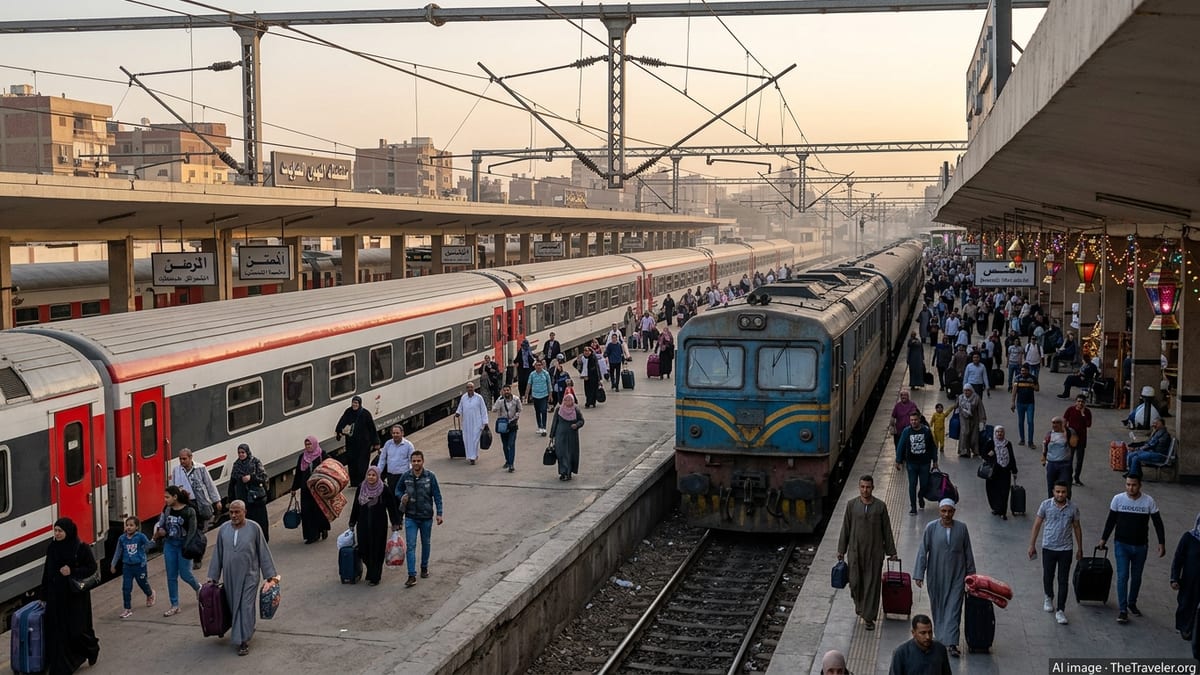
Four Contracts Target Eastern and Western Freight Arteries
According to published coverage of the agreements, the Alstom-led consortium, which also includes Egyptian firms Rowad Modern Engineering and Concrete Plus, will deliver signalling, track and systems upgrades across two priority corridors for Egyptian National Railways. The first covers the 6th of October to Alexandria axis on Egypt’s western side, while the second focuses on the Belbes to 10th of Ramadan line serving the fast-growing industrial city east of Cairo.
Reports indicate the contracts have a combined value of about €690 million and were signed in mid-June 2026. The work forms part of a broader national programme to overhaul the rail network and expand freight capacity in order to shift cargo from roads to rail, reduce congestion and support industrial growth.
Publicly available information shows that the projects will introduce modern digital signalling and associated control systems along heavily used segments. These upgrades are expected to enable higher train frequencies, improve reliability and enhance safety on routes that move both freight and, in some sections, mixed traffic.
The agreements will be booked as new orders in the 2026/27 financial year for the consortium partners, marking one of the largest recent rail systems packages in the Egyptian freight sector.
Western Corridor: Cairo–Alexandria Logistics Spine
Domestic media describe the western package as part of the Cairo–Alexandria logistics and trade corridor, a multimodal spine designed to connect inland dry ports and industrial zones with Egypt’s main Mediterranean gateway. Within this package, contracts cover development of signalling on the Marazeeq to 6th of October section and construction of a new Beni Salama to 6th of October line, together totaling about 137 kilometres.
Additional works include the doubling and signalling upgrade of the Beshteel to Itay El Baroud line, estimated at 117 kilometres, and modernisation of signalling on the 97 kilometre Union to Qabbari route serving the greater Alexandria area. Together, these elements are intended to form a high-capacity freight arc that avoids central Cairo and funnels cargo directly toward Alexandria’s port complex.
Publicly available information highlights that this corridor is closely linked to new dry ports at Sadat City and 6th of October. By tying those inland hubs into the national rail grid, Egypt aims to streamline customs clearance and container handling away from seaports, easing bottlenecks and shortening transit times for importers and exporters.
Industry observers note that the western upgrades are expected to benefit a broad catchment of industrial towns and agricultural regions along the Nile Delta, giving producers more reliable access to maritime export routes and domestic distribution networks.
Eastern Corridor: Linking Sokhna, 10th of Ramadan and Belbes
The second major component covers the Belbes to 10th of Ramadan axis, forming part of what officials have previously described as the Ain Sokhna to Alexandria logistics corridor. At its core is a new conventional rail freight line connecting Robeiky, the 10th of Ramadan dry port area and Belbes over roughly 63 kilometres.
According to local business press reports, this eastern rail link is designed to complement Egypt’s high-speed electric network and new road infrastructure, creating a continuous chain from the Red Sea ports of Sokhna and Adabiya through inland logistics zones to Alexandria and other Mediterranean ports.
The 10th of Ramadan region hosts one of Egypt’s largest industrial clusters, with significant manufacturing activity in sectors such as automotive components, building materials, textiles and consumer goods. The new freight corridor is expected to improve connectivity between these factories, dry ports and seaports, lowering logistics costs and supporting export-oriented production.
Observers point out that integrating Robeiky and 10th of Ramadan into the rail freight grid also supports the government’s strategy to build up inland logistics hubs that can relieve pressure on coastal cities while creating jobs in new urban communities.
Boosting Safety, Capacity and Reliability on ENR Network
Publicly available information from Egyptian media and corporate statements emphasises that a core objective of the four contracts is to raise safety standards on key ENR lines. Modern electronic interlockings, centralised traffic control and upgraded level crossings are expected to replace older signalling technology on multiple segments.
Enhanced signalling typically allows railways to reduce headways between trains, enabling more services to run on existing tracks without compromising safety. In the context of Egypt’s freight corridors, this can translate into higher throughput for bulk commodities, containers and manufactured goods, improving the economics of rail transport compared with road haulage.
The projects also aim to improve reliability by renewing critical infrastructure elements and introducing remote monitoring systems that can detect faults before they disrupt operations. For shippers, more predictable transit times and fewer delays are key incentives to shift cargo from trucks to trains.
Analysts following the sector suggest that these upgrades could support Egypt’s broader ambition to position itself as a regional logistics hub linking Africa, the Middle East and Europe, particularly as new industrial zones, dry ports and free trade arrangements come online.
Part of a Wider Push to Build Eight Integrated Logistics Corridors
Coverage in Egyptian outlets places the contracts within a nationwide strategy to develop eight integrated logistics corridors that connect industrial, agricultural and mining regions to seaports on both the Red Sea and the Mediterranean. These corridors combine conventional diesel rail, high-speed electric lines, highways, dry ports and logistics zones into end to end freight chains.
The 6th of October–Alexandria and Belbes–10th of Ramadan projects are presented as cornerstone elements of this strategy, because they reinforce both the east–west and north–south axes running through the Nile Valley and newer satellite cities. By enhancing capacity on these routes, planners aim to accommodate rising freight volumes anticipated from new industrial projects and trade flows.
In addition, the focus on connecting dry ports at Sadat City, 6th of October and 10th of Ramadan to rail freight corridors reflects a broader global trend in which inland logistics hubs act as extensions of seaports. For Egypt, such hubs can help decongest coastal cities, improve customs efficiency and create value added services such as warehousing, light assembly and packaging.
As works proceed on the four contracts signed with Egyptian National Railways, attention is likely to turn to how quickly the upgrades translate into tangible improvements in freight performance and whether similar public private partnerships will be deployed to modernise other sections of the country’s rail network.