


More news on this day
Travelers passing through Las Vegas’ Harry Reid International Airport this week are encountering rolling delays and missed connections after a construction accident on the East Coast damaged key communications infrastructure used by air traffic control, slowing flight flows thousands of miles away.
Get the latest news straight to your inbox!
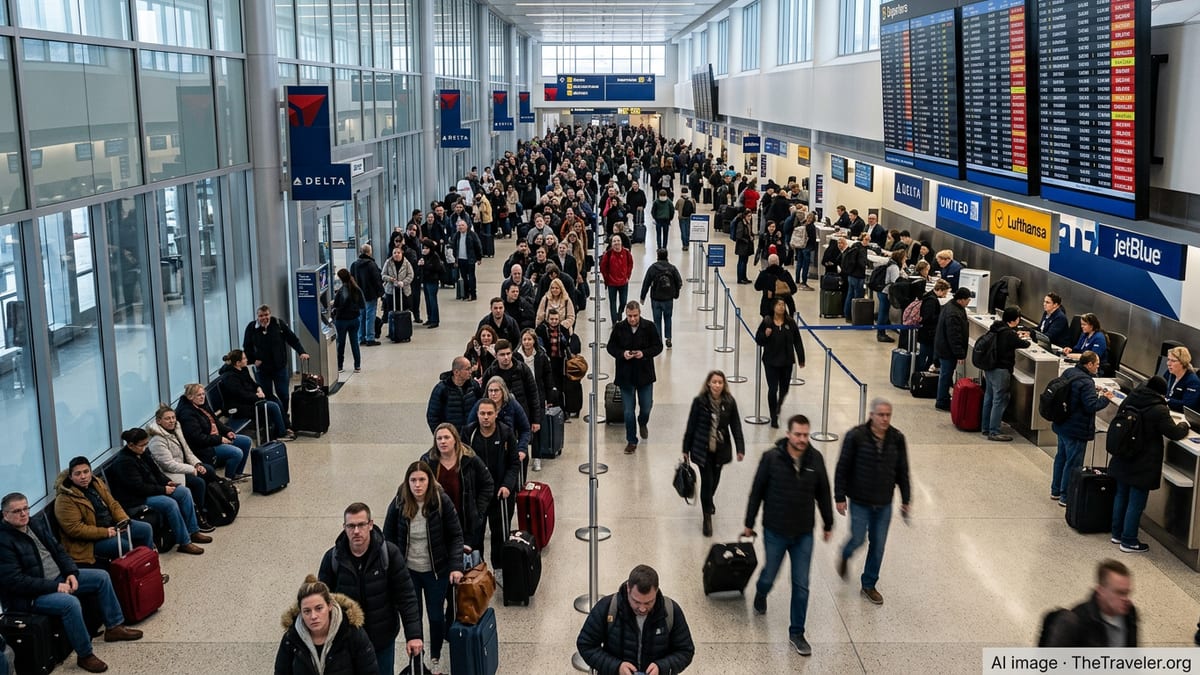
How an East Coast construction mishap reached Las Vegas
Published coverage from national outlets and aviation tracking services indicates that a construction crew on the U.S. East Coast recently severed a major communications cable used to route data between Federal Aviation Administration facilities and air traffic centers. The damaged line and its affected backups handle traffic management information critical for coordinating flights in and out of several busy Northeast hubs.
Reports describe the incident as affecting a primary communications line and at least one backup route, forcing traffic managers to reduce the rate at which flights could depart and arrive in parts of the Northeast. That slowdown created bottlenecks at airports where many cross-country routes originate or connect, including major hubs that feed flights to the West.
As delays accumulated across the network, Las Vegas began to see late-arriving aircraft from affected East Coast and Midwest cities. Airline schedules at Harry Reid International Airport rely on the same aircraft operating multiple legs per day, so a disruption on a morning route into a Northeast hub can cascade into afternoon and evening departures to Las Vegas and then onward to the West Coast.
According to publicly available flight data, those rolling knock-on effects have been more noticeable at peak times, with clusters of delayed departures and arrivals appearing in the early afternoon and late evening, when cross-country connections typically bank through Las Vegas.
Current conditions at Harry Reid International Airport
Real-time status information for Harry Reid International Airport shows periods of moderate delays in recent days, with conditions varying by time of day and airline. FAA traffic management summaries reference ground delay programs and reroutes affecting East Coast facilities, which in turn influence aircraft movements into and out of Las Vegas.
Publicly available flight-tracking boards for the airport list a mix of on-time operations alongside delays ranging from 30 minutes to more than two hours on some routes connected to East Coast and Midwest hubs. The pattern reflects a network-driven disruption rather than a local weather or infrastructure issue in Las Vegas itself.
Available information from the airport operator emphasizes that runways and taxiways at Harry Reid International are open, with routine local construction work limited mainly to roadway projects and previously scheduled airfield maintenance. That means the current disruption is primarily the result of national airspace constraints originating with the damaged cable on the East Coast, not any new limitation at Las Vegas.
Travel advocacy sites tracking recent operations at Harry Reid International note a higher-than-usual share of delayed and canceled flights over the past several days, particularly on routes linking Las Vegas with large connecting hubs in the East and central United States.
Which travelers and routes are most affected
Based on airline schedules and route maps, the impact is most acute for travelers whose itineraries involve connections through busy East Coast and Midwest hubs before or after a stop in Las Vegas. Flights linking Las Vegas with cities such as New York, Philadelphia, Newark, Boston, Washington, Chicago and Atlanta are among those most exposed to the current disruption.
Network-wide slowdowns tend to hit tightly timed connections hardest. Publicly available accounts from passengers describe missed onward flights after prolonged delays departing from or arriving into the Northeast, followed by rebookings later in the day or next morning. When those missed connections involve aircraft that would otherwise continue on to Las Vegas, the delay carries over into the desert.
Nonstop West Coast routes into Las Vegas, such as those from Los Angeles, San Diego and San Francisco, appear less affected, though travelers may still encounter aircraft arriving late from earlier segments tied to the disrupted regions. That can translate into minor pushback delays even when local conditions at both airports are clear.
Budget carriers and leisure-focused airlines with dense schedules into Las Vegas from a limited number of bases may also feel the strain, as a single delayed aircraft can disrupt multiple Las Vegas rotations. Travelers booked on point-to-point services without connections, however, may be better insulated from the most severe timing problems.
Practical guidance for travelers heading to or from Las Vegas
Airlines and airport operators are encouraging passengers to monitor their flight status closely through official airline apps and text alerts, which typically update faster than terminal display boards. Given the cascading nature of the disruption, a flight that appears on time in the morning can quickly move into delay if its inbound aircraft encounters new restrictions in the Northeast or Midwest.
Industry guidance and consumer-rights organizations recommend building in additional buffer time when connecting through East Coast hubs while the network recovers from the cable incident. That may mean choosing itineraries with longer layovers or, when possible, opting for nonstop flights into or out of Las Vegas to reduce dependency on congested connecting points.
Travelers already in Las Vegas and facing delays can use airline tools to explore same-day flight changes, standby options, or rerouting through less congested hubs. Some carriers waive change fees during significant system disruptions, although the exact options vary by airline and ticket type and are detailed in each airline’s published travel advisories.
Publicly available airport information shows that amenities such as complimentary terminal Wi-Fi and expanded dining hours in some concourses are helping passengers manage longer waits. Travelers with tight onward plans, including hotel check-ins or event start times on the Strip, may wish to contact those providers in advance to adjust reservations in case of extended delays.
How long the ripple effects might last
Network specialists and aviation analysts note in published commentary that outages involving critical communications links can continue to affect air traffic for several days, even after technical repairs are completed. Once the damaged cable is restored, traffic managers still need time to work through backlogs, reposition aircraft and restore normal rotations for crews and equipment.
The duration of impacts on Las Vegas will likely depend on how quickly East Coast facilities can resume full capacity and how effectively airlines can re-balance their fleets. Historically, significant line cuts and infrastructure outages have produced rolling disruptions that ease gradually over a period of days rather than disappearing overnight.
Travelers with trips scheduled in the coming week should expect conditions to vary from day to day and by route. Morning departures sometimes recover faster after overnight repositioning of aircraft, while evening banks can remain vulnerable if earlier segments encounter renewed constraints.
Aviation data services advise that while the situation appears to be stabilizing compared with the immediate aftermath of the construction accident, periodic clusters of delays into and out of Harry Reid International may continue until the national network fully adjusts. Passengers planning time-sensitive arrivals in Las Vegas, such as for conferences or major events, may want to allow extra flexibility while the system absorbs the shock of the East Coast cable incident.