


More news on this day
An easyJet flight from London Luton to Glasgow on 16 November 2026 was delayed by close to an hour after a passenger allegedly smoked in the aircraft toilet before departure, triggering the lavatory smoke alarm and prompting cabin crew to offload the traveler while the Airbus A320 remained at the stand.
Get the latest news straight to your inbox!
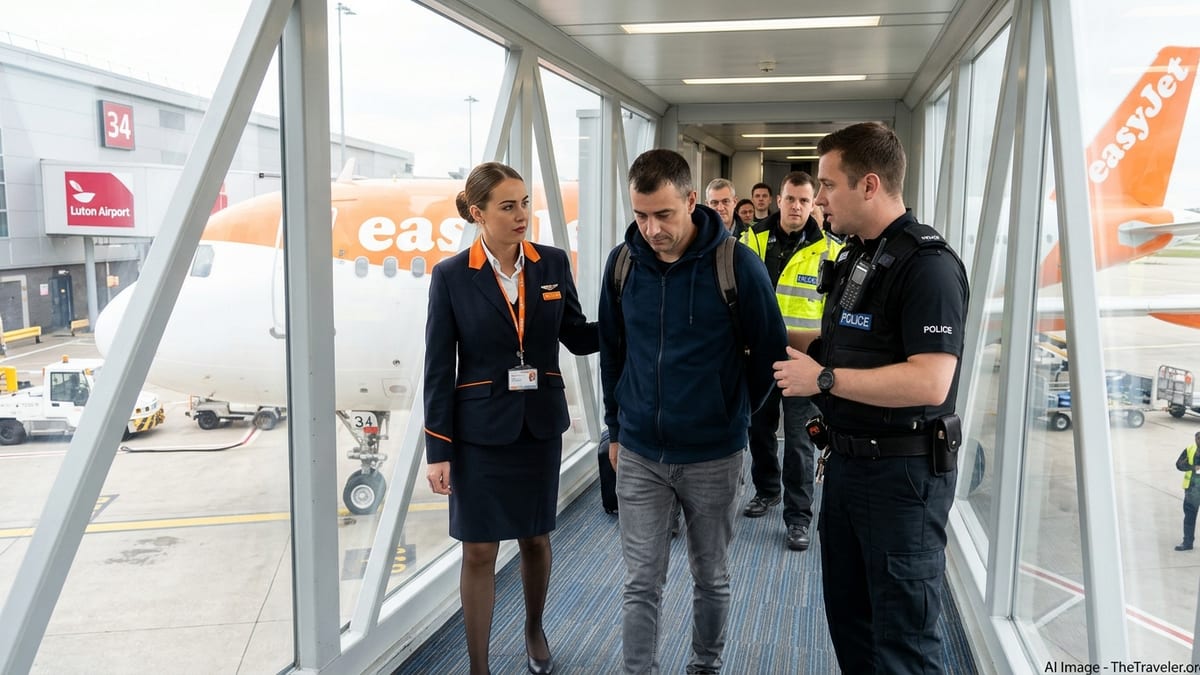
Passenger removed at gate after smoke alarm sounds
The incident occurred on easyJet flight U2404, also marketed as EZY404, operating from London Luton Airport to Glasgow on Monday 16 November 2026. The aircraft had not yet left the gate when the lavatory smoke detector activated, with multiple outlets citing reports that a male passenger lit a cigarette in one of the onboard toilets.
According to departure records, the service was scheduled to leave Luton at 13:00 but did not push back until 13:48, a delay of just under 50 minutes compared with schedule. Flight-tracking data indicate the A320 departed at 13:56 and arrived in Glasgow at around 14:54, about 40 minutes behind its planned 14:15 arrival time. Despite the disruption, there were no reports of injuries and no need for an air-turnback or diversion.
Cabin crew intervened after the alarm sounded and the passenger was removed from the aircraft while it remained on stand. easyJet confirmed that flight EZY404 on 16 November was met by police at Luton prior to departure due to what the airline described as a “passenger behaving disruptively onboard.” Authorities have not publicly disclosed the individual’s identity or whether any specific charges or fines were imposed.
Smoking and vaping banned on all UK airlines
The incident highlights how inflight smoking is treated as a safety and legal issue rather than a minor rule breach on UK carriers. The UK Civil Aviation Authority states that smoking and vaping are prohibited on all UK airlines, in line with the Air Navigation Order 2016 and associated operating regulations that require operators to prevent smoking in any part of the aircraft.
Under Article 243 of the Air Navigation Order 2016, passenger misconduct that includes smoking where it is not permitted can constitute a criminal offence. Official guidance notes that offences under this part of the Order may attract fines of up to £2,500 on conviction, and cases are typically handled by the police and prosecuting authorities rather than airlines alone.
In addition to any legal consequences, operators can impose their own measures. easyJet’s terms and conditions explicitly reserve the right to refuse carriage or remove a passenger from a flight if they have smoked or attempted to smoke in the airport, outside designated areas, or on board. The airline can also decline further transport where it reasonably believes a passenger’s behaviour endangers safety or security.
Impact on fellow travelers and operations
For passengers booked on U2404 on 16 November, the consequences were primarily time related. The late pushback from Luton and delayed arrival in Glasgow meant those with onward travel, such as rail connections or domestic transfers booked on separate tickets, faced a tighter margin or potential missed links. No cancellation was reported and the sector operated normally once the disruptive passenger had been offloaded and safety checks were completed.
Smoking incidents in aircraft lavatories can have much wider operational effects when they occur in flight rather than on stand. Lavatory smoke alarms are treated conservatively by crews because they are designed to detect possible fire. In more serious cases, such alerts can trigger emergency responses, including flight diversions, priority landings and the deployment of airport fire and rescue services, all of which can disrupt schedules and create significant costs.
In this case, the alarm activated before departure, allowing crew and ground staff to manage the situation without an airborne emergency. Even so, standard procedures required the removal of the passenger, liaison with police at the aircraft door and the completion of necessary reports before the flight could continue, extending the delay for everyone on board.
What travelers should know about inflight smoking rules
Travelers on UK airlines should assume that any form of smoking or vaping inside the aircraft, including in toilets and galley areas, is prohibited at all times, regardless of whether the seatbelt sign is on. This applies to traditional cigarettes, e-cigarettes and heated tobacco devices as well as any attempt to tamper with or disable lavatory smoke detectors, which itself may constitute an offence.
Passengers found breaching these rules can expect at minimum to be reported to the authorities on arrival and may face on-the-spot questioning, formal interviews and potential prosecution under aviation or public order legislation. Airlines may also refuse to carry the individual on the affected flight and, under their conditions of carriage, can consider longer-term bans in response to serious misconduct, particularly where safety has been put at risk.
Before travelling, passengers who are unsure about carrier-specific policies should review the airline’s conditions of carriage and any safety information supplied with their booking. On board, cabin crew safety briefings and seat-pocket cards set out the key prohibitions, and illuminated “no smoking” signs remain in use throughout the flight. Adhering to these rules helps avoid delays like those experienced on the Luton–Glasgow service and reduces the risk of legal trouble at the end of the journey.