


For many travelers in 2026, the highlight of a trip is no longer a museum or a skyline view but a bowl of hand-rolled pasta in a Roman kitchen, a steaming bamboo basket of dumplings in a Shanghai apartment, or a taco lesson in a backyard in Los Angeles. Two platforms dominate this hunt for local food experiences: Eatwith and Airbnb Experiences. Both promise meals and cooking classes with locals, but they work differently and feel different once you sit down at the table. This guide compares how each platform actually performs on the ground so you can decide where to book your next memorable meal.
Get the latest updates straight to your inbox!
How Eatwith and Airbnb Experiences Work
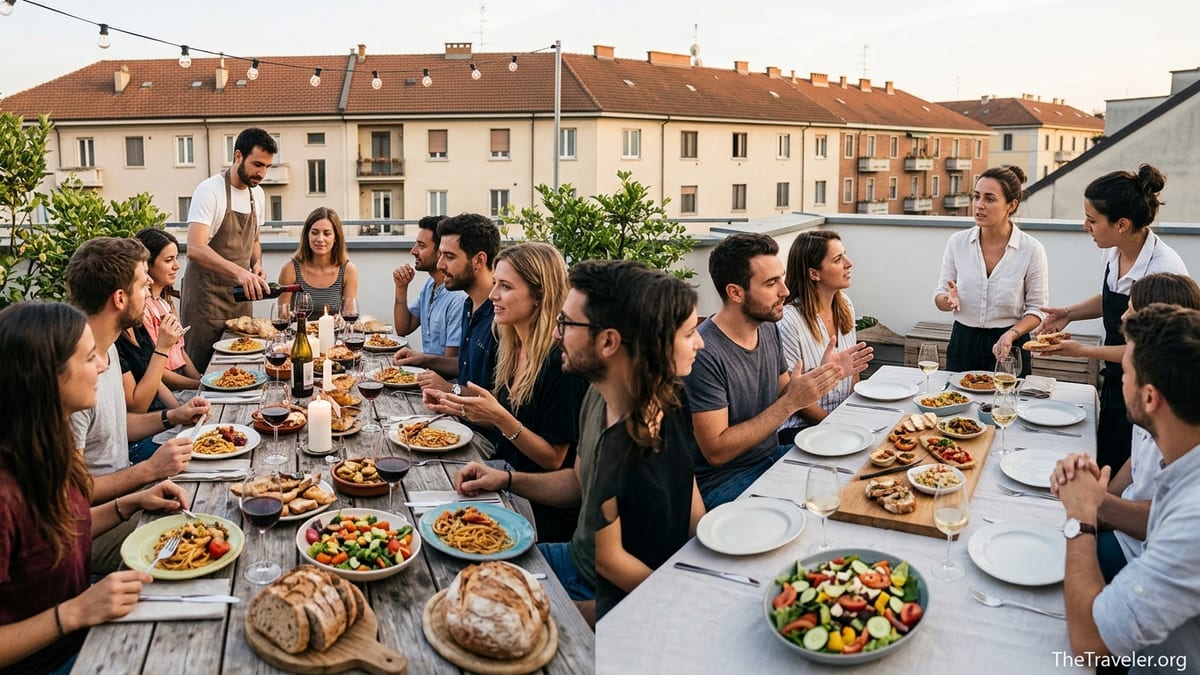
Eatwith is a specialist platform built entirely around food. Hosts are usually home cooks, professional chefs, food tour guides, or small restaurateurs who open their kitchens, dining rooms, or favorite markets to travelers. Bookable activities include shared dinners at a long table in a Paris apartment, rooftop brunches in New York, paella classes in Barcelona, and food tours in London or San Francisco. The company explicitly frames itself as a way to “eat with locals,” and its booking flow, categories, and host profiles are all focused on mealtimes, food culture, and small groups.
Airbnb Experiences sits inside the much larger Airbnb ecosystem, next to regular accommodation listings. Experiences cover everything from DJ workshops and street art walks to kayaking tours, with food and drink as just one category among many. On the main Experiences page, you will see food tours in cities like Atlanta or Nashville next to art classes, fitness sessions, and live music nights. In recent product updates in 2026, Airbnb has highlighted food culture as a major growth area, adding thousands of new cooking classes, tastings, and chef-led dinners in cities such as Rome, Tokyo, and Paris.
In practice, this means Eatwith is a niche tool for people who already know they want a food experience, while Airbnb is a broad marketplace where you might book a cooking class alongside your apartment. Both let you browse by city and date, filter by price and language, and pay securely in-app, but the feel of the search is different. Eatwith searches tend to surface only culinary events with detailed menus and host bios, while Airbnb’s interface nudges you toward a mix of activities, with food slotted into a wider trip plan.
For a traveler heading to, say, San Francisco, Eatwith might show a plant-based dinner in a Mission District loft, a sourdough bread workshop, and a chef’s tasting menu in a small pop-up space. Airbnb Experiences in the same city could show a North Beach pizza crawl, a taco and mural tour in the Mission, plus non-food activities like sunset sailing on the bay. Your choice of platform may start with how single-minded you are about food versus building a more varied schedule.
Depth of Local Connection and Authenticity
Travelers usually book these platforms for one core promise: a more local, less touristy way to eat. Eatwith is structured to maximize that feeling. Many listings take place in private homes or informal venues. A typical evening might involve joining eight other guests in a Barcelona apartment for homemade tapas, chatting with the host’s friends, and finishing the night with vermut on a balcony. In Rome, Eatwith commonly features pasta or market-and-cooking classes led by cooks who grew up in the neighborhood, sometimes followed by a family-style meal on a courtyard terrace.
Because Eatwith restricts itself to culinary experiences, hosts tend to lean into storytelling about their city’s food culture. Descriptions often emphasize family recipes, regional products, and local markets. For example, an Eatwith dinner in San Francisco might highlight Dungeness crab when in season, sourdough from a neighborhood bakery, and wines from small North Coast producers. You are more likely to hear why a host uses a certain olive oil or where they buy their cheese than on a big-group walking tour.
Airbnb Experiences can still deliver strong local connection, especially when you choose small-group or home-based offerings. A private hands-on cooking experience in La Quinta, California, hosted by a Le Cordon Bleu–trained chef illustrates the format: the host travels to a guest’s rental, guides them through a curated menu, then sits down to eat together. In South Florida, a food-and-drink experience may involve visiting family-run Cuban bakeries and Haitian restaurants that do not usually appear on mainstream tourist maps. Many of these tours are led by journalists, food writers, or long-time residents who weave in history and neighborhood politics.
The main difference is consistency. Because food is only one category on Airbnb and the bar for hosting is relatively broad, the spectrum runs from deeply personal home dinners to fairly generic bar crawls. Some guests report outstanding, intimate food tours that feel like being shown around by a friend, while others have shared stories of disappointing experiences that felt rushed or commercial. With Eatwith, the baseline expectation is more clearly centered on a shared table and conversation, which tends to filter for hosts motivated by hospitality as much as side income.
Types of Food Experiences and Where Each Platform Shines
If you already know what kind of food experience you want, the platforms line up differently. Eatwith is particularly strong for sit-down meals and small-format cooking classes. In big cities like Paris, Barcelona, and New York, you will find communal dinners in private homes, chef’s table tasting menus, and brunches on rooftops or in hidden gardens. Cooking classes often focus on one cuisine or technique, like handmade pasta in Rome, dim sum in Hong Kong, or mezze spreads in Tel Aviv, followed by a full meal around the same table where you cooked.
Airbnb Experiences excels at hybrid activities where food is part of a bigger story. Food tours are a clear example. In Atlanta, you might join a Beltline food and street art tour that pairs local dishes with graffiti and neighborhood history over two and a half hours, typically costing around 90 to 100 dollars per person. In Nashville, popular experiences include donut-focused city tours and ice cream making sessions that combine dessert tastings with behind-the-scenes looks at small businesses. These tend to move through multiple venues and involve more walking and photography than lingering over one long meal.
Both platforms offer market tours plus cooking classes, which have grown especially popular in destinations such as Rome, Tokyo, and Bangkok. In Rome in 2026, a market-and-cooking format typically costs the equivalent of about 130 to 180 US dollars per person for a half-day that includes tastings at a market like Testaccio or Campo de’ Fiori, hands-on cooking in a teaching kitchen, wine, and a seated lunch or dinner. That structure appears on Eatwith and Airbnb Experiences alike, often run by the same local companies cross-listing on both platforms to fill their classes.
For travelers who love staying “in,” Airbnb has a unique advantage because some experiences are designed to take place directly in your rented apartment or house. A private chef may come to your cabin in Colorado or your villa in Portugal to cook a multi-course meal or teach a class using your kitchen. While private chef services can run anywhere from about 85 to 250 dollars per guest for a full dinner in 2026, they can transform a remote stay into what feels like a pop-up restaurant. Eatwith offers some private chef-style bookings too, but its center of gravity remains shared tables in host-selected spaces rather than in your own rental.
Pricing, Group Size, and Value for Money
On both platforms, prices vary widely by city, format, and group size, but some general ranges have emerged in 2026. Simple tasting walks or bakery tours in Western cities often start around 45 to 70 dollars per person. More comprehensive food tours that include several sit-down stops, drinks, and a guide’s time usually run in the 80 to 120 dollar range. Hands-on cooking classes with full meals typically fall between 100 and 180 dollars per person in major European and North American cities, with higher prices for premium ingredients or very small groups.
Eatwith skews toward small, often fixed-size groups. A dinner might cap at 8 to 12 guests at a single table, with prices in the 70 to 120 dollar range that cover multiple courses, wine, and sometimes an aperitif. Because overhead is lower for a home cook than for a restaurant and there is no extra venue fee, you often get a multi-course meal comparable to a mid-range restaurant tasting menu at a similar or slightly lower price. For example, in a Mediterranean city, a seafood-themed Eatwith dinner with local fish, wine pairings, and dessert might cost about 90 dollars per person, which is close to what you would pay at a trendy bistro but with fewer people and more direct contact with the chef.
Airbnb Experiences has a broader spread. Budget-friendly options like 45 dollar ice cream workshops in Nashville or coffee tastings in smaller cities sit alongside high-end offerings such as chef collaborations in markets or Michelin-adjacent kitchens, where prices can exceed 200 dollars per person. Because Airbnb often routes guests into mixed experiences with strangers, you may find larger group sizes on some tours. A downtown tapas walk might take up to 16 guests on a busy evening, which keeps the per-person cost down but dilutes intimacy. Smaller, premium listings sometimes limit groups to six or fewer and charge accordingly.
When it comes to value, the best benchmark is how much actual food, drink, and one-on-one interaction you receive relative to the price and duration. A three-hour Eatwith dinner with generous pours of wine and a host guiding you through each dish can feel like excellent value at 100 dollars, especially in expensive cities. A 90 dollar walking tour that provides only minimal tastings and little seating time may feel less satisfying, regardless of platform. Carefully reading menus, inclusions, and recent reviews is crucial before booking.
Quality Control, Safety, and Reviews
Both Eatwith and Airbnb Experiences vet hosts to some extent and rely heavily on guest reviews to maintain overall quality. Eatwith’s smaller scale and singular focus on food arguably allow for tighter curation. The platform spotlights featured hosts in major cities, and many listings emphasize the host’s professional background, whether they are former restaurant chefs, food writers, or culinary school graduates. Because fewer new hosts join compared to a giant marketplace, underperforming listings can be easier to identify and phase out over time.
Airbnb Experiences benefits from its massive user base and brand recognition, which bring in a constant flow of reviews. In its own statements, Airbnb notes that Experiences receive very high average ratings, close to a 4.9 out of 5, and has been expanding food culture experiences through partnerships with well-known culinary institutions and markets. However, travelers should read detailed reviews, not just star scores. Recent discussions among hosts and guests online indicate that while many Experiences are excellent, disputes about quality or refunds can be harder to resolve when customer support is stretched.
Safety considerations are similar on both platforms. You book and pay through the platform, your host and meeting locations are documented, and group sizes are visible. It is still wise to favor experiences with many recent reviews, clear logistics, and transparent information about what and where you will eat. For example, a food tour that names specific neighborhoods, mentions how dietary restrictions are handled, and lists approximate timing for each stop is generally more trustworthy than a vague “city food crawl.”
On the food safety side, look for signs that hosts are conscious of allergies, sanitation, and pacing. Many Rome or Bangkok cooking classes explicitly note that gluten-free or vegetarian options can be accommodated with advance notice. In a home setting, rely on reviews to see if past guests felt comfortable with cleanliness and kitchen standards. When in doubt, messaging the host with specific questions before booking is an easy way to gauge professionalism on either platform.
When Eatwith Is the Better Choice
Eatwith tends to be the stronger platform when your top priority is a slow, social meal that feels like being invited to a local friend’s home. If you are traveling as a couple or small group and want to meet other travelers and residents over a long dinner, the typical Eatwith format of 8 to 12 people around one table is hard to beat. It is especially appealing in cities where restaurant reservations are competitive or solitary diners feel awkward occupying a table for two hours.
For solo travelers, Eatwith dinners often become instant micro-communities. You might sit between a local graphic designer and a visiting family from another continent, sharing dishes that rarely appear on tourist menus. In addition, the host’s home surroundings add context: you see how a Parisian stocks their fridge, or how a Lisbon apartment kitchen is laid out, details that hotel-based travelers rarely encounter.
Eatwith also makes sense if you are specifically interested in home-style or regional cuisines that can be hard to find in standard restaurants. A Georgian supra-style feast prepared by a host whose family recipes predate the current restaurant boom, or a Persian New Year dinner cooked by second-generation immigrants in London, often appear first on specialist platforms like Eatwith rather than mass-market tour sites. If your goals involve slow conversation, shared platters, and cultural immersion more than hitting multiple photo spots, Eatwith is the logical starting point.
Finally, for travelers who prefer to support small-scale, often independent hosts whose primary canvas is their own kitchen or dining room, Eatwith’s narrower focus can feel more aligned with their values. You are rarely funneled into large groups or corporate-run experiences. While prices can be similar to popular restaurants, more of what you pay flows directly to the host rather than to marketing and third-party agencies.
When Airbnb Experiences Has the Edge
Airbnb Experiences comes into its own when you want variety, flexibility, and the ability to centralize your trip planning in one app. Because it sits next to your accommodation booking, you can design a long weekend in Lisbon that includes a pastry class, a neighborhood fado walk, and a day trip to a vineyard without leaving the platform. For many travelers, this convenience outweighs the slightly more curated feel of niche sites.
In major cities worldwide, Airbnb usually offers a wider number of food experiences per date than Eatwith. You might have dozens of cooking classes, tastings, and food tours to choose from on a Saturday in Paris or Tokyo, ranging from croissant workshops in patisseries to izakaya crawls with craft beer tastings. This density can be useful for last-minute planners who want a same-day activity or are traveling in peak season when smaller platforms sell out early.
Families and groups with mixed interests may also do better on Airbnb Experiences. One afternoon, parents can book a child-friendly pizza making class while teens join a street photography walk, all through the same interface. Food may be one part of the day rather than the centerpiece. In beach destinations or resort areas where the restaurant scene is more spread out, Airbnb’s partnerships with local guides often produce car-based or boat-based food excursions that blend scenery, swimming stops, and simple meals.
Lastly, frequent Airbnb users value the familiar review and messaging system. If you already have the app, your payment details saved, and a sense of how host ratings work from booking accommodations, transitioning into Experiences feels seamless. For travelers who prefer to keep all reservations in one place rather than managing multiple sign-ins and confirmation emails, that simplicity can be decisive.
The Takeaway
Choosing between Eatwith and Airbnb Experiences for local food often comes down to what you picture when you imagine your ideal meal abroad. If it is a long table in a stranger’s apartment with homemade dishes and stories that stretch late into the evening, Eatwith is likely to deliver more consistently. Its entire design favors intimate, food-only encounters that turn dinner into a cultural exchange rather than a quick stop on a tour.
If instead you see food as one thread in a wider tapestry of activities, or you want the convenience of booking everything from your accommodation to your cooking class in a single app, Airbnb Experiences is a versatile tool. It offers a bigger catalog of food tours, market visits, and hybrid experiences, from croissant baking in Paris to donut walks in Nashville, curated within a platform you may already be using.
In reality, many travelers now mix and match. You might book a single Eatwith dinner to anchor your week with one deep local connection, then use Airbnb Experiences for flexible daytime activities and spontaneous tastings. Whatever you choose, the key to a memorable local food experience in 2026 is the same: prioritize small groups, detailed descriptions, and hosts who clearly love both cooking and conversation. With that filter, both platforms can transform a standard city break into a trip you remember every time you recreate that dish back home.
FAQ
Q1. Which platform is better for a truly local home dinner, Eatwith or Airbnb Experiences?
Eatwith usually has the edge for home dinners, because most listings are meals hosted in private homes or very small venues, with 8 to 12 guests sharing a single table and the host cooking on-site.
Q2. Are food experiences on Eatwith more expensive than on Airbnb Experiences?
Prices are broadly similar, but Eatwith often offers strong value on multi-course dinners with wine, while Airbnb Experiences has a wider range that includes both cheaper tastings and higher-end, premium collaborations.
Q3. How far in advance should I book popular food experiences?
In major cities and during peak seasons, it is sensible to book 2 to 4 weeks ahead for signature dinners or cooking classes on either platform, especially if you have specific dates or dietary needs.
Q4. Which platform is better for solo travelers who want to meet people?
Eatwith dinners are well suited to solo travelers because everyone sits together and shares dishes, while Airbnb Experiences can be better if you prefer structured group tours with more walking and less table time.
Q5. Can I rely on reviews to judge food safety and quality?
Reviews are a useful guide on both platforms, but read recent, detailed comments about cleanliness, portion sizes, and communication rather than looking only at star ratings.
Q6. Is it easier to handle dietary restrictions on Eatwith or Airbnb Experiences?
Both allow you to message hosts in advance, but Eatwith hosts often design menus themselves and may be more flexible with vegetarians, vegans, or gluten-free guests if informed early.
Q7. Which platform offers more options in smaller or less touristy destinations?
Airbnb Experiences typically has broader geographic coverage, so if you are visiting a smaller city or rural area, it is more likely to have at least a basic food tour or cooking activity available.
Q8. Are private chef experiences better booked through Airbnb or Eatwith?
Airbnb tends to feature more private chef options that take place directly in your rental, which can be useful for villas and cabins, though Eatwith also lists some curated private meals in host-selected spaces.
Q9. How do cancellation policies compare between the two platforms?
Both platforms offer hosts a choice of cancellation rules, so policies vary by listing; always check the specific experience page to see how late you can cancel and whether refunds are partial or full.
Q10. If I could only book one experience, which should I choose for maximum cultural immersion?
Many travelers find that a single, small-group home dinner or cooking class, especially on Eatwith or with a highly rated Airbnb host, gives the deepest insight into local life compared to larger, faster-paced tours.