


In destinations as different as Paris, Tokyo, and Mexico City, a growing number of travelers are slipping away from crowded restaurant strips and into local homes, community kitchens, and rooftop terraces to share a meal with strangers. Increasingly, they are finding those seats at the table through Eatwith, a social dining platform that connects visitors with vetted hosts for small, hosted experiences, from homemade dinners to pasta classes and neighborhood food tours. As post-pandemic travelers chase more meaningful connections and authentic flavors, Eatwith has quietly become one of the most talked-about ways to eat like a local abroad.
Get the latest updates straight to your inbox!
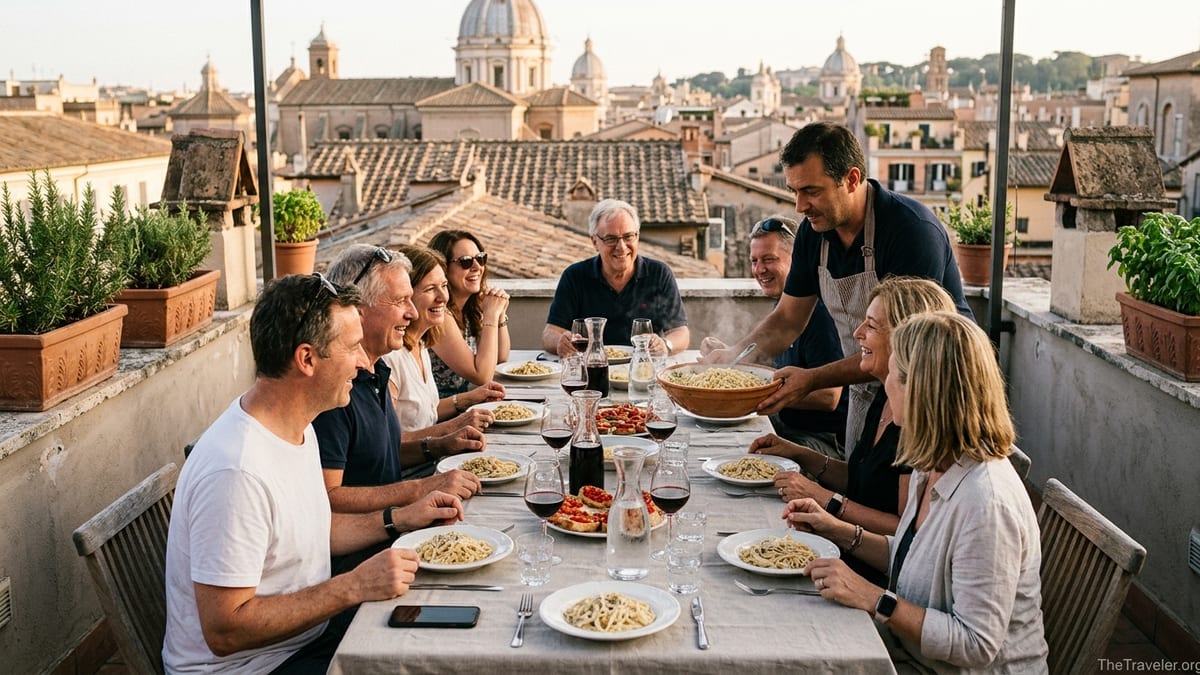
From Restaurant Reservations to Local Dining Rooms
Over the past few years, travelers have watched reservation platforms make it easier to book high-demand restaurants around the world. Yet many people are discovering that snagging a table at a buzzy spot in Barcelona or New York does not necessarily lead to a memorable cultural experience. You can eat well, but you may leave having learned little about how locals really cook, shop, or gather. Eatwith responds to that gap by inviting guests into private spaces, where the dinner itself is only part of the story.
Founded as a home-dining community, Eatwith now works with thousands of hosts in cities across Europe, North America, Asia, and Latin America. Instead of browsing a list of restaurant names, you scroll through profiles of individual cooks and storytellers. In Rome, for example, you might book an evening with Barbara and Federica, two longtime hosts in Trastevere known for their family-style Roman feasts served in a cozy, art-filled apartment. Guests sit around one long table for multiple courses, wine included, leaving with recipes, restaurant tips, and often new travel friends.
For many travelers, this sort of night becomes the highlight of a trip because it feels like being invited to a friend’s house rather than being processed through a busy dining room. A couple visiting Paris might skip a third bistro dinner and instead choose a small-group cheese and wine night in the 11th arrondissement, hosted by a local affineur who walks them through classic French cheeses and everyday etiquette around the French table. The setting, usually a living room or private tasting space, allows for casual questions and unhurried conversation that are rare in time-pressed restaurants.
This shift from anonymous tables to personal hosts mirrors a broader travel trend: people want their money to buy experiences that feel specific, not interchangeable. Eatwith experiences vary widely in style and price, but what they share is a sense of being welcomed into someone’s world, not just their place of business.
Why “Authentic” Now Means Sitting With Locals
As international travel has bounced back, many of the world’s most visited cities have struggled with overtourism and a sense of sameness. The main dining streets of Lisbon, Athens, or Prague often feature nearly identical menus and English-language touts competing for attention. Dining with an Eatwith host offers an alternative path that often leads into residential neighborhoods and home kitchens that ordinary visitors would never see.
Consider a typical Eatwith evening in Barcelona’s Gracia district. Instead of joining the crowds just off La Rambla, you might head up quiet side streets to a fourth-floor apartment where a local couple prepares a seasonal Catalan menu. Pan con tomate is made with tomatoes from the neighborhood market, while seafood rice might feature whatever looked best that morning at the Boqueria. Between courses, the hosts explain why locals eat late, how family meals work during festivals, and where they themselves go out for tapas when friends visit. Authenticity here is not a marketing label; it is the natural byproduct of being in someone’s home.
In Tokyo, Eatwith experiences can look very different but serve the same hunger for real-life context. Guests might join a small sushi-making workshop in a residential ward, where a home cook explains how everyday Japanese families shop for fish, what dishes are reserved for holidays, and how convenience-store food actually fits into busy urban life. The chance to ask candid questions about everything from chopstick etiquette to sake preferences turns a cooking session into a cross-cultural exchange.
These intimate settings are especially appealing to repeat travelers who have already checked off the classic restaurant experiences and want something deeper. A family returning to Florence for a second visit may feel less compelled to book another fine-dining tasting menu and more intrigued by an Eatwith class that starts with a visit to Sant’Ambrogio Market before everyone heads back to the host’s kitchen to make fresh pici pasta.
How Eatwith Works in Practice
On a practical level, Eatwith functions much like other sharing-economy platforms, but with a sharp focus on food. Travelers search for experiences by city and date, filtering by type of event, such as home-cooked dinners, cooking classes, or food tours. Each listing shows a clear per-person price, what is included, guest reviews, and a photo-rich description of the host’s background and the menu or activity.
Prices vary depending on the destination and format. A casual home-style dinner in Lisbon might start around the equivalent of 40 to 55 US dollars per person, usually including several courses and wine. In Paris or London, where food and rent costs are higher, travelers can expect to see many dinners and tastings in the 70 to 100 dollar range. Hands-on cooking classes that run three to four hours and include a full meal often fall somewhere between these brackets. In major European capitals, it is common to see small-group classes advertised at roughly 90 to 120 dollars per person, especially when high-quality ingredients, wine, or a market visit are part of the experience.
Booking is handled directly on the platform, with instant confirmation for most events. Similar to other peer-to-peer services, payment is processed in advance, so no cash changes hands during the evening unless guests want to leave a discretionary tip. Many travelers appreciate that the listing spells out exactly what is included, whether that means a set number of wine pairings, vegetarian options, or a guaranteed small group size.
Another practical advantage is flexibility. Solo travelers can join communal dinners without feeling out of place, while families can often reserve private evenings or request child-friendly menus. In many cities, hosts are accustomed to accommodating dietary needs such as vegetarian, pescatarian, or gluten-free meals when notified in advance. That responsiveness, combined with the chance to message hosts through the platform before booking, gives cautious travelers more confidence than simply wandering into an unknown restaurant.
Real-World Examples: From Roman Feasts to Tapas Rooftops
One of the clearest reasons more travelers are turning to Eatwith is the growing number of specific, memorable experiences being shared in reviews and word-of-mouth recommendations. In Rome’s Trastevere neighborhood, for instance, long-running hosts have built reputations for multi-course Roman feasts served at large communal tables. A typical evening might begin with an aperitivo of prosecco and seasonal bites, move into classic dishes like cacio e pepe or amatriciana, and end with homemade tiramisu and local digestifs, all within a price range that is roughly comparable to a mid-tier restaurant menu with wine.
In Barcelona, rooftop paella nights have become a staple of the platform. Travelers who might otherwise struggle to access residential terraces with skyline views can, through Eatwith, book an evening where a local host demonstrates how to prepare sofrito, talks about regional rice varieties, and then serves the finished paella alongside Catalan wines. For roughly what a tourist-focused paella menu would cost near the waterfront, guests gain both a meal and an informal cooking lesson.
Elsewhere, the platform is expanding beyond classic dinner parties. In Mexico City, hosts offer mole workshops that trace family recipes from Oaxaca to modern home kitchens, while in Tel Aviv travelers can join Shabbat dinners that blend traditional dishes with contemporary Israeli cuisine. In each case, the format varies, but the through line remains a direct, face-to-face encounter with someone who lives the local food culture daily.
These real-world examples underscore how Eatwith fits naturally into existing itineraries. Travelers might book a single evening in a city like Lisbon as a centerpiece experience, or string together multiple events across a longer journey, such as a Paris wine-and-cheese night followed by a Lyon bouchon-style dinner and a Provence picnic workshop.
Social Connection in an Era of Solo and Remote Travel
Another powerful draw of Eatwith is social connection. With the rise of solo travel, remote work, and digital nomad lifestyles, more people are spending extended periods abroad without the built-in community that comes with group tours or all-inclusive resorts. A seat at a small communal table can quickly turn strangers into dinner companions, and sometimes lasting friends.
Solo travelers in particular often describe Eatwith evenings as an antidote to self-conscious restaurant meals. Instead of asking for a table for one in a busy dining room, a solo guest joins six to ten others around a host’s table. Conversation usually begins with easy topics like where everyone is from or what they did that day, then naturally deepens as the food arrives. Because nearly everyone is a visitor, there is an unspoken permission to ask naïve questions about local culture without fear of judgment.
Remote workers and long-stay visitors also use Eatwith to break out of expat bubbles. Someone spending a month in Lisbon on a workation might join one or two different experiences each week, from a seafood-focused dinner in a local’s apartment to a pastel de nata baking class in a shared kitchen space. Over time, they build a loose network of hosts and fellow guests, along with an evolving list of neighborhood recommendations that rarely appear in guidebooks.
Even for couples and families, these social evenings can be a way to balance days of sightseeing with nights that feel more like visiting old friends. Parents report that multi-generational cooking classes, where grandparents and children roll pasta or shape dumplings side by side, become core shared memories that outlast many museum visits. Eatwith’s small-group format, typically under 12 guests, keeps the atmosphere relaxed rather than overwhelming.
Comparing Eatwith to Traditional Restaurants and Tours
Eatwith is not a replacement for restaurants or classic food tours; instead, it sits somewhere between them. A restaurant offers professional service, a full menu, and predictable hours. A guided food tour moves guests efficiently through multiple stops so they can sample a city’s highlights in a few hours. Eatwith combines some elements of both while adding the intimacy of a private gathering.
Cost-wise, many Eatwith dinners are in the same range as a mid-range restaurant in equivalent neighborhoods. A three-course dinner with wine in central Rome or Paris can easily climb above 60 or 70 dollars per person after service and tax. Many Eatwith evenings fall close to that mark, particularly when wine, aperitifs, and dessert are factored in. For travelers already budgeting for one special meal in each city, the question is less about spending more and more about how they want that money translated into experience.
Compared to group food tours, Eatwith events usually involve fewer people and linger longer in one place. Instead of walking from bakery to market to bar, guests settle into a single home or studio. That slower pace allows for questions about everyday life that do not fit neatly into a quick tasting stop. A host might pull out family photo albums, share memories of city changes over decades, or explain subtle etiquette around shared dishes that even local restaurants assume you already know.
There are trade-offs. Professional restaurants can typically accommodate last-minute walk-ins, while many Eatwith events need to be booked in advance and may not run every night. Some travelers also prefer the formality and polish of restaurant service to the casual, sometimes improvisational nature of a home gathering. Yet for those specifically seeking stories and connection, the balance often tilts toward the Eatwith side of the equation.
Practical Tips for Booking an Eatwith Experience
For travelers curious about trying Eatwith, a bit of planning goes a long way. It is wise to browse options as soon as flights or trains are booked, especially for popular cities such as Rome, Barcelona, Paris, and Lisbon. Prime weekend evenings and unique events, like rooftop dinners or market-plus-cooking combinations, can sell out weeks in advance during peak seasons.
Reading host profiles closely helps match expectations. Some hosts are professional chefs or food tour guides who have turned their expertise into intimate events. Others are talented home cooks who emphasize conversation and cultural stories as much as the menu itself. Reviews often mention details that matter on the ground, such as whether portions are generous, how interactive the cooking component is, or how many guests typically attend.
It is also important to communicate dietary needs early. Many Eatwith experiences can accommodate vegetarians, pescatarians, or guests who avoid certain ingredients, but not every menu is easily adaptable. Travelers with severe allergies or strict religious dietary rules should message hosts before booking to confirm what is realistically possible. Because these meals are usually served family-style, clarity up front helps avoid awkward adjustments at the table.
Finally, logistics matter. Hosts normally provide clear directions to meeting points, which might be a metro stop, a neighborhood square, or the building entrance itself. Leaving extra time for public transport or navigation is wise, especially in cities with winding historic centers. Arriving a few minutes early not only reduces stress but also allows guests to meet the host and fellow diners as they trickle in, setting a relaxed tone for the night.
The Takeaway
The growing popularity of Eatwith reflects a deeper shift in why and how people travel. As flights and hotels become easier to book and destinations more crowded, the human connections behind a trip increasingly define whether it feels meaningful. A home-cooked dinner in Trastevere, a paella rooftop in Barcelona, or a sushi workshop in a Tokyo apartment can turn a standard vacation into a collection of vivid, personal stories.
For travelers willing to trade some of the polish of traditional restaurants for the warmth of a shared table, Eatwith offers a straightforward path into local life. It is not the only way to eat authentically abroad, but it has become one of the most accessible, particularly for solo travelers, remote workers, and repeat visitors who crave genuine interaction. As more hosts open their doors and more guests share their experiences, sitting down to dinner with strangers may become as essential a travel ritual as visiting a city’s top museum or viewpoint.
FAQ
Q1. What exactly is Eatwith?
Eatwith is a social dining platform that connects travelers with vetted local hosts for small-group experiences such as home-cooked dinners, cooking classes, and food-focused walks.
Q2. How much do Eatwith experiences typically cost?
Prices vary by city and format, but many home dinners in Europe fall in the range of roughly 40 to 100 US dollars per person, with more elaborate cooking classes at the higher end.
Q3. Is Eatwith safe for solo travelers?
Eatwith screens hosts and uses a review system, and most experiences are small-group events, which many solo travelers find safer and more comfortable than dining alone in unfamiliar areas.
Q4. Do I need to be an experienced cook to join a class?
No. Most Eatwith cooking classes are designed for beginners, with hosts guiding guests step by step through recipes, from rolling pasta to assembling desserts.
Q5. How far in advance should I book an Eatwith event?
For popular cities and weekends, it is sensible to book at least one to two weeks ahead, and longer in peak seasons such as summer or major holidays.
Q6. Can Eatwith hosts handle dietary restrictions?
Many can, particularly for vegetarian or pescatarian diets, but it is essential to message the host before booking to confirm whether they can safely accommodate specific needs or allergies.
Q7. What is included in the price of an Eatwith dinner?
Listings spell this out, but a typical price usually covers several courses, water, and often wine or another drink; some premium events add aperitifs, digestifs, or market visits.
Q8. How many people are usually at an Eatwith event?
Group sizes vary, but many dinners and classes host between 6 and 12 guests, which keeps conversation manageable and allows everyone to interact with the host.
Q9. Do I need to tip my Eatwith host?
Tipping is not always expected, as hosts set their own prices, but guests who feel they received exceptional hospitality sometimes offer a small cash tip or a detailed positive review.
Q10. Is Eatwith a good option for families with children?
Yes, provided you choose child-friendly listings. Many hosts welcome families, and cooking classes where kids can roll dough or decorate dishes are often especially popular.