


More news on this day
Travelers using Edmonton International Airport are facing a fresh round of disruption as three delays and six cancellations affect a string of Jazz, Air Canada and WestJet flights linking the Alberta hub with Calgary, Vancouver, Toronto and Montreal.
Get the latest news straight to your inbox!
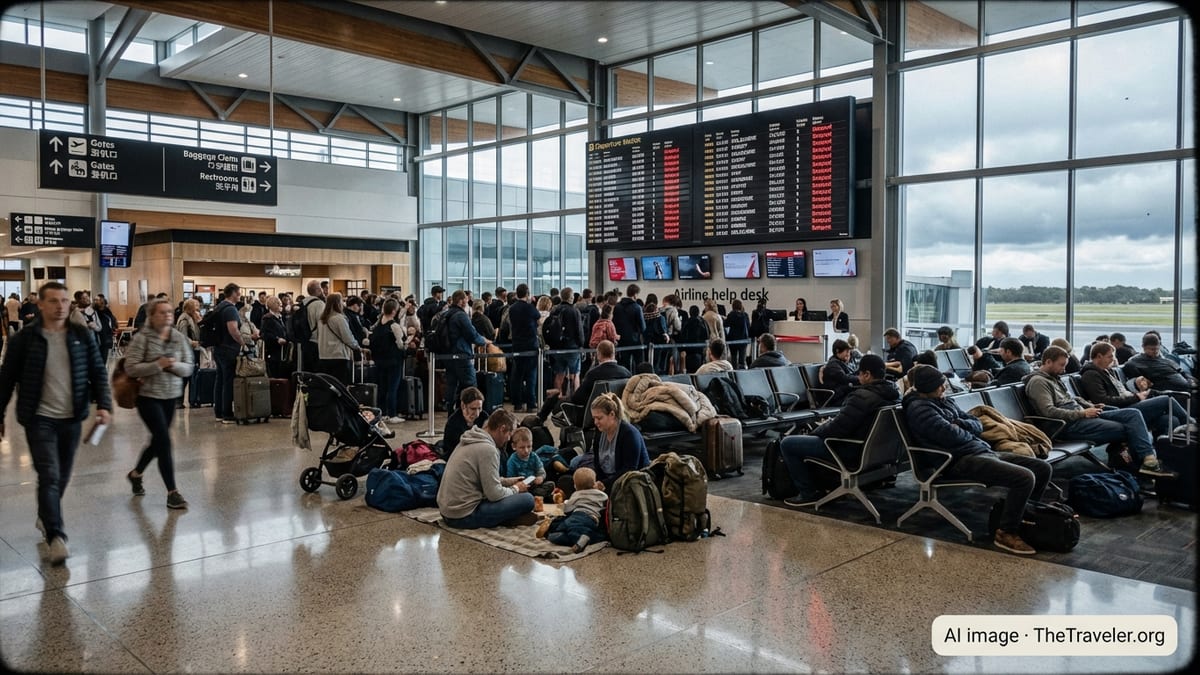
Operational Disruptions Ripple Across Major Canadian Routes
Publicly available flight tracking data for departures from Edmonton International Airport on June 9 indicates that a cluster of services to key Canadian hubs has been disrupted, with three flights delayed and six cancelled across regional carrier Jazz and mainline operators Air Canada and WestJet. The affected routes include high-frequency links to Calgary and Vancouver as well as longer domestic sectors to Toronto and Montreal, underscoring the vulnerability of some of the country’s busiest corridors.
The interruptions primarily touch flights marketed by Air Canada and WestJet and, in the case of Jazz, regional services operated on behalf of Air Canada. These routes typically connect Edmonton with national and regional hubs that offer onward connections across Canada, the United States and overseas, amplifying the impact for travelers with tight itineraries or same-day connections.
While specific causes vary by flight, recent patterns across Canadian networks point to a mix of factors that often contribute to short-notice disruption, including weather-related constraints at hub airports, aircraft rotation challenges and crew availability. When several issues overlap within a single operating day, even a small number of scrapped or late-running services can cascade into missed connections and rebookings for dozens of passengers.
The timing of the latest problems is particularly significant for Edmonton, which has been positioning itself as a growing western Canadian gateway with expanding domestic and international links. Any period of concentrated disruption on cornerstone routes to Calgary, Vancouver, Toronto and Montreal can quickly test both airline resilience and traveler patience.
Jazz and Air Canada: Regional Links Under Pressure
Regional operator Jazz, which flies under the Air Canada Express banner, plays a pivotal role in tying Edmonton into the wider Air Canada network, especially through short-hop services to Calgary and connections onward to Toronto and Montreal. Publicly available schedules show that these flights are often structured to feed peak bank departures at larger hubs, so even modest delays can carry outsized consequences for downline connections.
On affected Edmonton to Calgary rotations, the latest disruptions have translated into pushed-back departure times and, in several cases, cancellations that remove key options from the morning and midday schedules. Travelers relying on these flights to reach onward transcontinental or transatlantic services from Calgary, Toronto or Montreal may be forced into same-day rebookings, overnight stays or entirely reworked itineraries.
Delays on regional services can be particularly challenging because these flights usually operate with smaller aircraft and tighter schedules, leaving limited slack for recovery. When one flight arrives late into Edmonton, the aircraft and crew are often scheduled to turn quickly for another departure, increasing the risk that disruption on a single segment will echo across multiple routes.
Public information shows that Air Canada has, at times, leaned on schedule adjustments and selective cancellations in response to wider network pressures, including seasonal storms and resource constraints at major hubs. Today’s pattern at Edmonton appears consistent with a strategy of trimming specific flights to stabilize the broader timetable, though the trade-off is reduced choice and flexibility for travelers on affected routes.
WestJet Cancellations and Delays Complicate Western Connections
WestJet, which maintains a substantial network from Edmonton with frequent services to Calgary and Vancouver, is also among the airlines experiencing disruption today. Departures from Edmonton to these western hubs form a backbone of the carrier’s domestic offering, feeding connections onward to destinations across Canada, the United States and sun markets.
Current flight data indicates that WestJet has registered a mix of outright cancellations and delayed departures on its Edmonton services to Vancouver and Calgary, contributing to the total of six cancellations and three delays impacting operations from the airport. For passengers aiming to connect in Vancouver or Calgary to longer-haul flights to eastern Canada or international destinations, same-day plans may now involve longer routings, extended layovers or date changes.
Recent months have highlighted how quickly disruption at one western hub can spread across WestJet’s network. Weather systems in Calgary and Vancouver, combined with tight aircraft and crew utilization, have previously led to schedule thinning and same-day adjustments, and similar dynamics can be at play when multiple flights from Edmonton are altered on short notice.
For Edmonton-based travelers, the effect is not only fewer nonstop options but also reduced redundancy in case of problems. When both Air Canada and WestJet adjust operations on the same day across the same city pairs, the alternatives for rebooking between carriers become more limited, especially on peak travel dates.
Impact on Passengers and Options for Rebooking
For passengers caught up in today’s disruptions, the immediate effect is visible on departure boards in the form of delayed statuses and cancelled flights. The practical consequences can range from missing family events and business meetings to losing prepaid accommodation nights or tour reservations in destination cities such as Toronto and Montreal.
Publicly available consumer guidance for Canadian air travelers typically recommends that affected passengers check their flight status frequently on airline apps or airport information pages, and proceed to the airport only once a revised schedule is confirmed. When a flight is cancelled, eligible travelers can often opt for rebooking on the next available departure, a change of routing via an alternative hub, or, in some cases, a refund, depending on the airline’s policies and the underlying cause of the disruption.
For those traveling on complex itineraries that rely on Edmonton connections, same-day recovery can be more complicated. A cancelled or severely delayed leg to Calgary or Vancouver may invalidate downstream connections to Toronto, Montreal or beyond, and re-accommodation may involve longer routings with multiple connections or overnight stays. In such cases, maintaining documentation of expenses and disruption timelines is often advised for any subsequent claims under airline policies or applicable passenger protection rules.
Travelers on affected Jazz, Air Canada and WestJet services are also encouraged in publicly available resources to monitor gate announcements, review rebooking options through digital self-service tools, and consider contacting airline customer service as early as possible, particularly on days when multiple flights from the same departure point are being cancelled or delayed.
Broader Context for Edmonton’s Air Connectivity
The latest wave of delays and cancellations adds to a year in which airports across Canada have periodically contended with weather disruptions, staffing challenges and aircraft scheduling issues. Edmonton International Airport, which has been working to expand its portfolio of domestic and international routes, is not immune to these wider pressures, particularly when they affect major partners such as Air Canada, Jazz and WestJet.
Edmonton’s links to Calgary, Vancouver, Toronto and Montreal are central to the region’s connectivity, providing access to national business centers, cultural events and onward long-haul flights. When multiple flights on these corridors are adjusted within a short window, it underscores how closely the city’s travel prospects are tied to the operational resilience of a handful of key airlines and hubs.
Aviation analysts frequently note that some degree of disruption is inevitable in complex networks, especially in a country where weather can swiftly constrain airport operations. However, a cluster of nine affected flights in a single day on core domestic routes serves as a reminder for travelers to build extra time into itineraries, particularly when planning critical same-day connections through Calgary, Vancouver, Toronto or Montreal.
As airlines and airports refine schedules and adjust capacity heading into the busier summer period, performance on these key Edmonton routes will remain a closely watched indicator of how reliably western Canada’s air links can support both local demand and the broader national network.