


More news on this day
Hundreds of travelers were left scrambling for alternatives this week as a cluster of EgyptAir and Buraq Air cancellations disrupted at least eight flights linking Cairo, Sharm El Sheikh, Kuwait and other key hubs across the Middle East, according to publicly available schedule data and regional media coverage.
Get the latest news straight to your inbox!
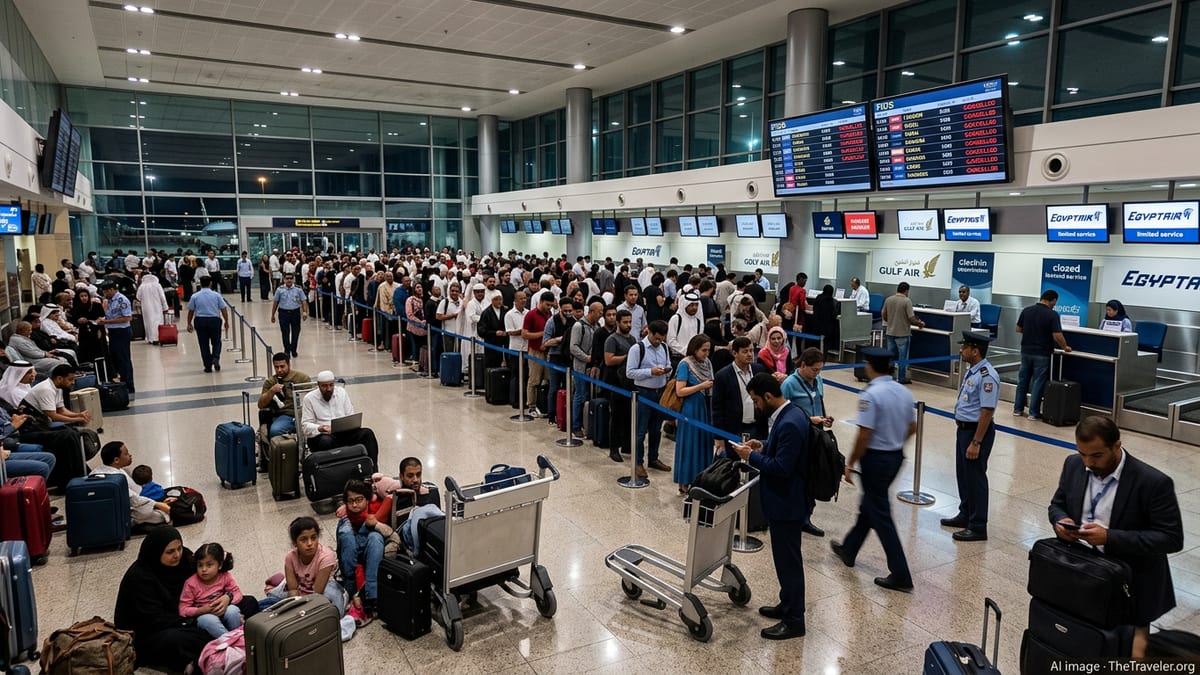
Multiple Cancellations Hit EgyptAir’s Regional Network
Publicly available information on EgyptAir’s operational updates indicates that the carrier has been cutting and reshaping parts of its Middle East schedule since late February, in response to airspace restrictions and wider regional instability. The latest changes include cancellations on routes touching Cairo and Sharm El Sheikh, as well as services to and from Gulf destinations such as Kuwait, which together account for at least eight affected flights over recent days.
EgyptAir’s own notices show that flights to several Gulf and Levant destinations have been suspended on a rolling basis since February 28, with Kuwait singled out for a longer disruption window compared with other routes. These measures have translated into repeated cancellations and last minute timetable changes on some of the airline’s highest demand regional services, including flights that underpin both point to point traffic and connections for long haul itineraries.
Timetable and flight status tools used by travelers and industry watchers show gaps in the usual pattern of departures between Cairo, Sharm El Sheikh and Kuwait, highlighting days where previously scheduled EgyptAir rotations did not operate. While some flights continue as planned, the patchwork of active and canceled services has made it more difficult for passengers to predict whether their journeys will proceed as booked.
The disruption has been compounded by the fact that Cairo and Sharm El Sheikh function as crucial gateways for both domestic tourism and onward travel to the wider Middle East. When even a relatively small number of flights are withdrawn on short notice, the impact can quickly ripple outward, filling remaining seats on other carriers and constraining options for rebooking.
Buraq Air Services Affected on Egypt and Gulf Links
Libyan carrier Buraq Air, which serves Cairo from its Tripoli base and connects into wider regional traffic flows, has also been caught up in the current wave of operational disruption. Regional aviation tracking data and media reports point to cancellations on some Buraq Air services touching Egypt and the Gulf, including flights that would normally carry passengers onward via Cairo to destinations such as Kuwait and other Middle Eastern hubs.
Although Buraq Air’s network is smaller than that of EgyptAir, its routes play a niche but important role for travelers moving between Libya, Egypt and the Gulf. When individual rotations are dropped, passengers often have limited alternatives, particularly for trips that require tight timing for work, medical or educational commitments.
Industry analysts note that smaller regional airlines can be more vulnerable to airspace closures, fuel price spikes and crew or aircraft availability issues. The loss of even one aircraft from rotation can force a cascade of cancellations across several days of scheduling, and that effect appears to be visible on some of Buraq Air’s Egypt linked services this week.
For passengers, the result has been unexpected overnight stays, missed onward connections and, in some cases, the need to purchase fresh tickets on other airlines at short notice. Social media posts and regional travel forums describe travelers attempting to reroute via alternative hubs in North Africa or the Gulf after learning at the airport that their Buraq Air flight would not operate.
Knock-On Disruptions at Cairo and Sharm El Sheikh
Cairo International Airport and Sharm El Sheikh International Airport are both reporting elevated levels of disruption across multiple carriers, not only EgyptAir and Buraq Air. Recent regional coverage highlights Cairo’s role as an overflow hub during Middle East airspace closures, with diverted aircraft, compressed turnaround times and congested stands putting additional stress on airport operations.
At Sharm El Sheikh, which functions as a major leisure gateway on the Red Sea, the cancellation of even a handful of regional links can upset carefully planned itineraries for holidaymakers and tour groups. When flights to or from Kuwait and other Gulf cities fall off the schedule, affected passengers often find that alternative same day departures are already full or priced significantly higher than their original tickets.
Travelers caught in the latest round of cancellations report lengthy queues at transfer and ticketing desks, with some being offered rebooking several days later rather than same day alternatives. Others have turned to online travel agencies and global distribution platforms to piece together new routings via third country hubs, sometimes at substantial extra cost.
The pressure has also been evident on domestic sectors linking Cairo with resorts and secondary cities. When regional inbound flights are canceled, tour operators and hotels that rely on a predictable flow of arrivals may be forced to rearrange ground transport, excursions and room allocations on short notice, adding another layer of complexity to an already fluid situation.
Flexible Policies and Limited Options for Stranded Passengers
EgyptAir has published temporary measures for customers holding tickets on affected routes, including the option to change travel dates or reroute to alternative destinations in the Gulf and Middle East within defined time windows. Publicly available policy summaries describe waivers for change fees and, in some cases, fare differences when passengers choose to postpone travel or switch to another destination within the airline’s regional network.
These flexibilities have provided some relief for stranded travelers, particularly those with flexible plans who can delay trips by several days. However, passengers who must travel on fixed dates, or who need to align flights with nonrefundable hotels, cruises or ground transport, continue to face difficult choices between absorbing extra costs or canceling trips altogether.
Buraq Air has implemented its own set of options for disrupted passengers, according to regional travel agency advisories and customer communications circulating online. These include rebooking on subsequent services when available and, in some cases, offering refunds for segments that can no longer be operated. Capacity constraints and the relatively low frequency of some routes mean that replacement flights are not always immediately available.
Consumer advocates in the region emphasize the importance of documenting all communication with airlines and intermediaries, as compensation or refunds may depend on the specific terms and conditions attached to each ticket. In many cases, travelers who booked through third party agents must coordinate both with the airline operating the flight and the company that issued the original ticket.
What Travelers Should Watch in the Coming Days
With airspace restrictions and regional tensions still evolving, schedule planners at EgyptAir, Buraq Air and other Middle Eastern carriers are likely to continue adjusting timetables in the short term. Analysts following published schedules expect further short notice changes on selected routes between Egypt and Gulf states, particularly Kuwait and other high demand corporate and migrant worker markets.
Travel industry commentary suggests that passengers planning trips through Cairo, Sharm El Sheikh or Kuwait in the next several days should monitor flight status closely, checking both airline channels and independent flight tracking tools. Reconfirming departure and arrival times 24 hours before travel, and again on the day of departure, is being widely recommended for those with tight connections.
Some experts advise allowing longer minimum connection times at Cairo and other regional hubs while the disruption continues, and where possible avoiding itineraries that rely on the final late night or early morning departures of the day. Travelers who can build additional buffer time into their journeys may find it easier to recover from missed connections or rolling delays.
While there are signs that airlines are gradually refining contingency plans and reallocating aircraft, the experience of passengers stranded by the latest EgyptAir and Buraq Air cancellations underlines the fragility of regional air connectivity when multiple factors converge. For now, flexibility, real time information and contingency planning remain essential tools for anyone flying between Egypt and the wider Middle East.