


More news on this day
Emergency vehicles and airport equipment converged around an American Airlines aircraft on the tarmac at Chicago O’Hare International Airport, prompting delays, passenger concern and a flurry of questions from those watching from nearby gates and aircraft.
Get the latest news straight to your inbox!
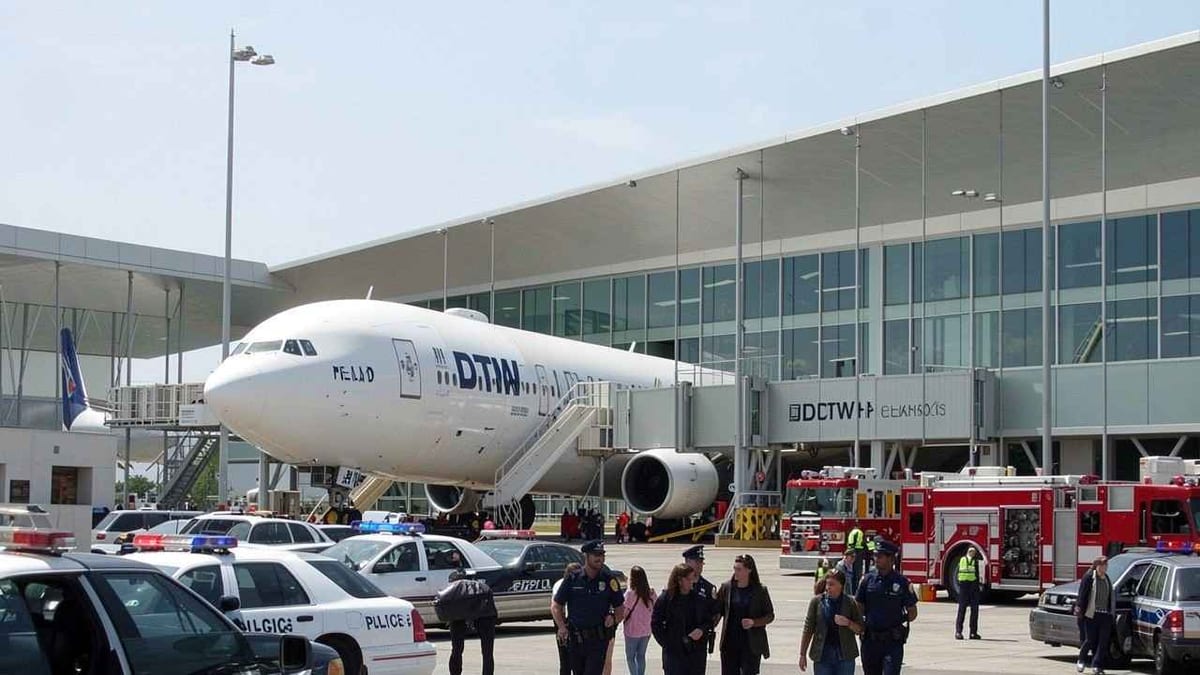
Visible Emergency Response on the Tarmac
Reports from travelers arriving at or departing from O’Hare indicate that a parked American Airlines jet became the focus of an intensive emergency response, with multiple fire and rescue trucks, airport operations vehicles and support equipment positioned around the aircraft. Photos and eyewitness descriptions describe a concentrated cluster of vehicles near the plane rather than an airport-wide disruption.
While detailed official explanations were not immediately available, publicly accessible flight-tracking data and social media posts suggest the incident unfolded after the aircraft was already on the ground, rather than during an airborne emergency. Observers described vehicles moving into place around the aircraft and remaining on scene for an extended period as other traffic on the airfield continued under restrictions.
Initial accounts did not describe visible smoke or fire from the jet, and there were no early indications of serious injury connected to the episode. In many such cases at major hubs, emergency teams are dispatched under conservative safety protocols, leading to a significant visual presence even when an issue is ultimately contained.
What Passengers and Onlookers Reported
Travelers seated on nearby aircraft, as well as those in terminal areas with a view of the airfield, reported a buildup of planes waiting for available gates while the response unfolded. Some passengers described watching a line of aircraft halted on taxiways as the American Airlines jet and surrounding emergency equipment occupied key access points.
Other accounts referenced additional ground vehicles, including buses and airline service trucks, moving toward the affected area. In comparable past events at O’Hare, buses have sometimes been used to move passengers from a stranded or evacuated aircraft back to the terminal when a jet cannot taxi on its own power or when gate space is limited.
Published coverage of past situations at O’Hare suggests that the extensive appearance of emergency vehicles can result from standard procedures that call for multiple fire, medical and operations units to stage around an aircraft until the situation is fully assessed. For those watching from a distance, this can create the impression of a larger crisis even when the underlying issue is localized.
Context: O’Hare’s History of High-Profile Aircraft Incidents
O’Hare International Airport has seen several high-profile American Airlines incidents over the decades, which shape public perception when emergency vehicles appear in large numbers on the field. Historical records highlight the catastrophic crash of American Airlines Flight 191 shortly after takeoff in 1979 and the engine failure and fire aboard American Airlines Flight 383 during takeoff in 2016, both of which involved dramatic on-airport responses.
Aviation safety databases also document ground collisions and mechanical issues involving American Airlines jets at O’Hare, including minor wingtip strikes, taxiway incidents and precautionary returns after technical warnings. In those cases, aircraft were often surrounded by fire and rescue units as a preventive step while crews verified that no secondary hazards existed.
Industry analysts note that scenes of fire trucks and ambulances converging on a single aircraft can quickly evoke memories of those earlier, more serious events. However, most modern airfield responses are precautionary and, in many cases, end with passengers disembarking normally once checks are complete.
Safety Protocols and Standard Responses
According to publicly available aviation safety manuals and prior federal investigation reports, large hub airports typically maintain detailed emergency plans that spell out exactly how many vehicles and personnel must respond to various alerts. Even a report of unusual odor in the cabin, a suspected hydraulic problem, or a precautionary return to the gate can trigger a visible arrival of specialized fire and rescue trucks alongside routine airport operations units.
In many instances, the aircraft is met on the runway or taxiway by a convoy of airport fire-rescue vehicles that then escort it to a gate or remote stand. Once stopped, responders check for signs of fire, leaking fuel or overheated brakes, while airline technicians and ground staff position additional equipment. This sequence can resemble a major disaster scene even if all checks are negative and passengers exit through a jet bridge or stairs in a controlled manner.
Public data on airport preparedness shows that O’Hare, one of the world’s busiest hubs, staffs a substantial complement of Aircraft Rescue and Firefighting units. Regular drills and prior real-world incidents at the airport have reinforced a culture of rapid, highly visible response whenever a potential aircraft issue is reported.
Impact on Flights and Travelers
As emergency and support vehicles clustered around the American Airlines aircraft, surrounding taxiways and gate areas experienced ripple effects. Passengers on unrelated flights reported longer-than-expected waits on the tarmac, as well as changes in gate assignments and departure times.
Based on similar past occurrences at O’Hare and other major hubs, such incidents can lead to short-term ground stops or localized holds while controllers reroute aircraft around the affected area. Airline operations teams typically rework gate plans on short notice, which can cause aircraft to remain parked away from terminals or pause on taxiways while new positions are cleared.
For travelers inside the terminal, the most noticeable effects are often cascading delays on departure boards and announcements of gate changes rather than direct visibility of the emergency response. Once the aircraft at the center of the incident is secured and moved, operations generally resume a more typical pace, even as airlines and investigators review what prompted the initial alert.