


More news on this day
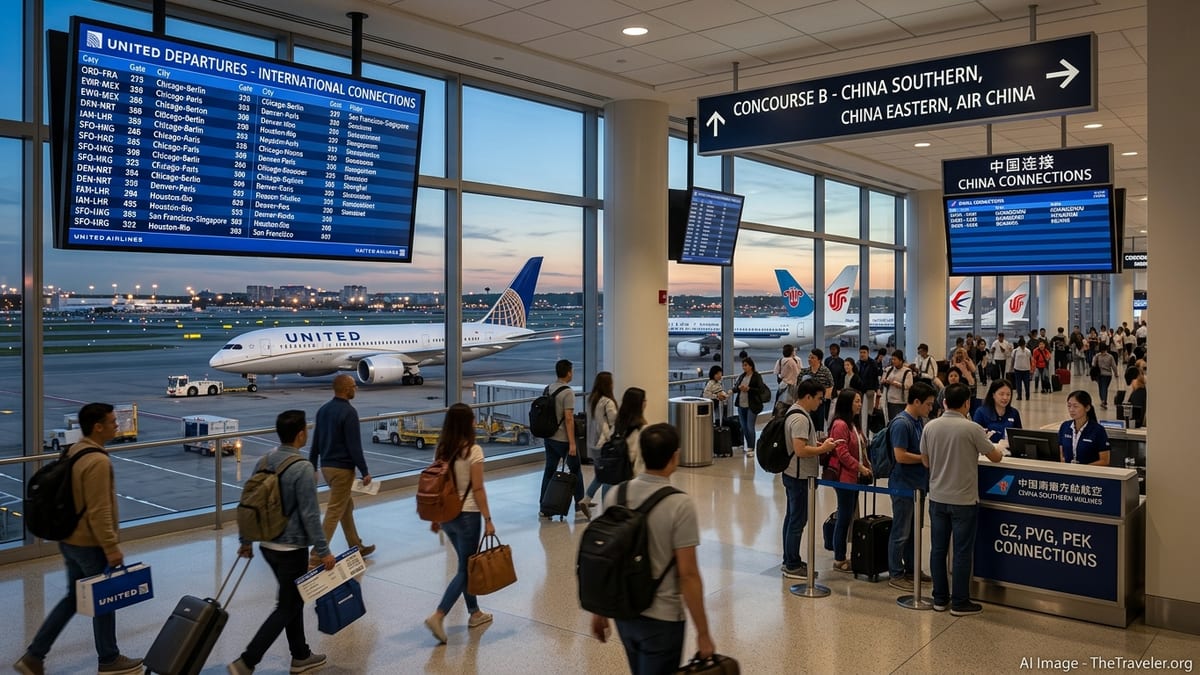
United Airlines now serves 398 destinations worldwide, giving it the largest destination network of any carrier in OAG’s November 2026 schedules analysis and reshaping options for long-haul travelers as China’s big three airlines rapidly rebuild their international networks.
Get the latest news straight to your inbox!
OAG data puts United first by destinations, not by size overall
According to OAG’s latest airline frequency and capacity statistics, which compile scheduled flights for November 2026, United Airlines serves 398 destinations worldwide. OAG’s analysis ranks United as the airline with the highest number of scheduled destinations in that month, a measure based strictly on how many airports appear in its timetable rather than passenger traffic, revenue or fleet size.
The ranking is highly time-specific and reflects one set of published schedules rather than a permanent record. OAG’s data for November 2026 also show United among the world’s largest carriers by flights operated and seats offered, but the new “number one” claim applies only to destination count. Other large full-service airlines, including peers in North America, Europe and the Gulf, trail United on this particular metric even where they may lead on passengers or capacity.
Because the figures are based on filed schedules, any subsequent route launches, suspensions or frequency changes after OAG’s November 2026 dataset was compiled will not appear until later updates. Travelers and industry watchers should treat the 398 figure as a snapshot for that month and reconfirm network details when planning trips.
China Southern, China Eastern and Air China climb capacity league tables
While United leads on destination count in November 2026, OAG’s airline statistics highlight how China Southern, China Eastern and Air China are rebuilding and expanding their networks after the pandemic. OAG’s recent capacity tables show these three carriers moving up global rankings by scheduled seats and flights between 2024 and 2026, reflecting a strong recovery in Chinese outbound and connecting travel. The figures refer to scheduled capacity rather than passenger volumes, so they indicate how much flying is offered rather than how many people have already flown.
China Southern illustrates this growth. Route-mapping data from FlightConnections, cross-checked against OAG schedules and carrier information, indicate that as of November 2026 the airline serves approximately 143 domestic destinations within China and 80 international destinations in 50 countries. Definitions can vary slightly between data providers, but all confirm that China Southern’s network reach has widened again compared with the early post-pandemic years.
China Eastern and Air China show similar patterns, with OAG’s country and carrier statistics pointing to increased long-haul capacity on routes linking China with Europe, North America, Southeast Asia and Australia between 2024 and 2026. None of the Chinese big three currently match United’s 398-destination reach, but their rapid capacity growth and network rebuild are making them more prominent on global long-haul and transit flows.
What 398 destinations mean for United passengers
For travelers using United’s network, a November 2026 footprint of 398 destinations translates into wider one-stop options from its U.S. hubs to secondary and regional cities worldwide. OAG’s schedules show United increasing capacity at core airports such as Chicago O’Hare and Denver, and using those hubs to connect smaller U.S. and Canadian communities with medium-sized cities in Europe, Latin America and the Asia-Pacific region via a single connection.
This breadth is particularly visible in intra-European and Latin American links, where United pairs major gateways with smaller coastal, island or industrial cities that might otherwise require two or more changes. In the Pacific region, a broader mix of Japanese, Korean and Southeast Asian destinations reachable through alliance and codeshare links complements United’s own nonstops, widening the range of one-stop itineraries available from cities across the United States.
The extensive destination count also shapes competition. On some flows between North America and Asia, United’s network overlaps with those of Chinese and Middle Eastern carriers that also target long-haul transit traffic. That can increase the number of schedule and price combinations available to passengers, particularly those prepared to connect through a hub city to reach secondary destinations, although exact options vary by origin, season and booking date.
Chinese hubs reemerge as long-haul transit options
For Asia-bound travelers from North America and Europe, the rebuilding of China Southern, China Eastern and Air China’s long-haul capacity means more itineraries that route through Guangzhou, Shanghai and Beijing. OAG’s 2024–26 schedules show rising numbers of flights and seats on trans-Pacific and Europe–China services, aided in part by access to Russian overflight routings that can shorten flying times on some city pairs compared with carriers that avoid Russian airspace.
This growth is starting to create additional fare and schedule options between cities such as Los Angeles or Toronto and destinations in Southeast Asia, South Asia and Australasia, where Chinese carriers can sell through-connections via their hubs. In some cases, increased capacity can contribute to more competitive pricing, though fares still depend on demand, seasonality and airline-specific strategies.
However, itineraries transiting mainland China involve additional considerations. Travelers need to pay close attention to current visa and transit rules, which differ by nationality and by airport, and to any geopolitical or airspace-related advisories affecting routings. Because policies and permitted routings can change, passengers should check official government and airline guidance at the time of booking and again before departure rather than relying on historical experience.
What travelers should verify before booking
Both United’s 398-destination figure and the Chinese big three’s capacity gains come from OAG’s November 2026 schedules, a dataset that will evolve as airlines update timetables. Routes can be added, suspended or retimed seasonally, and destination counts may fluctuate from one month to the next as carriers adjust networks in response to demand, aircraft availability and regulatory conditions.
Before making concrete travel plans, passengers should recheck current schedules using airline websites, booking systems or updated OAG-based tools to confirm that specific routes, frequencies and connection options are still in place. This is particularly important for itineraries relying on tight connections, seasonal routes or transit through hubs with changing visa or entry requirements.
For travelers comparing options between United and Chinese or other long-haul carriers, focusing on the details that matter most to a given trip remains essential. These include total travel time, connection quality, entry and transit rules, and fare conditions, all of which can change faster than headline statistics about global destination counts or capacity rankings.