


More news on this day
Norway has formally adopted zero-emission requirements for cruise ships, tourist boats and ferries in its UNESCO-listed West Norwegian Fjords, setting binding deadlines from 2026 and 2032 even as national cruise traffic rebounds and ports accelerate shore-power investments.
Get the latest news straight to your inbox!
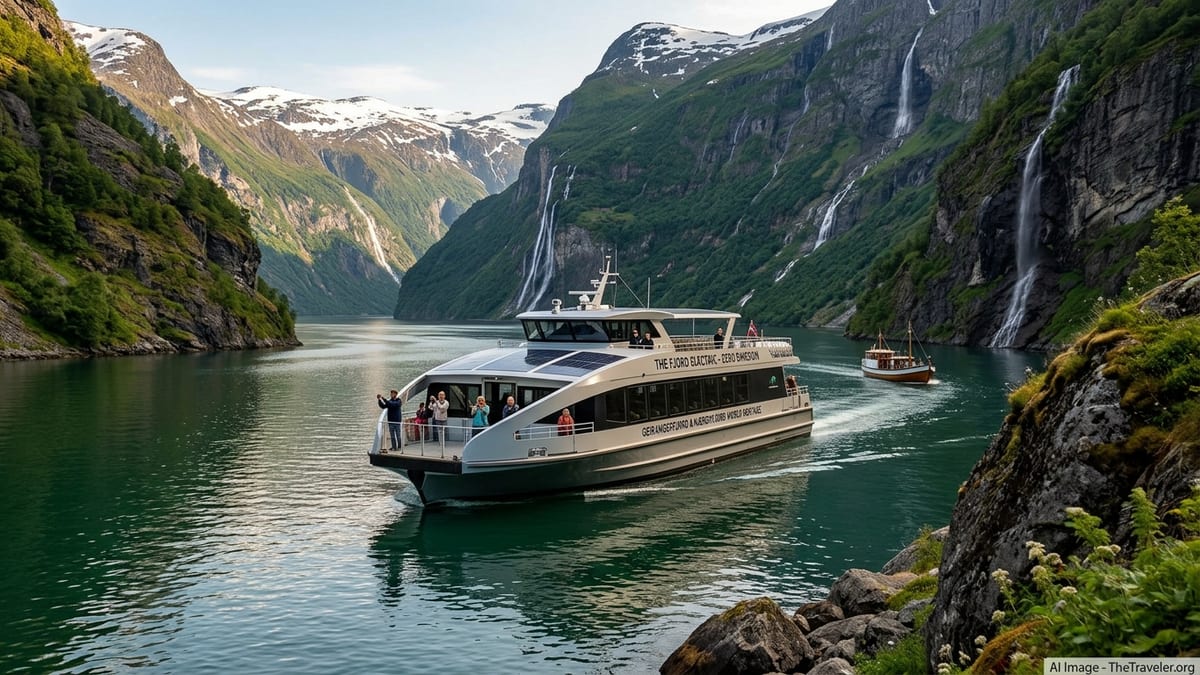
New binding rules for World Heritage fjords
The Norwegian Maritime Authority has adopted amendments to the Environmental Safety Regulations that introduce zero-emission operating requirements for passenger ships in the World Heritage fjords of Geirangerfjord and Nærøyfjord and associated areas. The circular setting out the rules is dated 14 April 2025, with the legal amendments laid down on 10 April 2025.
From 1 January 2026, passenger vessels under 10,000 gross tonnage operating in these fjords must use energy sources that do not cause direct emissions of carbon dioxide or methane. From 1 January 2032, the same zero-emission requirement will apply to passenger ships of 10,000 gross tonnage and above, covering conventional large cruise ships. The rules explicitly apply to cruise ships, tourist boats and ferries within the designated World Heritage areas, rather than across all Norwegian waters.
The regulations also provide for mandatory use of shore power where facilities are available and allow biogas as an approved alternative fuel under the zero-emission framework. Temporary exemptions for smaller ships that have an established operating history in the fjords are possible under strict conditions, but the overall policy direction is toward phasing out direct greenhouse gas emissions in these specific fjord environments.
Rising cruise volumes focus attention on emissions
The new fjord rules arrive as cruise activity along the Norwegian coast continues to recover and expand after the pandemic. Norway’s coastal and port authorities project several thousand cruise calls and well over six million cruise passengers nationwide in 2024, up from roughly four to four and a half million passengers in the first full seasons after Covid-19 restrictions were lifted. Exact figures vary by source and may be revised, but the trend points to growing traffic rather than contraction.
At the same time, other environmental regulations are tightening around the World Heritage fjords, including Tier III nitrogen oxide limits from 2025 and existing restrictions on scrubber discharges and certain fuels. Together with the newly adopted zero-emission requirement, these measures are aimed at cutting air and climate emissions, reducing noise and protecting both local communities and the fjords’ World Heritage status as cruise and tourist ship activity intensifies.
For travelers, this combination of rising demand and stricter rules is likely to influence which ships operate in the fjord region over the next decade. Older, more polluting vessels may scale back or end calls in the regulated fjords, while newer ships with advanced batteries, alternative fuels or hybrid systems are expected to take a larger share of itineraries that enter Geirangerfjord or Nærøyfjord and nearby ports.
Bergen caps cruise visitors and scales up shore power
Bergen, one of Norway’s busiest cruise ports and a key gateway to the fjords, has already introduced local limits and invested heavily in shore power. The city council has set a ceiling of four cruise ships and 8,000 cruise passengers per day, a cap that port officials say guides scheduling on peak days. This limit is intended to manage congestion in the compact city center while keeping overall daily visitor numbers within agreed thresholds.
The Port of Bergen now advertises multiple high- and low-voltage shore-power connections for cruise and other ships, with shore-power operator Plug listing nine installations serving the harbor, including facilities designed for large cruise vessels. Bergen officials have described one of these as Europe’s largest shore-power facility for cruise ships, reflecting the scale of the investment.
To encourage actual use of the infrastructure, Bergen has offered reduced quay fees for ships that connect to shore power. For the 2024 season, port communications highlight a discount on charges for vessels that plug in, alongside a clear message that from 2026 the port expects only ships capable of using shore power on cruise calls. While this local policy is separate from the national fjord-specific zero-emission rules, both are pushing operators toward cleaner technologies.
Oslo completes new shore-power hub for cruise ships
Further south, Oslo has brought a major new shore-power facility for cruise ships into operation at Revierkaia. According to the Port of Oslo, the high-voltage plant was completed in April 2024, with the first test connection of the cruise ship AIDAmar on 12 April and regular operations starting in May. The facility was formally inaugurated in September 2024.
The Revierkaia installation is built to international shore-power standards and is designed to supply up to around 16 MVA of power, though the port notes that effective available capacity may be lower in the initial phase. Oslo plans additional shore-power capacity for cruise ships at Filipstadkaia, with port statements indicating that both cruise quays will be equipped to supply electricity at berth in the coming years.
Oslo has also consolidated cruise calls at Revierkaia and Filipstadkaia after closing older central quays to cruise traffic in 2023 following political decisions. The port has signaled that cruise ships will in future be required to connect to shore power when facilities are available, aligning local policy with Norway’s national push for lower-emission port calls.
How Norway’s approach compares with EU rules and what travelers should watch
Norway’s zero-emission rules for the World Heritage fjords go beyond current European Union requirements for passenger ships. Under the EU’s FuelEU Maritime regulation and related shore-power legislation, large passenger ships and container vessels will have to use on-shore power supply, or equivalent zero-emission technologies, while at berth at certain major EU ports from 1 January 2030, with obligations expanding to more ports and ship types by 2035. Those EU rules focus on emissions at berth and do not mandate zero-emission sailing at sea.
By contrast, Norway’s fjord regulations govern ship operations while sailing and maneuvering within the defined World Heritage areas, not just during time alongside. The requirements are also geographically limited: they apply only in the West Norwegian Fjords World Heritage property and associated regulated zones, and they are phased by ship size between 2026 and 2032. There is no nationwide blanket ban on non-zero-emission cruise ships, and many Norwegian ports outside the World Heritage fjords will continue to receive conventional vessels subject to other existing environmental rules.
Travelers planning Norwegian fjord cruises over the next decade should pay attention to which itineraries actually enter the Geirangerfjord and Nærøyfjord areas and which ships are deployed. After 1 January 2026, smaller passenger vessels serving those fjords will need to comply with the zero-emission rule, and from 2032 the same will apply to large cruise ships. This may lead to changes in routes, ship assignments, fares or seasonal patterns as operators adjust fleets and decide whether to invest in new technology or focus on less regulated parts of the Norwegian coast. Checking itinerary details, ship specifications and any port or operator updates close to departure will help travelers understand how these environmental rules might affect their specific sailing.