


More news on this day
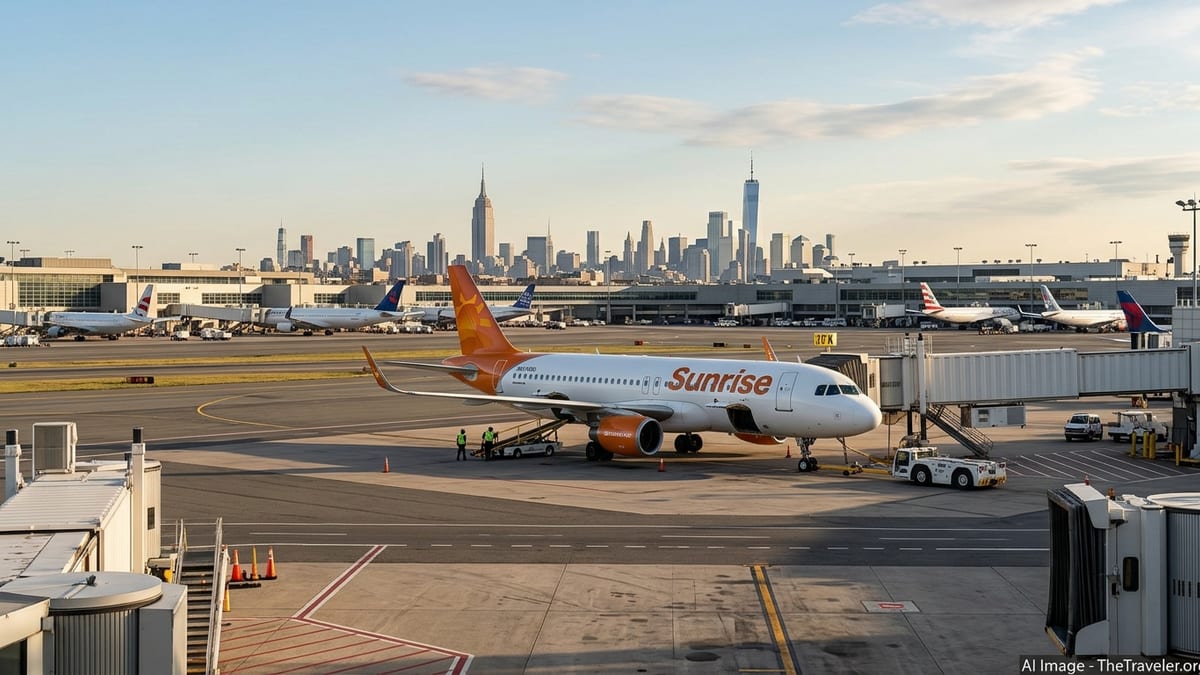
Haitian carrier Sunrise Airways is moving its only nonstop Haiti–New York service from Newark Liberty International Airport to New York John F. Kennedy International Airport for the winter 2026–27 season, a shift that preserves and reshapes the key air bridge between Cap‑Haïtien and the New York area while US carriers remain barred from serving Port‑au‑Prince.
Get the latest news straight to your inbox!
What Sunrise Has Announced So Far
In an “Important Notices” update on its website, Sunrise Airways confirms that its direct Cap‑Haïtien–New York route will switch to operate from John F. Kennedy International Airport starting in winter 2026, and that all operations at Newark will end on 25 October 2026. The airline does not yet publish a detailed JFK timetable in this notice, but it clearly sets Newark’s final day of service and confirms that the New York link will continue from JFK rather than disappear.
Independent schedule tools provide further detail on the planned launch at JFK. Data compiled by specialist site AeroRoutes shows Cap‑Haïtien–New York JFK flights beginning on 16 November 2026 with two weekly frequencies in the initial winter 2026/27 schedule period. Several timetable aggregators list Monday and Thursday evening departures from Cap‑Haïtien, with a scheduled flight time of about 4 hours 30 minutes and Sunrise as the sole operator on the city pair.
Most schedule trackers currently indicate an Airbus A320‑family aircraft on the route, but Sunrise has not publicly confirmed a specific aircraft type or configuration and could still adjust equipment closer to launch. The airline has also not yet announced which terminal at JFK it will use for the Cap‑Haïtien flights, so travelers will need to verify this detail once it is formally assigned.
Impact on New York–Area Travelers and Haiti’s Diaspora
The switch from Newark to JFK alters the ground access picture for New York–area passengers flying nonstop to northern Haiti. Travelers based in Queens, Brooklyn and the Bronx gain a more convenient airport for Haiti‑bound trips, with JFK typically offering shorter surface journeys than Newark and far more public transport and shared‑ride options from those boroughs. For many in the Haitian diaspora communities concentrated in eastern Queens and Brooklyn, Cap‑Haïtien flights from JFK may be easier to reach than the previous Newark operation.
By contrast, New Jersey–based passengers and those in parts of Staten Island and suburban New York that are oriented toward Newark can expect longer ground transfers once the switch takes effect. For this group, the end of Cap‑Haïtien service at Newark on 25 October 2026 means factoring in additional time and cost to reach JFK or considering connections via other US or Caribbean gateways if those prove more convenient overall.
The move also strengthens connectivity for Haiti‑bound travelers coming from further afield. JFK remains a major long‑haul hub with extensive transatlantic, transpacific and Latin American networks, and Sunrise’s presence there will make it easier to build self‑connect itineraries into Cap‑Haïtien using a single New York airport. However, because Sunrise does not belong to a global alliance and there is no announced codeshare tied to this route, passengers arranging separate tickets should leave generous connection times and recognize that through‑checked baggage or protected misconnections are not guaranteed.
Pricing, Availability and Other US–Haiti Links
Searches on major booking platforms show Sunrise Airways’ JFK–Cap‑Haïtien nonstops in late November 2026 priced from roughly just under 500 US dollars round trip at the time of writing, with many peak‑date itineraries closer to or above the 1,000 dollar mark depending on departure day and fare class. Inventory for the first weeks of JFK service is already on sale, and seats appear limited on some early departures as travelers lock in holiday and end‑of‑year trips.
For now, Sunrise is the only carrier offering nonstop service between the New York area and any Haitian airport. Port‑au‑Prince remains off‑limits to US airlines under Federal Aviation Administration restrictions following security incidents around Toussaint Louverture International Airport, and there is no published timeline for US carriers to resume flights to the capital. As a result, Cap‑Haïtien continues to function as the main international gateway for commercial air traffic between Haiti and the United States.
The broader US–Haiti market is beginning to show early signs of rebuilding beyond New York. American Airlines has announced its return via Miami–Cap‑Haïtien, with flights scheduled to restart on 1 November 2026 after a multi‑year suspension linked to security concerns. That development, while secondary to Sunrise’s New York move, means that by late 2026 Cap‑Haïtien should again have nonstop links to both Miami and New York, giving travelers some choice of US gateway even as Port‑au‑Prince remains offline to US operators.
What Travelers Should Watch Next
Several operational details for Sunrise’s JFK–Cap‑Haïtien flights remain fluid. The exact start date and weekly frequency could change as the airline fine‑tunes its winter 2026/27 schedule, particularly if demand patterns or Haiti’s security situation shift. Travelers booking months in advance should monitor their reservations for time or date changes and be prepared for possible adjustments as the launch date approaches.
There is also no confirmed information yet on introductory fare promotions, checked‑baggage allowances specific to the New York route, or the final choice of JFK terminal. Sunrise is currently signaling the airport switch via its own channels, but has not issued a detailed public schedule announcement beyond the Newark end date. Prospective passengers should verify terminal assignments, baggage rules and minimum check‑in times directly with the airline closer to departure.
Given the volatile security environment in Haiti and the ongoing FAA restrictions affecting Port‑au‑Prince, all future travel plans involving Cap‑Haïtien are subject to change at relatively short notice. Before flying, travelers should recheck airline schedules, US government travel advisories and any updated regulatory notices covering Haitian airspace, and build extra flexibility into their itineraries in case flight times, frequencies or access points are revised again.