


More news on this day
A newly compiled open dataset from nonprofit newsroom AP Projects shows that restaurant and hotel employers in the United States have filed 6,348 state WARN notices affecting 920,524 workers since 1989, offering the clearest national view yet of how large-scale layoffs and full-site closures have reshaped the country’s hospitality capacity over nearly four decades.
Get the latest news straight to your inbox!
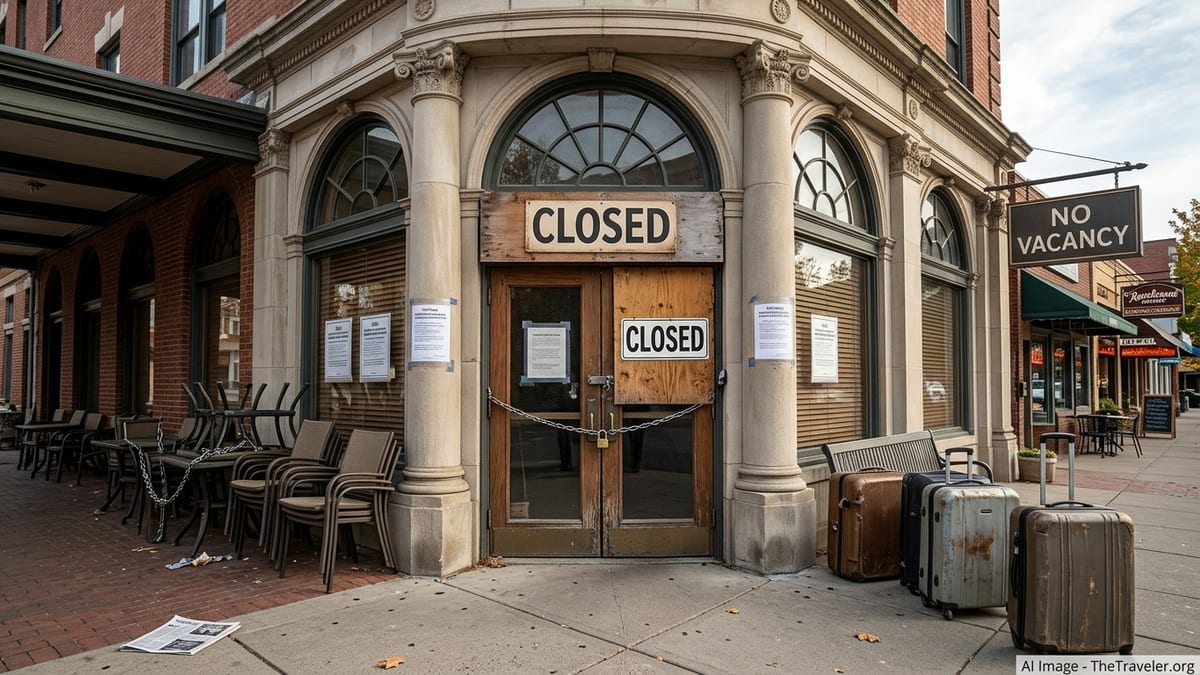
What the AP Projects hospitality WARN data actually covers
The AP Projects dataset aggregates Worker Adjustment and Retraining Notification filings from 48 state labor portals, standardizing employer names, locations and notice types into a single archive published daily on Hugging Face. Within that archive, “Restaurant and hotel” is identified as the largest industry slice, with 6,348 sector-tagged notices and 920,524 affected workers on record between 1989 and 2026.
The coverage focuses on leisure-facing venues: restaurants, hotels, resorts, casinos, bars, caterers, concessions and similar properties that rely heavily on traveler spending. Grocery stores, hospitals and their contractors, and other employers whose core business lies outside visitor accommodation and dining are explicitly classified into different sectors and not counted in these hospitality tallies.
AP Projects notes that its WARN compilation mirrors state disclosure rules, which only require advance notice when employers above certain size and impact thresholds cut staff or close sites. As a result, the 920,524 hospitality workers captured in the dataset represent large, reportable events rather than the full universe of job changes in U.S. tourism and dining.
Layoffs versus full closures, and why the distinction matters
The dataset distinguishes between routine mass layoffs and permanent or long-term closures using the notice type field that state agencies assign. Across the restaurant and hotel sector slice, 1,302 of the 6,348 notices are classified as complete closures, meaning the employer reported shutting down an entire site or operation rather than trimming staff at an ongoing location.
For travelers, that distinction is significant. A layoff at a large resort might reduce services or operating hours while leaving room inventory technically available, whereas a closure notice for a hotel tower, casino floor or beachfront resort removes those beds and amenities entirely from the local tourism market. Over time, repeated closures in a small destination can tighten peak-season availability and shift demand to remaining properties.
Because WARN filings flag the planned effective date of each event, the AP Projects records also give a sense of timing. Clusters of closure notices around specific years often coincide with known local shocks such as destination redevelopment cycles or sudden drops in visitor demand, although the dataset itself does not assign causes and should not be read as attributing layoffs to any single factor.
How concentrated hospitality job losses reshape destinations
The companion per-employer file linked from the AP Projects hospitality slice shows how a relatively small number of large hotels, resort complexes and casino operators account for a disproportionate share of WARN-tracked job losses. In major tourism hubs such as Las Vegas, Orlando and Atlantic City, individual properties have filed multiple large notices over the period, sometimes tied to multi-phase redevelopments or transitions between brands.
When an entire casino resort or convention hotel files a closure notice, hundreds or even thousands of jobs at a single address can be recorded in one event. For cities whose visitor economies lean heavily on a handful of flagship properties, this kind of concentrated disruption can ripple through local restaurants, tour operators and transport services that are not reflected in the WARN figures but depend on the same flow of guests.
Conversely, the dataset also records smaller but frequent notices from national restaurant chains operating in suburban corridors and near interstate exits that serve road-trip travelers. While each individual closure may be modest, a pattern of exits along a route can change the mix of dining options available on long-distance drives, especially late at night or in less densely populated regions.
Limits of WARN data and what travelers should watch next
AP Projects stresses that WARN data is incomplete by design. Not every state has identical thresholds or historical coverage, three states are not yet scraped into the archive, and employers below size or impact limits can close locations without filing any notice. That means many boutique inns, independent restaurants and small tour operators will never appear in the 920,524-worker hospitality tally, even if their exits are highly visible to guests.
The smaller figure of 306,489 hospitality layoffs cited in some earlier references appears to reflect only a subset of the now-published sector slice, likely an earlier cut before notice types were fully tagged and restaurant and hotel employers were combined into the current, broader category. The latest AP Projects rebuild supersedes those partial counts by including all sector-tagged notices from 1989 onward.
For upcoming trips, travelers should pay closer attention to whether a destination has recently seen multiple WARN-noticed hotel, resort or casino closures, since that can signal tighter room supply, fewer on-site amenities and a shifting local job market. Because the AP Projects dataset is rebuilt daily as new state notices appear, travelers and industry workers can check the most recent filings for their city or preferred chains and confirm that reservations, opening dates and employment offers align with the latest official plans rather than past assumptions.