


More news on this day
An Emirates Airbus A380 service experienced a cascade of delays that ultimately left passengers stranded for roughly 24 hours, according to multiple online accounts and flight-tracking data, spotlighting the pressures on global hub operations when a single long-haul rotation falters.
Get the latest news straight to your inbox!
A cascade of schedule disruptions on a flagship route
Published accounts describe the disruption beginning with an initially modest delay to an Emirates A380 departure from its hub in Dubai, which then expanded into missed connections, crew hour limitations and aircraft rotation problems. Because Emirates relies heavily on tightly timed connections over Dubai, a hold at the gate or on departure can quickly reverberate across onward services on the same aircraft and crew.
Once the first leg of the journey departed late, connecting passengers on the superjumbo reportedly missed onward flights at the next hub, leading to rebookings and additional waiting periods in crowded terminals. The size of the A380, which can carry well over 450 passengers in Emirates configurations, meant that a single disrupted service created an unusually large pool of displaced travelers seeking hotel rooms and new itineraries on subsequent flights.
Publicly available guidance on airline disruption patterns notes that delays are often amplified in hub systems when late-arriving aircraft must still operate onward segments. In such networks, crew duty limits, airport curfews, and air traffic restrictions can all combine to turn a short setback into an overnight or multi-day delay for passengers.
In this case, online reports indicate that the compounded effects of these factors pushed some travelers close to or beyond the 24-hour mark between their original schedule and actual arrival, with many spending long stretches in transit lounges or airport hotels while waiting for replacement services.
Passenger experience: long queues, limited information and missed plans
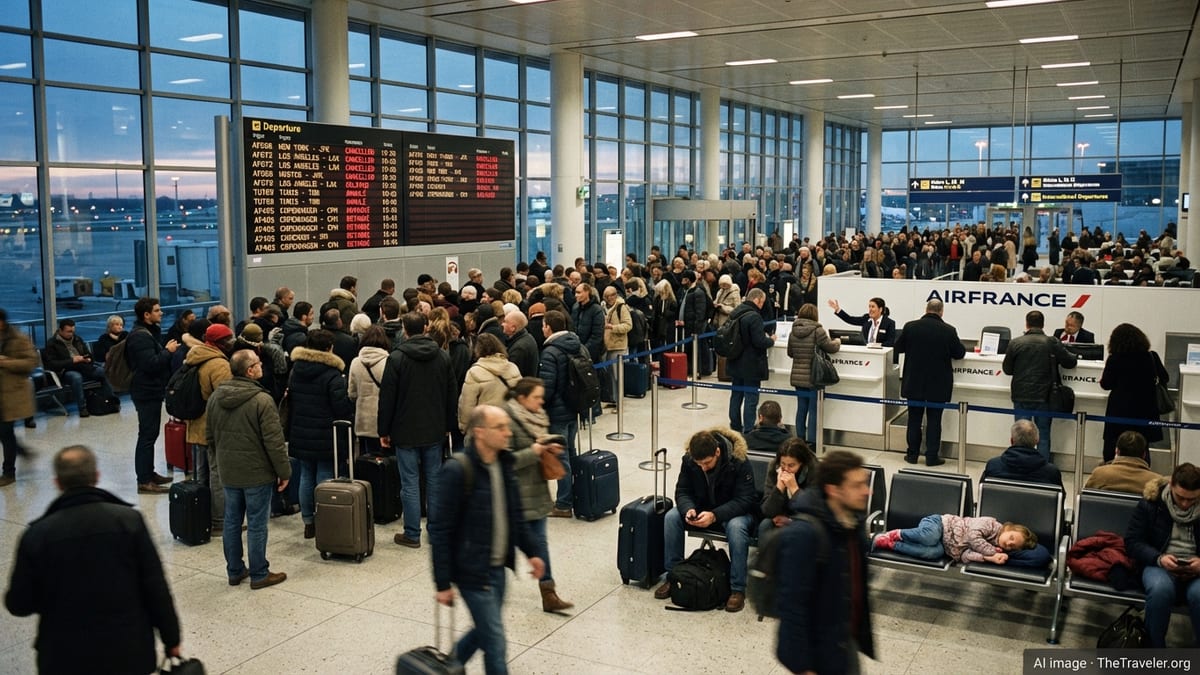
Accounts shared on social platforms and travel forums describe extended queues at service desks as A380 passengers attempted to secure rebookings, meal vouchers and hotel accommodation. With hundreds of travelers from a single widebody flight seeking assistance at the same time, response times were reportedly slow, and many passengers indicated that they relied on mobile apps and flight-tracking tools to understand their options.
Some travelers reported receiving only intermittent updates via email or app notifications, with limited proactive announcements in the terminal. This pattern is consistent with broader passenger feedback seen during major disruption events, where technology channels provide basic status updates but detailed rebooking information often requires in-person assistance or lengthy calls to contact centers.
The extended delay had knock-on effects for work commitments, tours and hotel bookings at final destinations. Travelers wrote that they faced additional costs to adjust ground arrangements or lost prepaid reservations that were nonrefundable. For long-haul passengers already in mid-journey, the sense of uncertainty grew as estimated departure times shifted repeatedly throughout the day and into the night.
Despite the disruption, some accounts acknowledged that onboard service on the A380 itself remained in line with expectations once flights finally departed, highlighting the contrast between the in-flight experience and the strain placed on ground operations and customer support during irregular operations.
Operational pressures on Emirates’ A380 network
Emirates operates the world’s largest fleet of Airbus A380 aircraft, using the double-decker jets on high-demand routes linking Dubai with major cities in Europe, Asia, North America and beyond. The carrier’s hub-and-spoke model concentrates connecting traffic into carefully choreographed banks of arrivals and departures, designed to minimize layover times and keep aircraft utilization high.
Industry analyses of delay propagation show that this type of tightly connected network is especially vulnerable when a large aircraft encounters a mechanical check, weather hold or airspace restriction. A delayed inbound A380 can arrive outside its planned connection window, leaving hundreds of passengers without immediate onward options and forcing schedule adjustments across multiple subsequent legs.
In recent years, Emirates and other Gulf carriers have also faced airspace constraints and regional disruptions, which can necessitate longer routings and additional fuel stops. These conditions can further compress recovery margins on long-haul rotations, especially when crew working-time limits are approached and substitutes are not immediately available at downline airports.
Operational documents and consumer guides note that when disruption strikes, airlines must juggle aircraft positioning, crew rest requirements and airport curfews, all while trying to maintain as much of the published timetable as possible. For an A380-heavy operation, each decision about a single aircraft can affect thousands of passengers over a 24-hour period.
What the incident reveals about disruption handling
The 24-hour stranding of Emirates A380 passengers underscores recurring tensions between operational efficiency and resilience in modern long-haul networks. High aircraft utilization and dense connection banks keep costs lower and fares competitive, but they also reduce the buffer available when something goes wrong.
Consumer-rights information notes that entitlements for delayed passengers vary widely depending on the route and jurisdiction, with different rules applying for flights departing the European Union, the United Kingdom or other regions. Many travelers on the disrupted Emirates service turned to public guidance to understand whether they were eligible for compensation, refunds, or only basic care such as meals and accommodation.
Publicly available information on best practices suggests that clear, frequent communication and realistic estimates of departure times are critical to maintaining trust during severe disruption. Passengers generally react more positively when they are given a concise explanation of the cause, a timeline for updates, and practical advice on rebooking, rather than a series of rolling short delays that ultimately stretch into an overnight wait.
The experience reported by the stranded A380 travelers adds to a growing body of anecdotal evidence about how large hub carriers manage cascading delays. While the underlying causes may differ from one incident to another, the pattern of crowded service desks, long rebooking waits and uncertain arrival times remains a key concern for international passengers navigating an increasingly complex global aviation system.
Implications for future travelers on mega-hub routes
For future passengers on Emirates and other airlines operating A380s through major hubs, the incident serves as a reminder of how vulnerable intricate itineraries can be to a single disruption. Travel experts often recommend allowing longer connection times on critical journeys, particularly during peak travel seasons or in regions prone to weather or airspace challenges.
Some guidance also encourages travelers to keep essential items and one night’s worth of necessities in hand luggage in case hold baggage becomes temporarily inaccessible during an unplanned overnight stay. Access to medications, chargers and basic toiletries can make an extended delay more manageable while rebooking options are arranged.
The episode may also encourage airlines to further refine digital tools that allow stranded customers to self-service rebookings, hotel placements and meal vouchers without waiting in physical lines. As passenger volumes continue to grow, scalable technology solutions are likely to become a central part of disruption management strategies, especially for carriers that routinely operate very large aircraft.
While the stranded Emirates A380 passengers ultimately reached their destinations, their 24-hour ordeal highlights the cascading nature of delays in modern aviation and the importance of resilient planning by both airlines and travelers when crossing multiple time zones on complex itineraries.