


More news on this day
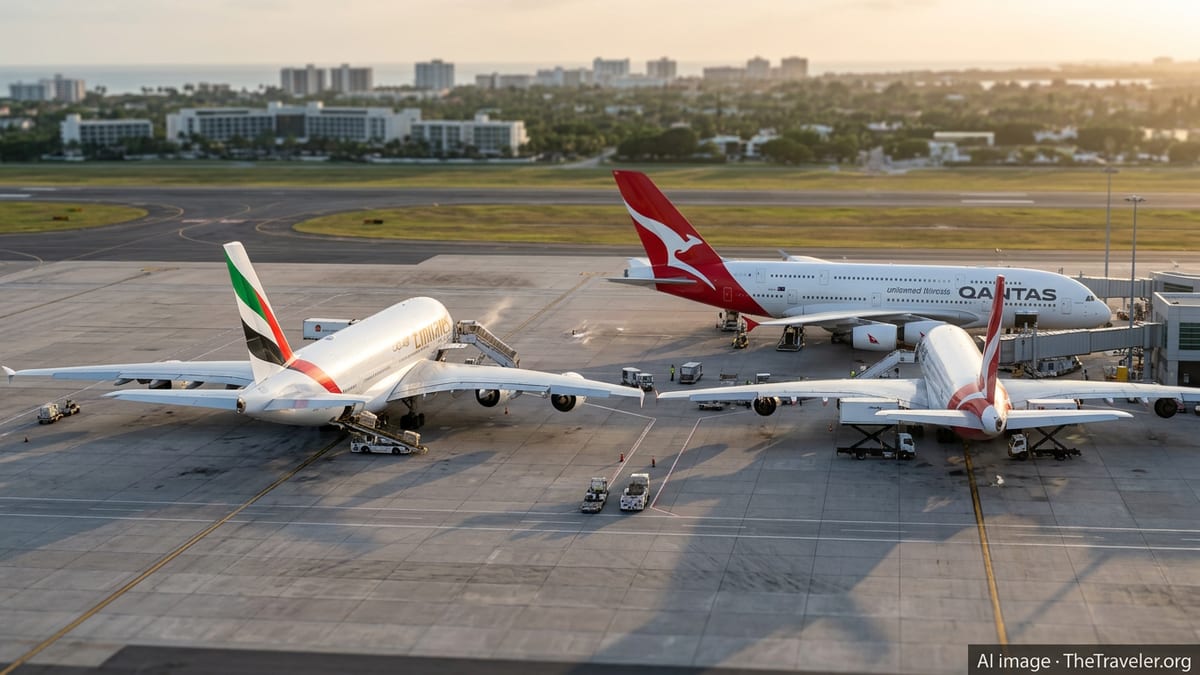
An Emirates Airbus A380 service turned into an exhausting overnight ordeal for hundreds of travelers after a late-night diversion left 373 passengers confined on the aircraft for more than 10 hours with limited air conditioning, according to multiple media reports and social media accounts.
Get the latest news straight to your inbox!
Late-Night Diversion Turns Into All-Night Ordeal
According to published coverage in European and aviation-focused outlets, the incident unfolded on a recent Emirates A380 flight operating between Dubai and a European destination when the widebody jet was forced to divert late at night after weather and operational complications. The superjumbo, carrying 373 passengers, landed safely at an alternate airport but then remained on the ground for most of the night with passengers kept onboard.
Reports indicate that the diversion itself was handled routinely, but what followed drew widespread criticism. Instead of a relatively short wait for a gate or buses, travelers described sitting on the double-deck aircraft for more than 10 hours overnight, with minimal air circulation and no meaningful opportunity to rest off the plane.
Accounts shared in local media describe the temperature in parts of the cabin rising to uncomfortable levels as the aircraft sat on the ground with engines and main air systems largely off. While some limited ventilation was reportedly available, several passengers said conditions became stifling, particularly for families with young children and older travelers.
The situation has renewed attention on how airlines manage long diversions for very large aircraft such as the Airbus A380, which can carry hundreds of people into airports that may not be fully equipped to process such a volume of unexpected arrivals late at night.
Passenger Complaints Over Heat, Exhaustion and Communication
Passengers quoted in regional reports and on social platforms described an increasingly tense atmosphere in the cabin as the hours passed. Many highlighted the combination of lack of sleep, warm air, and uncertainty about when they would be allowed to disembark as the most challenging aspects of the experience.
Several accounts referenced children crying, passengers fanning themselves with safety cards, and people pacing in the aisles as they tried to stay cool. Some travelers alleged that crew members appeared constrained by airport and ground-handling limitations, and that updates about next steps were sporadic or vague.
Publicly available information on the episode suggests that catering supplies also became strained, with passengers reporting limited access to food and fresh water during the extended delay. While some refreshments were distributed, travelers said these provisions did not match the duration of the wait or the discomfort caused by the lack of full air conditioning.
The experience has been widely shared online, with many users questioning why passengers could not be brought into the terminal sooner or transferred more quickly to alternative transport or accommodation once it became clear that the delay would last through the night.
Emirates Responds Amid Scrutiny of Disruption Handling
Coverage in international business and aviation media states that Emirates has acknowledged the disruption and issued an apology to affected customers after the incident came to light. The airline’s public communications emphasized that safety remained the overriding priority during the diversion and subsequent ground delay.
Emirates has not publicly disclosed full operational details, but reports indicate that a combination of local airport constraints, late-night ground-handling availability, and the logistics of accommodating a full A380 load contributed to the prolonged time onboard. The airline has been reported as saying that it is reviewing the circumstances around the event and its handling of passenger welfare.
Emirates’ general customer service policies, as published on its website, state that the carrier aims to provide water, snacks and information during long delays and diversions, especially at airports in its core markets. However, such commitments can be difficult to meet when flights divert to secondary airports or arrive outside normal operating hours, where terminal facilities, immigration processing capacity, and ground staff may be limited.
The episode adds to broader scrutiny on how major international airlines, including Gulf carriers operating megahub models, respond when complex disruptions cascade across networks and leave passengers stranded far from their original destination.
Regulatory Frameworks and Passenger Rights Questions
The incident has also reignited debate over how existing passenger rights rules apply when long delays occur after diversions, particularly for non-European airlines operating into and within Europe. Legal experts quoted in prior analyses of similar cases note that protections can differ substantially depending on the origin and destination of the flight and the jurisdiction in which a diversion takes place.
Within the European Union and the United Kingdom, regulations outline compensation and assistance obligations for long delays, cancellations, and denied boarding on flights departing from EU or UK airports. However, when a long on-board delay happens after an unplanned diversion, interpretation of these rules can become more complex, especially if local infrastructure or border-control constraints make rapid disembarkation difficult.
Consumer advocates argue that, regardless of legal nuances, airlines should have robust contingency plans for scenarios in which large aircraft are forced to land at airports that are not primary hubs. They point to this Emirates A380 case as an example of how a manageable operational problem can escalate into a severe comfort and welfare issue when passengers are confined in high temperatures for many hours.
Industry observers suggest that regulators may increasingly look at how carriers handle such edge cases, including access to air conditioning, potable water, toilets, medical support, and timely information for passengers who are required to remain onboard aircraft for extended periods on the ground.
Growing Pressure for Better Contingency Planning
Aviation analysts note that diversions are an inevitable part of long-haul flying, particularly for airlines with dense networks and high aircraft utilization. Weather, airspace restrictions, and technical issues can quickly force a change of plan, redirecting widebody jets to secondary or regional airports not designed for such volumes of international traffic.
In that context, the Emirates A380 incident is being cited as a case study in how the industry needs to strengthen coordination between airlines, airports, and ground-handling providers to avoid prolonged onboard confinement. Proposed measures include pre-agreed procedures for rapidly positioning buses and stairs, priority immigration processing for large diverted flights, and protocols to ensure at least partial air conditioning and consistent access to basic supplies when passengers must remain on board for more than a few hours.
For Emirates, which has made the A380 a flagship of its brand and built its reputation around comfort and service, the episode represents an unwelcome contrast with its usual marketing message. Travel commentators suggest that how the airline compensates affected passengers and demonstrates lessons learned will be closely watched by frequent flyers.
As global travel demand continues to rebound and major carriers operate at or near full capacity, the disruption highlights a broader reality for long-haul travelers: when things go wrong, what matters most is not only safety, but also how swiftly and humanely airlines manage the hours that follow an unscheduled landing.