


More news on this day
A Disney Cruise Line voyage has drawn heightened scrutiny after two urgent medical evacuations were reported on separate sailings just days apart, with the ship forced to alter its course shortly after departure in each case.
Get the latest news straight to your inbox!
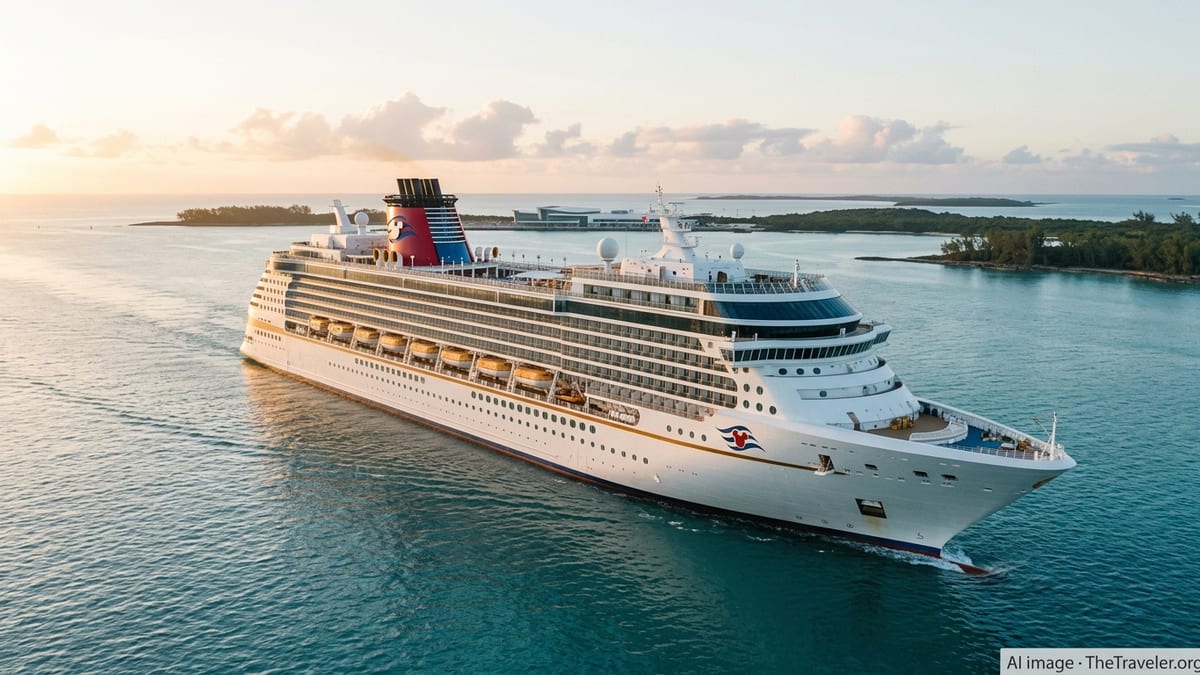
Back-to-Back Medical Diversions Raise Questions
Recent coverage of Disney Cruise Line operations describes two urgent medical situations on one of the company’s newest ships occurring within a narrow time frame, each serious enough to require the vessel to divert or return to port soon after leaving. Publicly available accounts from passengers and cruise-watch outlets indicate that in both instances, the captain interrupted the normal itinerary so that an ailing guest could be transferred to shoreside care as quickly as possible.
On the most recent sailing, the ship reportedly turned back to its departure port within hours of embarkation so that an ill passenger could be offloaded for medical treatment. Passengers described a sudden change in course and announcements explaining that a medical issue required immediate attention, with the ship later resuming its itinerary after the guest was transferred to land-based services.
Coverage of an earlier cruise on a similar route notes a comparable scenario in which the ship altered course shortly after departure because of another serious medical incident. In that case, the vessel did not complete its planned early-evening sailing pattern, returning instead toward port so that the affected guest could be evacuated under the care of emergency responders.
While medical diversions are not unheard of in the cruise industry, the close timing of these two episodes on the same brand has focused attention on how such emergencies are handled and what they mean for guests on board.
How Medical Evacuations Work at Sea
Medical evacuations at sea typically involve coordination between the ship’s medical team, the cruise line’s shoreside operations center, and local emergency services. In many cases, the fastest option is to reverse course and return to the nearest port, especially when the ship is still close to shore during the early hours of a voyage. In other instances, arrangements may be made for a helicopter airlift or a rendezvous with a smaller vessel capable of transporting the patient.
Reports on the recent Disney incidents suggest that both emergencies occurred soon after embarkation, making it more feasible for the captain to bring the ship back toward its home port. This kind of decision weighs factors such as the passenger’s condition, the onboard medical facility’s capabilities, weather, sea conditions, and the proximity of ports with appropriate hospitals.
Cruise ships of Disney’s size typically carry onboard infirmaries staffed with doctors and nurses trained in handling a range of urgent conditions. However, these clinics are not designed to replace fully equipped hospitals. When passengers require specialized diagnostics, surgery, or intensive care that exceeds the scope of onboard facilities, medical disembarkation becomes the priority.
Industry observers note that such diversions can be disruptive to itineraries and onboard operations, but they remain a routine part of passenger-ship safety planning. The recent back-to-back events on a Disney vessel highlight how that planning is put into practice when multiple serious health incidents occur in quick succession.
Impact on Passengers and Itineraries
For travelers, an unexpected medical turnback can mean delayed arrivals at scheduled ports, shortened time ashore, or adjustments to entertainment and dining categories while the crew responds to the emergency. Passengers on the most recent Disney sailing described feeling a noticeable reduction in speed and observing the ship’s course change on navigational apps as it redirected toward port.
Despite the disruption, many accounts emphasize that onboard activities continued where possible while medical teams and bridge officers concentrated on the evacuation. Some guests reported being informed through public announcements that a medical issue had arisen and that the ship’s schedule would be adjusted to accommodate the urgent situation.
Depending on timing and distance, cruise lines may attempt to make up lost time by increasing speed later in the voyage, modifying port calls, or shifting arrival and departure windows. In other cases, one port may be skipped entirely so the itinerary remains viable. Guests impacted by significant itinerary changes are typically offered varying forms of compensation, though the details differ by cruise line and specific circumstances.
The Disney cases underscore how even a brief diversion in the early hours of a cruise can ripple through an itinerary that has been tightly scheduled months in advance. For most travelers, however, the priority placed on a fellow passenger’s health tends to carry broad understanding, especially when communication remains clear and consistent.
Safety Track Record and Industry Context
Medical emergencies at sea are a reality for all major cruise operators, given the wide age range and health profiles of tens of thousands of passengers sailing each week. Industry statistics gathered over recent years show that unplanned medical evacuations occur across brands and ship sizes, occasionally requiring coordination with national coast guards or other maritime rescue agencies when ships are far offshore.
Disney Cruise Line has generally been associated with a strong safety and service reputation, particularly in the family and multigenerational travel segment. Previous coverage has highlighted cooperative efforts between Disney vessels and search-and-rescue agencies in serious cases, including helicopter evacuations when ships were operating hundreds of miles from land. These examples illustrate that protocols exist not only for turnbacks near home ports but also for more complex rescues in distant waters.
Experts observing the latest two incidents tend to see them less as indicators of systemic problems and more as reminders that large ships are small floating cities where medical crises inevitably occur from time to time. In this view, the key question is not whether emergencies happen, but how prepared a cruise operator is to respond quickly and transparently when they do.
The cluster of recent evacuations nonetheless places additional public attention on Disney’s operational readiness at a moment when cruise demand remains strong and the brand continues to expand its fleet with newer, larger vessels.
What Future Guests Should Know
For travelers booked on upcoming Disney cruises, recent events may prompt practical questions about what happens if an emergency occurs during their own sailing. Travel planners generally recommend that guests disclose significant medical conditions to their physicians before cruising, carry adequate supplies of prescription medications, and consider purchasing travel insurance that covers medical expenses and emergency evacuation, which can be costly when outside standard networks.
Passengers can also familiarize themselves with the ship’s safety procedures, including attending the mandatory muster drill and noting the locations of the onboard medical center and key guest services desks. While muster drills are primarily focused on fire and abandonment scenarios, they also reinforce the chain of communication guests can rely on when something unexpected happens.
For families, discussing the possibility of delays or itinerary changes in advance can help set expectations, especially for children eager to reach specific ports or attractions. Recent coverage of the Disney evacuations shows that most of the ship’s experience, from dining to entertainment, can often continue while crews handle a medical diversion in the background.
As the cruise industry continues to track these developments, the back-to-back evacuations on a Disney ship serve as a timely example of how quickly voyages can pivot to prioritize passenger health, and how layered contingency planning has become an integral part of modern cruising.