


More news on this day
Emirates and Etihad Airways have issued fresh travel advisories urging passengers to plan carefully and monitor schedules, as the United Arab Emirates keeps its airspace open despite a wave of extended flight suspensions to Dubai and Abu Dhabi by foreign carriers through October 2026.
Get the latest news straight to your inbox!
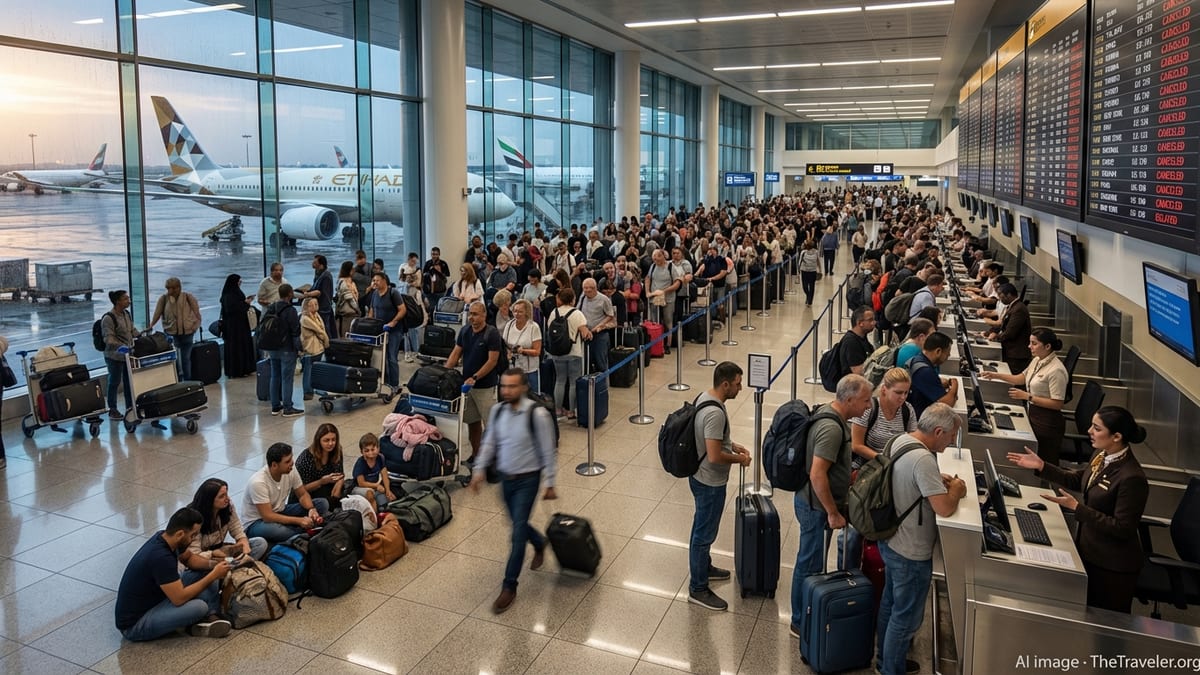
UAE Hubs Stay Open As Regional Conflict Reshapes Flight Networks
Dubai International and Abu Dhabi’s Zayed International remain operational as the United Arab Emirates maintains open skies across key Middle Eastern corridors, even as parts of the wider region continue to grapple with airspace restrictions linked to this year’s conflict centred on Iran. Publicly available information from regional aviation authorities shows that the UAE lifted all temporary air traffic limits introduced at the height of the crisis earlier in the year, positioning its airports to handle through-traffic and connections once airlines choose to return.
Industry data and travel advisories, however, indicate that the recovery has been uneven. While local carriers Emirates and Etihad have progressively rebuilt schedules across Europe, Asia and Africa, large portions of long haul capacity into Dubai and Abu Dhabi from North America, Europe and parts of Asia remain curtailed as foreign airlines extend flight suspensions well into the northern winter season.
Analysts say the result is a fragmented Middle East air network in which the UAE’s flagship hubs are technically open and functioning, but access is patchy and highly dependent on the carrier and point of origin. For travellers, that translates into a complex mix of full operations on some routes, reduced frequencies on others, and outright cancellations from several non-Gulf airlines.
Emirates And Etihad Issue Urgent Traveller Guidance
In response to the fluid situation, Emirates and Etihad have both updated their travel advisory pages in recent weeks, stressing that schedules remain subject to change and asking customers to allow extra time at airports and to stay closely informed about their flights. Emirates’ customer updates highlight operational adjustments on various routes and encourage passengers to register contact details so they can receive short notice notifications if departure times or routings change.
Etihad’s latest public updates describe a phased approach to rebuilding its network from Abu Dhabi, with selected destinations gaining extra frequencies and some seasonal routes extended into October 2026 in line with shifting demand. The Abu Dhabi based carrier has advised ticket holders booked during earlier periods of disruption that rebooking flexibility is available on many itineraries, particularly for travel originally scheduled during the peak of the Iran related airspace crisis.
Both airlines continue to emphasise that safety and regulatory compliance drive all scheduling decisions. Operational notices describe reroutings around sensitive airspace, dynamic flight planning and close coordination with air navigation service providers, even as the UAE’s own skies are classified as open. For passengers, this means that flights may operate but take longer, leave at different times or connect through alternative gateways compared with pre crisis patterns.
Foreign Airlines Push Flight Suspensions Into Late October
While the UAE carriers move toward fuller operations, several major foreign airlines have chosen a more cautious timeline. Travel alerts published by Singapore Airlines show that nonstop services between Singapore and Dubai are cancelled until 24 October 2026, with the carrier redeploying capacity to other long haul routes while monitoring regional conditions.
Advisories from Cathay Pacific confirm that the Hong Kong airline has postponed the planned resumption of its Dubai and Riyadh passenger services until late October 2026, resetting launch dates to the week of 25 October instead of early September. The airline has cited the Middle East security environment and associated operational considerations in publicly available statements explaining the delay.
European carriers have taken similar decisions. Coverage from European travel media outlines how Lufthansa’s low cost affiliate Eurowings and other continental airlines have prolonged their own suspensions on services to Dubai, Abu Dhabi and Amman until 24 October 2026, part of a broader reshaping of schedules across the region. North American network updates from Air Canada likewise show that flights to Dubai remain off the schedule until at least 24 October, with customers advised not to approach airports unless they hold confirmed, operating bookings on alternative carriers.
Some smaller and regional airlines have matched those timelines. Notices from Royal Brunei Airlines, for example, indicate that flights to and from Dubai will continue to be suspended until 25 October 2026, underscoring how a range of non Gulf carriers are aligning their return plans around the second half of October even as the UAE maintains open airspace.
What Travellers Need To Know For Dubai And Abu Dhabi Trips
For passengers planning journeys to or through the UAE in the coming months, the divergence between local and foreign airline strategies creates a layered risk environment. The airports are open and Emirates and Etihad are flying, but connectivity from specific home markets may be limited until late October 2026 if national or preferred carriers have extended suspensions.
Travel specialists recommend that passengers first verify whether their airline is currently operating to Dubai or Abu Dhabi at all, and then examine schedule reliability metrics for the specific route and travel window. Public dashboards and airline travel news pages suggest that regional carriers based in the Gulf are offering more consistent operations to the UAE than many non regional airlines, at least until the current crop of suspensions expires.
Another consideration is transit. With several neighbouring states still subject to various levels of airspace caution, routings that previously overflew certain parts of the Middle East may now take longer or involve detours. That can affect minimum connection times at Dubai and Abu Dhabi and increase the risk of missed onward flights, particularly for itineraries stringing together multiple long haul legs.
Travellers are also being urged, in widely circulated advisories, to allow additional buffer time at departure airports, keep contact information up to date in airline booking systems and check flight status repeatedly in the 24 hours before travel. Even when flights are not cancelled outright, rolling rescheduling and aircraft swaps remain common across the region’s long haul network.
Outlook For UAE Aviation Through The 2026 Winter Season
Looking ahead to the northern winter 2026 season, most industry forecasts suggest that Dubai and Abu Dhabi are well placed to regain their role as major global connecting hubs once foreign carriers phase back their services. Economic and tourism indicators in the UAE have remained resilient in recent months, and local airlines have continued to add capacity on select routes in anticipation of a fuller recovery.
However, the staggered nature of foreign carriers’ returns, combined with the potential for new regional flare ups, means that uncertainty is likely to persist into the final quarter of the year. If the current pattern holds, many non Gulf airlines will revisit their Dubai and Abu Dhabi schedules in late October 2026, aligning with the expiry of present travel alerts and giving the industry a clearer view of the security and demand environment.
Until then, passengers can expect a two speed system in which Emirates and Etihad maintain and in some cases expand their networks from UAE hubs, while a patchwork of suspensions and reduced services from foreign airlines continues to limit direct access from some markets. For travellers willing to adapt routings and remain flexible on dates, the UAE’s open skies policy still offers viable options, but careful planning has become essential for any trip touching Dubai or Abu Dhabi this year.