


More news on this day
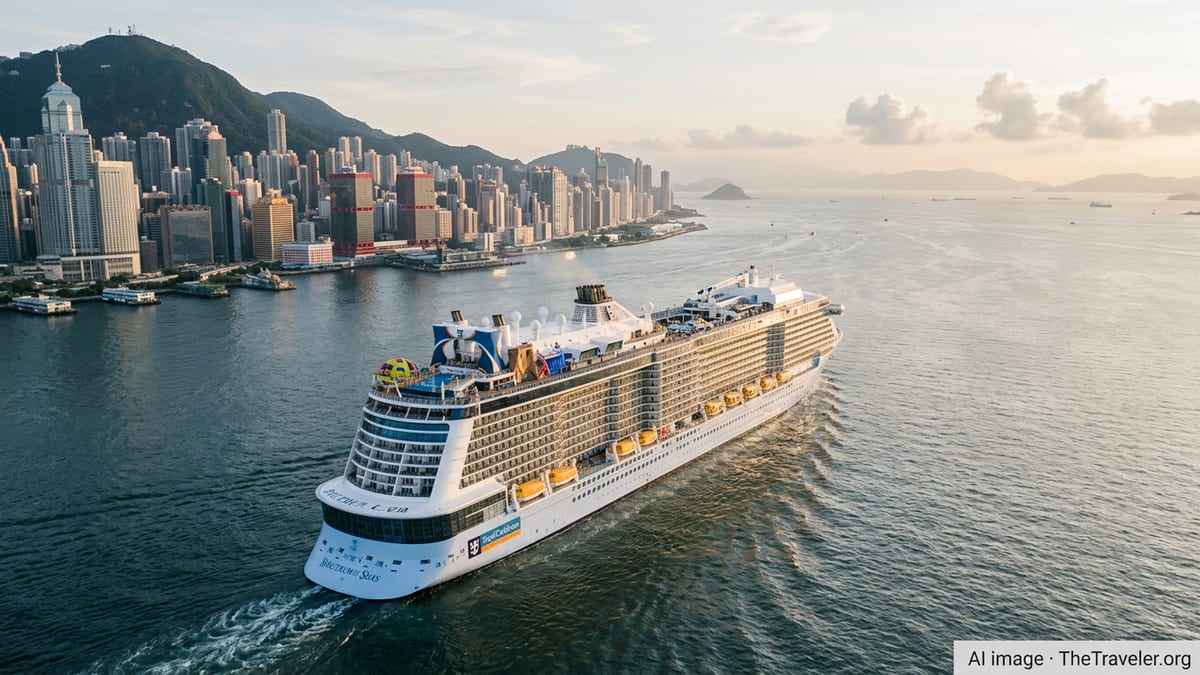
Royal Caribbean is charting an expansive 2027–2028 deployment that will see its cruise ships spread across the Caribbean, Europe, Alaska and Asia, as the line positions its newest “mega” vessels alongside refreshed classics in key global homeports.
Get the latest news straight to your inbox!
Caribbean Remains the Heart of the 2027–2028 Lineup
Publicly available schedules and deployment announcements indicate that the Caribbean will remain Royal Caribbean’s core focus in 2027 and early 2028, with a dense web of itineraries from Florida, the US Gulf Coast and the Northeast. Company releases outlining the 2027–2028 program highlight new and returning routes from Port Canaveral, Miami and Fort Lauderdale, alongside seasonal offerings from Tampa, New Orleans and San Juan.
Icon of the Seas, which debuted in 2024, is scheduled to shift to Galveston for the first time in August 2027, bringing one of the line’s newest ships to the Western Caribbean on weeklong itineraries. Other large vessels, including Harmony of the Seas and Utopia of the Seas, are set to operate from Port Canaveral, while Freedom-class and Voyager-class ships continue shorter getaways from Florida to Cozumel, Costa Maya, Nassau and Royal Caribbean’s private destination, Perfect Day at CocoCay.
Investor and press materials for the 2027–2028 Caribbean season also describe an emphasis on more frequent calls at private and branded destinations. Itineraries repeatedly feature Perfect Day at CocoCay, new Royal Beach Club concepts and ABC island routes, reinforcing the line’s strategy of blending high-capacity ships with controlled, resort-style shore experiences.
Several smaller and mid-sized ships are allocated to longer Southern Caribbean sailings from San Juan and, based on deployment summaries, from ports such as Cartagena and Colón. These cruises typically reach Aruba, Curaçao and Bonaire, along with less frequently visited ports in the Dominican Republic and the Lesser Antilles, providing alternatives to the heavily traveled Western and Eastern Caribbean loops.
Oasis, Icon and Quantum Class Ships Rotate Through Key Homeports
The 2027–2028 deployment underscores how Royal Caribbean is using its newest and largest ships to anchor major homeports. Icon-class vessels are slated to split time between Europe and North America, then return to Florida and Texas for peak Caribbean seasons. At the same time, Oasis-class hardware, including Allure of the Seas and Harmony of the Seas, appears in year-round or nearly year-round service from Florida, with seasonal shifts linked to dry docks and amplifications.
According to corporate announcements, Symphony of the Seas is set to homeport in Texas for the first time in 2027, offering four- to eight-night Western Caribbean itineraries that include Cozumel, Costa Maya and calls at Royal Caribbean’s beach destinations. Utopia of the Seas and Wonder of the Seas are positioned around Port Canaveral and Miami on shorter and seven-night cruises, reflecting strong demand for high-capacity ships on drive-to routes from central and South Florida.
Quantum-class vessels also play a prominent regional role. Some are slated to remain in Asia and the Pacific, but deployment details point to continued use of Quantum- and Anthem-class ships on itineraries from the US Northeast to Bermuda, Canada and the Caribbean. In press-center documentation for 2027–2028, Royal Caribbean pairs these technologically advanced ships with routes that include overnights or late stays in marquee ports, marketing them as flexible platforms for both warm-weather escapes and shoulder-season sailings.
Newbuilds expected later in the decade, including an additional Oasis-class ship targeted for 2028, are referenced in fleet overviews but not yet fully assigned to specific 2028 itineraries. Current planning materials suggest that once delivered, these vessels will likely follow the existing pattern of rotating between European summers and Caribbean winters, though final homeport decisions may adjust based on demand and port-development timelines.
Europe, Alaska and Asia Add Seasonal Breadth
While the Caribbean dominates Royal Caribbean’s deployment, scheduling information for 2027 shows a substantial summer presence in Europe. Itineraries published by the line and summarized by cruise industry outlets point to at least seven ships operating across the Mediterranean and Northern Europe, homeporting in cities such as Barcelona, Civitavecchia, Ravenna, Southampton and Athens.
In the Mediterranean, Oasis- and Quantum-class ships are planned on weeklong loops visiting marquee ports like Naples, Marseille and the Greek islands, often combining Western and Eastern circuits across the season. Smaller ships are earmarked for longer voyages touching Israel and the eastern Mediterranean when regional conditions allow, as well as itineraries that include the Adriatic and Dalmatian coasts. Northern Europe programs from Southampton and other ports feature crossings to the Norwegian fjords, the Baltic region and the Canary Islands.
For Alaska, Royal Caribbean’s 2027 brochures and deployment notes indicate that Radiance- and Quantum-class ships will once again be based in Vancouver, Seattle and potentially Seward or other Gulf of Alaska ports. These vessels are typically assigned a mix of roundtrip Inside Passage sailings and one-way cruises paired with land tours into the Canadian Rockies or Alaska’s interior. The 2027 itineraries follow that established pattern, with port calls in Juneau, Skagway, Ketchikan and popular glacier-viewing areas.
In Asia, Quantum of the Seas is scheduled to homeport in Singapore from late 2027 into early 2028, offering a blend of three- to seven-night getaways to destinations around Southeast Asia. Royal Caribbean has emphasized the repeat appeal of this deployment, positioning Quantum as a familiar ship for the regional market and tailoring itineraries around school holidays and festive periods to capture both local and fly-cruise demand.
Homeport Shifts Reflect Demand and Port Development
Across the 2027–2028 program, the line’s deployment decisions track closely with port investments and shifting travel patterns. Industry reporting on Royal Caribbean’s plans highlights the importance of Galveston, where expanded terminal capacity enables the arrival of Icon of the Seas and eventually other large ships. Similar attention is directed to Port Canaveral and Miami, where upgraded facilities facilitate turnarounds for multiple Oasis- and Icon-class vessels on the same weekend.
In the Northeast, Royal Caribbean maintains a presence from Cape Liberty and potentially other nearby ports, using larger ships during the peak summer season for Canada, New England and Bermuda, then repositioning some of that capacity southward for winter Caribbean service. Schedules released so far suggest a balancing act between serving loyal drive-to markets and optimizing ships on higher-yield Caribbean itineraries.
European homeport choices for 2027 continue a trend toward spreading capacity between Western and Eastern hubs. Barcelona and Civitavecchia remain important gateways, but Ravenna and Athens also appear as embarkation points in public deployment outlines, likely tied to itineraries that focus more heavily on the eastern Mediterranean and Greek islands. Southampton continues as a base for the UK market, with a mix of shorter cruises and longer Northern Europe voyages.
In Latin America, routing through Cartagena and Colón reflects Royal Caribbean’s broader strategy of using emerging homeports to build new patterns of Caribbean and Panama Canal cruising. The 2027–2028 plans outlined in trade and investor materials indicate that selected Radiance- and Vision-class ships will operate from these ports on seven-night or longer journeys that link Central and South American coastlines with more traditional Caribbean island calls.
Not All Ship Assignments Are Finalized
Although Royal Caribbean’s public materials describe a wide-ranging 2027–2028 deployment, not every ship in the fleet has a fully fixed schedule for the entire period. Trade publications tracking the rollout of new sailings note that the line is still releasing itineraries in phases, and that adjustments are likely as demand patterns evolve, new ports come online and shipyard slots for refurbishments are finalized.
Some ships expected to undergo dry dock work or amplifications around 2027 do not yet have full-season itineraries listed in consumer-facing tools. Others, particularly older Vision- and Radiance-class vessels, appear in broad deployment descriptions without detailed voyage calendars beyond early 2028. Observers of past deployment cycles point out that Royal Caribbean frequently refines these plans, adding shoulder-season repositioning cruises and specialty voyages closer to departure dates.
Industry coverage also emphasizes that geopolitical and regulatory factors can affect final routing. Eastern Mediterranean cruises, calls in certain Caribbean ports and select Asia-Pacific sailings have historically been adjusted in response to local circumstances. For 2027 and 2028, planners are signaling flexibility by highlighting ship classes and homeport regions rather than locking every vessel to a single pattern two years in advance.
For travelers and travel advisors, the emerging picture for 2027–2028 is that Royal Caribbean’s largest and newest ships will be concentrated in the Caribbean, Europe and select marquee markets such as Galveston and Singapore, while mid-sized and smaller ships continue to explore longer, more varied routes. As additional deployment details are published, the distribution of ships across the fleet is expected to sharpen, filling in the remaining gaps in the global map for those seasons.