


Used strategically, the Emirates Skywards Rewards World Elite Mastercard can be far more than a niche airline card. For a traveler based in the United States who flies Emirates even once a year and wants to build Skywards miles from everyday spending, this card can become a focused mileage machine. Here is exactly how I would apply for it today and structure my travel and purchases over the first 12 months to squeeze maximum value out of every Skywards mile.
Get the latest updates straight to your inbox!
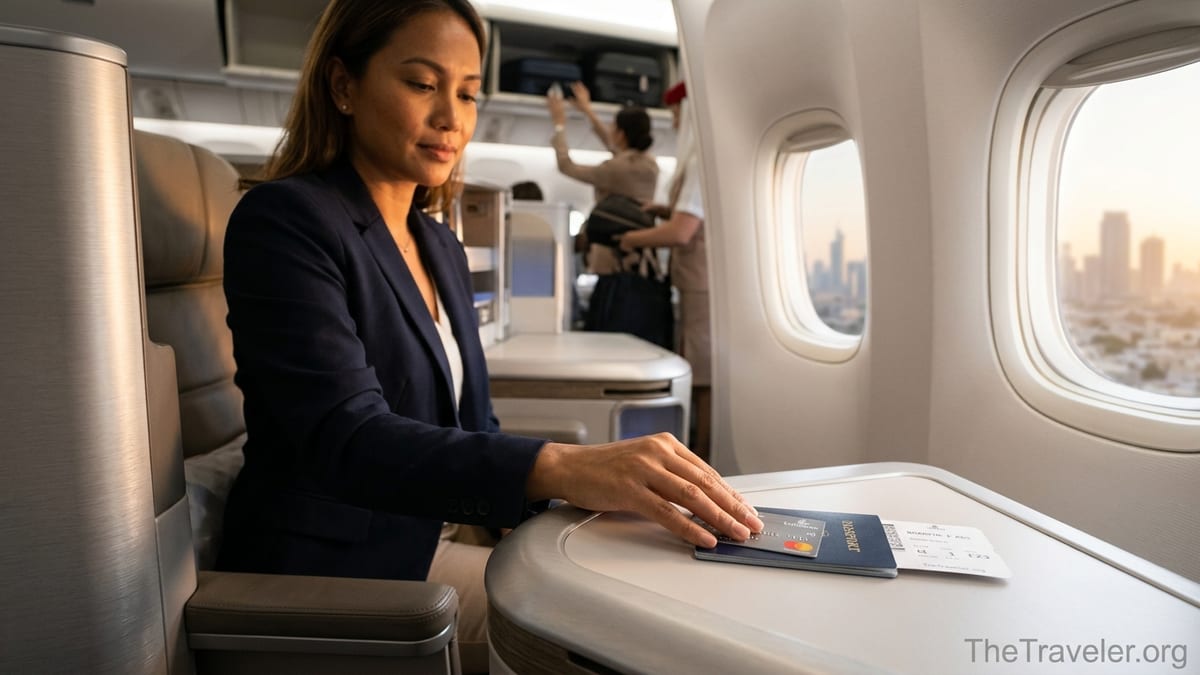
Understanding the Emirates Skywards Rewards World Elite Mastercard
The Emirates Skywards Rewards World Elite Mastercard is one of two cobranded Emirates cards issued in the United States by Barclays. It is the lower fee option, with a midrange annual fee that typically appeals to travelers who like Emirates but do not need all the premium perks of the higher tier card. The Rewards version earns Skywards miles directly, so every purchase you make feeds your Emirates Skywards balance without going through a bank points program.
The card’s earning structure is designed around Emirates loyalists. Recent public terms have offered 3 Skywards miles per dollar on eligible Emirates purchases, 2 miles per dollar on many travel purchases such as airline tickets, hotel stays and rental cars, and 1 mile per dollar on everything else. That means a 1,200 dollar round trip Emirates fare from New York to Milan could generate roughly 3,600 Skywards miles from the card alone, on top of the miles you earn from flying.
There is also a welcome bonus that has recently been in the range of 30,000 Skywards miles after you meet a moderate minimum spend in the first 90 days. Exact bonuses change regularly, which is why I always check the current offer on the issuer’s application page before applying. In general, I would not apply unless there is a sign up bonus available, since that is often worth at least a one way economy award on shorter Emirates routes when used well.
Beyond earning rates, the card includes airline specific benefits that help justify keeping it beyond year one. You may see features such as an initial boost to Emirates Skywards Silver tier, discounts on buying or gifting miles, and the extremely valuable perk that miles earned on the card do not expire as long as your credit card account stays open and in good standing, even if you are not flying Emirates frequently.
My First 90 Days: Chasing the Welcome Bonus Efficiently
The first three months after approval are where the Emirates Skywards Rewards World Elite Mastercard can deliver a big jump in your Skywards balance. To take advantage, I would plan ahead so that the minimum spend needed for the welcome bonus is met naturally through expenses I already expect, rather than forced or wasteful purchases.
Imagine the current public offer requires 3,000 dollars in purchases within 90 days to unlock 30,000 Skywards miles. If I know I have a 1,200 dollar family Emirates ticket from Chicago to Dubai coming up, I would time my application so that fare posts soon after my card is approved. That single transaction already covers 40 percent of the minimum. Next, I might prepay 600 dollars toward a hotel stay in Dubai, 400 dollars in domestic airfare on another airline for a separate trip, and then allow regular expenses like groceries, gas, and streaming subscriptions to fill in the remaining 800 dollars over two months.
The key is to funnel every eligible purchase through the new card during the bonus window. For example, if my household usually spends 1,000 dollars per month on groceries, dining, utilities and digital services, simply switching all of that spend onto the Emirates card for three months could cover the entire minimum on its own. I would also move any upcoming big but necessary expenses, such as annual car insurance payments or tuition installments, onto the card as long as any processing fees do not outweigh the value of the miles I expect to earn.
Practically, I set a reminder in my calendar for about 75 days after account opening to double check my tracked spend against the requirement. That gives me a two week buffer to close any remaining gap with normal expenses. I also review my first two statements right away to ensure that key transactions are coding correctly as travel or Emirates purchases, since those bonus categories accelerate earning even while I am working toward the welcome offer.
Building Everyday Spend Around Skywards Earning
Once the welcome bonus is secured, the next step is turning the Emirates Skywards Rewards World Elite Mastercard into a workhorse for the right categories. For Emirates tickets, it becomes my default payment method as long as I am not sacrificing a dramatically better return on another premium travel card. If I book a 2,000 dollar round trip in economy from San Francisco to Dubai for two passengers, that purchase alone could generate about 6,000 Skywards miles from the card, plus miles credited from actually flying.
For other travel spending, I would compare the Emirates card’s 2x earning rate to what my general travel card offers. Suppose I also hold a flexible points card that earns 3 points per dollar on all travel, and I typically transfer those points to an airline at a 1 to 1 ratio. On a 500 dollar hotel bill in Lisbon, that general card might earn 1,500 points, while the Emirates card earns 1,000 Skywards miles. If my priority is building a flexible pool of points for multiple airlines, I might keep hotels on the other card. If I am aiming to book a specific Emirates business class award in the next 18 months, I might instead push more hotel and car rental spend onto the Emirates card to swell my Skywards balance faster.
Outside of travel, the Emirates card earns 1 mile per dollar on everyday purchases. Here, I would be selective. It makes sense to put large periodic expenses on the Emirates card when I have a concrete Emirates redemption in mind. For example, paying a 900 dollar annual property insurance bill, 600 dollars in back to school shopping in August, and 400 dollars in holiday gifts in December on the card adds 1,900 Skywards miles for spending I would incur anyway. But if I have another no fee card that earns 2 percent cash back on everything, I would think about the relative value of a Skywards mile versus 2 cents in cash before routing all my groceries and utilities to the Emirates card by default.
In practice, I tend to use the Emirates Skywards Rewards World Elite Mastercard most heavily in the three to six months before an anticipated Emirates booking. During that period, I move as much spend as is comfortable onto the card to top up my mileage balance for a specific trip, such as a one way business class Seat upgrade from Dubai to Bangkok, which can sometimes price around 39,000 to 45,000 Skywards miles from certain paid economy fares on select dates.
Strategic Redemption: Where Emirates Skywards Miles Shine
To get real value from the Emirates Skywards Rewards World Elite Mastercard, you need to redeem miles thoughtfully. Emirates does not publish a traditional fixed award chart, and pricing varies by route, cabin, demand and season. The sweet spots often emerge on specific routes and when you book far in advance or remain flexible with dates. For example, one way economy awards between some European cities and Dubai can sometimes be found for roughly 22,500 to 30,000 miles plus taxes, which might be a good use of a welcome bonus if cash fares are high during your travel period.
A more aspirational use case is long haul business class. A one way business class ticket from New York to Dubai can easily cost 3,000 dollars or more in cash. With Skywards, you might occasionally find saver level awards around the low six figure range of miles, plus several hundred dollars in surcharges and taxes, depending on the season and exact route. If I were planning a trip to the Maldives, for instance, I might book a paid economy fare to Dubai and then use Skywards miles to upgrade to business on one direction, which often requires fewer miles than booking business outright and still delivers the full premium cabin experience on the overnight segment.
Upgrades can be especially powerful if your employer pays for a flexible economy ticket on Emirates for work travel. In that scenario, putting the ticket payment on your Emirates card generates miles, your company covers the fare, and you apply your personal Skywards miles from card and flight activity to upgrade. A single upgrade from economy to business on a Dubai to London route could easily deliver a few thousand dollars in perceived value in exchange for a mileage outlay that stems largely from your regular spending with the card.
Shorter regional routes are another area where Skywards miles can work well. If you are using Dubai as a connection hub, it is sometimes possible to tack on a side trip to cities like Muscat, Bahrain or Kuwait by redeeming miles for a regional award rather than paying separate cash fares. Before each trip, I compare the cash price of these short hops to the number of Skywards miles required and focus my redemptions where the cents per mile looks strongest.
Pairing the Card With Other Points Ecosystems
In my own wallet, the Emirates Skywards Rewards World Elite Mastercard rarely exists in isolation. I think of it as a specialist tool sitting alongside one or two broad earning cards tied to flexible currencies. Many major bank programs in the United States allow transfers to Emirates Skywards at varying ratios, which means I can boost my Skywards balance when a particularly strong redemption opportunity appears.
Consider a traveler who keeps most day to day spending on a general travel card that earns 2 or 3 flexible points per dollar, then selectively transfers those points to Emirates when planning an Emirates heavy trip. When they see a good Emirates business saver award from Los Angeles to Dubai, they might transfer 60,000 to 80,000 flexible points and then top up the booking with 20,000 to 30,000 miles accumulated from their Emirates Mastercard through one or two big ticket purchases. The combination makes premium cabin travel achievable sooner than relying on one program alone.
Another helpful pairing is with a no annual fee cash back card. Sometimes the smartest strategy in a given month is to build a cash buffer instead of airline miles, especially if you do not have an Emirates trip planned within the next 18 to 24 months. A 2 percent cash back card can cover airport transfers, hotel taxes or ancillary fees on an Emirates itinerary, while your Emirates card focuses on big Emirates purchases and targeted earning in the lead up to specific redemptions.
What I avoid doing is spreading my spend so thinly across multiple airline cards that I never reach a meaningful redemption on any of them. If I know Emirates will feature in my travel plans at least once every year or two, I make a conscious decision that the Emirates Skywards Rewards World Elite Mastercard will be one of my primary travel tools for that period. If my patterns change and I am not flying Emirates at all for a couple of years, I reevaluate whether the card’s annual fee still makes sense or if I should pause my Emirates focus and lean more on flexible points cards instead.
Realistic Year One Scenario: A Sample Mileage Game Plan
To show how this can play out in practice, consider a realistic United States based traveler planning an annual family trip to Dubai plus one smaller international getaway. Suppose they open the Emirates Skywards Rewards World Elite Mastercard in January, with a welcome offer of 30,000 miles after 3,000 dollars in spending in 90 days.
In February, they purchase two economy tickets from New York to Dubai for 1,400 dollars total during a sale. That spend at 3 miles per dollar generates about 4,200 miles. In March, they prepay 800 dollars toward a hotel in Dubai and 400 dollars for a rental car in Florida for a summer trip, which earn at 2 miles per dollar for another 2,400 miles. Everyday expenses like groceries, gas and streaming subscriptions over the first quarter add another 1,000 dollars in non bonus spend, for 1,000 miles. By early April, they have met the 3,000 dollar minimum, triggered the 30,000 mile welcome bonus, and earned roughly 7,600 miles from spend alone, for a total of about 37,600 new Skywards miles.
Later that year, they use the Skywards balance to offset the cost of a one way upgrade to business class on the overnight Dubai to New York segment on their return trip. While exact mileage costs vary, let us imagine this upgrade requires around 39,000 to 45,000 miles from an eligible paid fare. They top up the account by routing a 900 dollar home repair bill and 700 dollars in fall travel expenses through the card, earning another 2,300 miles. Combined with miles earned from flying, the welcome bonus and ongoing card spend have effectively unlocked a lie flat seat on a long haul flight that would have cost several thousand dollars in cash.
Over time, repeating this pattern each year with thoughtful timing allows the traveler to regularly enjoy premium cabin experiences or free regional add on flights without dramatically increasing their spending. The key ingredients are planning applications around large known expenses, being deliberate about which purchases go on the Emirates card and keeping a running mental tally of how close you are to your next high value redemption.
The Takeaway
If I were applying for the Emirates Skywards Rewards World Elite Mastercard today, I would approach it with a clear 12 month plan. I would first confirm that the current welcome offer is robust enough to justify an application, then line up Emirates tickets and other big expenses during the initial 90 day window to secure the bonus efficiently without overspending. From there, I would concentrate my Emirates and select travel purchases on the card while letting a flexible points or cash back card handle most non travel charges.
The Emirates Skywards program can be extremely rewarding, but only if you think carefully about redemption value. I would target long haul premium cabin flights, strategic upgrades and regional add on segments where the cents per mile make sense, rather than redeeming miles for low value options like merchandise. By pairing the Emirates card with at least one flexible points card, I could also keep my options open if my travel patterns change.
For United States travelers who see Emirates in their future at least every year or two, the Emirates Skywards Rewards World Elite Mastercard can punch well above its annual fee when used with intention. The card’s direct mileage earning, airline specific perks and ability to keep your Skywards miles active make it a focused tool for turning everyday spending into aspirational travel, provided you go in with a strategy instead of swiping on autopilot.
FAQ
Q1. Is the Emirates Skywards Rewards World Elite Mastercard worth it if I only fly Emirates once a year?
If you take at least one Emirates flight each year and can comfortably meet the welcome bonus spending requirement with normal expenses, the card can be worthwhile. The combination of sign up miles, elevated earning on Emirates purchases, and airline specific perks often offsets the annual fee for travelers who plan at least one Emirates trip every year or two.
Q2. What credit score do I generally need to qualify for the Emirates Skywards Rewards card?
The card is typically aimed at applicants with good to excellent credit, which in practice often means scores in the high 600s or above, with stronger approval odds in the 700s. Lenders also look at income, existing debts and your overall credit profile, not just a single score.
Q3. How long does it take for welcome bonus Skywards miles to post after I meet the minimum spend?
In many cases, welcome bonus miles appear within a few weeks after the statement period in which you meet the spending requirement, though exact timing can vary. I always keep records of my purchases and watch the first two or three statements closely to confirm the bonus has posted correctly.
Q4. Do Skywards miles earned from the credit card expire?
Skywards miles normally have an expiration timeline, but a key perk of this card is that miles earned from the cobranded Emirates credit card remain active as long as your credit card account is open and in good standing. If you close the card or fall behind on payments, standard mileage expiration rules can apply.
Q5. Can I use the card without paying foreign transaction fees when I am abroad?
The Emirates Skywards Rewards World Elite Mastercard is designed as a travel card and typically does not charge foreign transaction fees on purchases made outside the United States. This makes it particularly useful for international trips where you want to earn Skywards miles on overseas spending.
Q6. What kinds of purchases count toward the minimum spend for the welcome bonus?
Most everyday purchases such as airfare, hotel stays, dining, groceries, gas and online shopping count toward the minimum spend. Common exclusions include balance transfers, cash advances, fees and interest charges. It is always wise to review the current terms and conditions on the application page before assuming a particular transaction type will qualify.
Q7. How do I know if I should put a hotel or rental car on this card or on another travel card?
I compare the earning rate and the type of rewards I value most. If another card earns more points or offers better protections while my Emirates balance is already healthy, I might use that instead. If I am working toward a specific Emirates redemption and the earnings are competitive, routing hotel and car rentals through the Emirates card can help top up my Skywards balance faster.
Q8. Can I add authorized users to help earn more Skywards miles?
Yes, adding authorized users can be an effective way to increase earning, since their purchases will also generate Skywards miles that accrue to your account. I only add trusted family members and make sure everyone understands that I am ultimately responsible for all charges on the account.
Q9. Is it better to redeem Skywards miles for upgrades or for full award tickets?
The answer depends on the route, cabin and cash prices at the time you book. Upgrades from eligible paid economy or premium economy tickets to business class can sometimes deliver excellent value, especially on overnight long haul flights. Full award tickets can also be attractive when cash fares are very high. I usually price out both options in miles and in cash to see which delivers a better return.
Q10. What should I do if I stop flying Emirates frequently after getting the card?
If your travel habits change and you rarely fly Emirates, review the annual fee against the benefits you actually use before your renewal date. You might decide to keep the card for one more year to use existing miles, downgrade or close the account, or shift your focus to a more flexible travel card that better matches your new patterns.