


More news on this day
The United States has issued a heightened security alert for the Middle East, urging Americans outside the region to “seriously reconsider” travel to or through it as tensions with Iran and Iranian-backed groups raise the risk of sudden escalation and major transport disruption.
Get the latest news straight to your inbox!
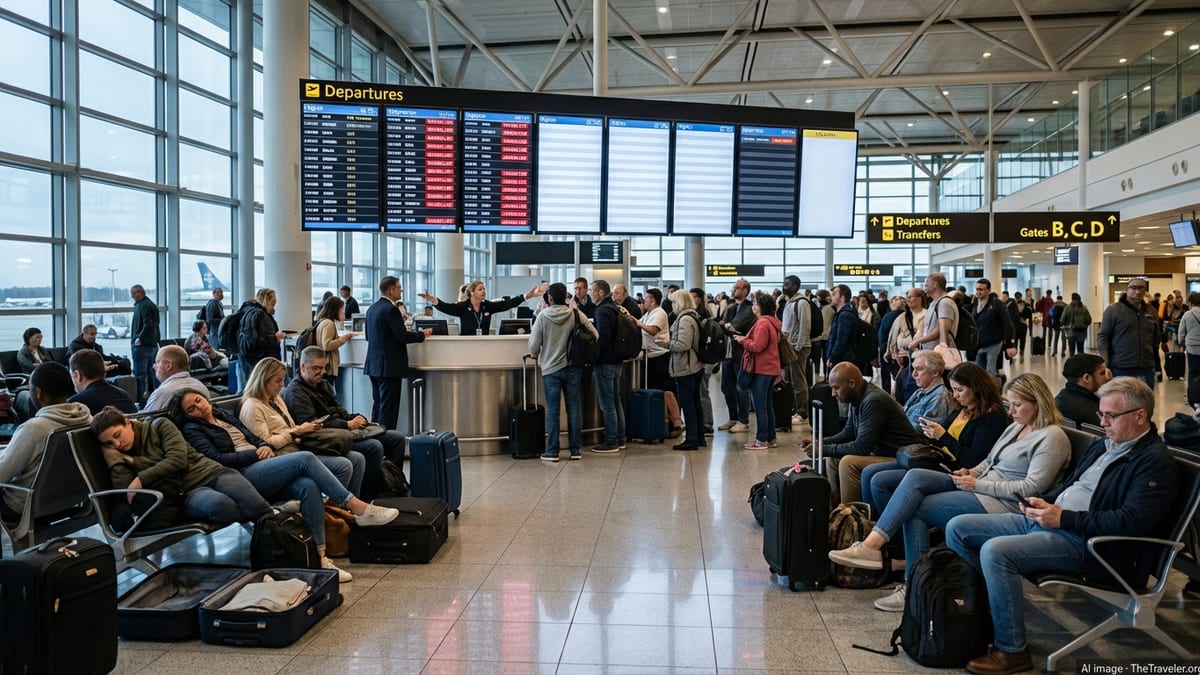
Alert issued amid fears of rapid escalation
According to publicly available information from the US State Department’s consular services, the latest alert was published over the weekend of September 19 to 20, 2026, highlighting what officials describe as a complex and volatile security environment across the Middle East. The advisory states that the ongoing conflict involving Iran and Iranian-aligned armed groups could intensify with little warning.
Reports indicate that the message was disseminated through the State Department’s TravelGov channels and reposted by multiple US embassies in the region. The alert emphasizes that the current military confrontation has “the potential to escalate rapidly,” with knock-on effects for both security conditions on the ground and civilian air travel across key hubs.
Coverage by international and regional media notes that the wording goes beyond routine travel caution language, explicitly calling on Americans outside the Middle East to “seriously reconsider travel to and through the region.” The phrasing signals a higher level of concern about the possibility of swift deterioration, even in destinations that have traditionally marketed themselves as stable transit or tourism points.
The warning follows weeks of increased missile and drone activity linked to Iranian-supported Houthi forces and other groups, particularly around Saudi Arabia and neighbouring states. Publicly available reporting highlights renewed strikes and attempted strikes near civilian airports and critical infrastructure, raising concerns about spillover effects on commercial aviation and foreign visitors.
Flight cancellations, airspace closures and travel disruption
The alert underlines the risk of sudden flight cancellations, temporary airspace closures and broader travel disruption affecting both direct journeys and connecting itineraries through major regional hubs. Travel industry coverage notes that carriers serving Gulf and Levant routes have already faced periodic schedule changes and diversions during previous spikes in regional tension.
Publicly available embassy notices advise Americans currently in the Middle East to exercise what is described as “heightened vigilance” and to closely monitor airline communications, airport announcements and local news. Travelers are being encouraged to maintain flexible plans, keep accommodation and onward connections adjustable where possible, and ensure they have access to funds and travel documents in case rapid departure becomes necessary.
Specialist travel media reports that some insurers and airlines may adjust their policies in response to evolving risk assessments, particularly for routes that pass near conflict-affected areas or airspace subject to short-notice restrictions. While exact impacts vary by carrier and country, the State Department messaging suggests that even transit passengers could face extended delays or rerouting.
The advisory also notes that the security situation could disrupt consular services in affected locations. Public information from recent embassy alerts highlights that limited staffing, movement restrictions or local curfews may at times constrain how quickly in-person assistance can be provided, making advance preparation especially important for US nationals.
Targeting of US interests and diplomatic facilities
The security alert reiterates concerns about potential targeting of sites associated with the United States, including diplomatic missions, businesses and other institutions. Recent public reporting has documented incidents in which US diplomatic facilities in and beyond the Middle East have come under threat in connection with regional tensions.
According to published coverage of the new advisory, US authorities are warning that Iran and groups supportive of Iran may look to strike US-linked locations or individuals as part of a broader regional confrontation. This includes venues that attract foreign visitors such as international hotels, business districts, and transport hubs that are seen as symbolic or practical targets.
While the alert does not single out specific cities or countries, reports indicate that embassies in Bahrain, Iraq, Israel, Jordan, Kuwait, Lebanon, Oman, Qatar, Saudi Arabia and the United Arab Emirates have amplified the message through their own channels. The emphasis is on situational awareness, avoiding large gatherings that could become flashpoints, and following local security guidance issued by host governments.
Travel-security analysts quoted in open media describe the combination of direct military activity, proxy involvement and political uncertainty as creating an unusually fluid risk picture for foreign nationals. For US travelers, that means the threat profile may differ sharply between destinations and can shift quickly in response to developments on the ground.
How the advisory fits into existing travel guidance
The latest alert builds on several earlier notices issued in 2026 about the Middle East, including a renewed warning in early August that Americans in the region should consider departing or be prepared to leave quickly if conditions worsened. Travel-focused publications reported that those earlier messages already urged prospective visitors to seriously reconsider nonessential trips.
The United States maintains detailed country-specific travel advisories that grade destinations on a four-level scale ranging from normal caution to “Do Not Travel.” These advisories, published on official platforms, incorporate factors such as terrorism, armed conflict, civil unrest, kidnapping and access to medical care. The new regional alert sits alongside those more granular assessments, serving as an overlay that reflects broader, cross-border risks.
Publicly available information suggests that some Middle Eastern destinations had already been subject to higher-level warnings before the latest escalation, particularly areas directly affected by ongoing conflicts. The fresh message, however, underscores that secondary effects such as airspace disruption, missile or drone overflight, and pressure on consular resources may now reach further than front-line zones alone.
Travel news outlets note that this kind of regional signal can influence how airlines, tour operators and corporate travel departments assess the viability of planned itineraries. Even in locations where day-to-day life appears relatively normal, the possibility of sudden deterioration is now a central consideration for both leisure and business travelers from the United States.
What US travelers are urged to do next
In light of the alert, Americans planning trips to the Middle East are being encouraged, through publicly accessible guidance, to reassess whether their travel is essential at this time. That includes carefully weighing the purpose of the journey against the potential for personal risk, logistical disruption and limited options to change plans at short notice.
Those who decide to travel despite the warning are advised in open-source guidance to enroll in the State Department’s Smart Traveler Enrollment Program, keep their contact information up to date and regularly check official advisories for their specific destination. Travel reports stress the importance of ensuring that passports, visas and any required residence permits are valid and readily accessible.
US nationals already in the region are being reminded via embassy and consular notices to review their personal security posture. That can include identifying more than one way to exit the country, verifying that mobile phones and communication apps function in the local environment, and maintaining a supply of essential medications and emergency cash in case of sudden movement restrictions.
Travel-industry and security experts quoted across multiple outlets also highlight the value of confirming how airlines, hotels and tour providers would handle abrupt changes caused by security events. Refund policies, change-fee waivers and the availability of alternative routing can significantly affect how manageable a rapid departure or last-minute adjustment might be.