


More news on this day
Strengthening African passports and a broader global travel rebound are reshaping tourism in Southern Africa, with Eswatini, Namibia and several regional peers leveraging improved mobility to attract visitors and send more of their own citizens abroad.
Get the latest news straight to your inbox!
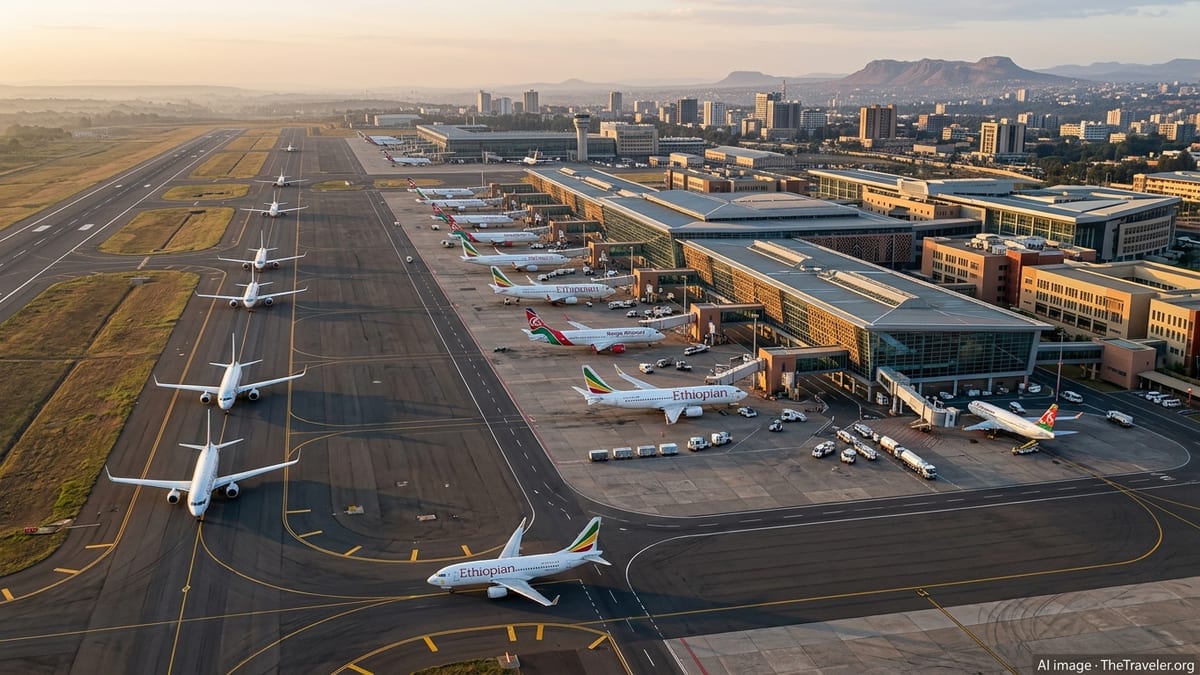
Rising Passport Strength Reshapes African Travel Dynamics
Across Africa, incremental gains in passport strength are beginning to influence where people can go, how easily they travel and how tourism-dependent economies position themselves. Global indices that track visa-free and visa-on-arrival access show a gradual improvement in mobility for several African states, even if they still lag far behind top-ranked European and Asian passports. According to published Henley Passport Index data, African passports such as those of Eswatini and Namibia now provide access to more destinations than a decade ago, reflecting a slow but steady broadening of travel options for their citizens.
For Eswatini, recent Henley figures indicate that citizens can enter more than 60 countries and territories without a traditional visa, placing the kingdom’s passport in the lower-middle tier globally but ahead of several other sub-Saharan states in terms of travel freedom. Publicly available information for Namibia shows similar mid-range performance, with Namibian passport holders enjoying visa-free or visa-on-arrival access to around 70 destinations, according to global passport comparison platforms. These numbers remain modest compared with the top-ranked passports worldwide, yet they represent tangible progress that can make both leisure and business travel more attainable.
Analysts of mobility trends note that even marginal improvements in rankings can have outsized effects in regions where travel barriers have historically been high. Easier access to regional hubs, long-haul destinations and emerging business centers encourages outbound tourism, supports diaspora connections and helps local firms participate more directly in global trade and investment. As more African countries negotiate bilateral visa waivers and streamline entry requirements, passport indices are likely to continue inching upward.
The evolving passport landscape also sends an important signal to investors and tourism operators. A trajectory of improving mobility can reinforce perceptions of political stability, regulatory predictability and international engagement, all of which matter when multinational hotel brands, airlines and tour operators decide where to deploy capital and capacity.
Eswatini’s Tourism Recovery Gains Momentum
Eswatini’s tourism sector is emerging from the pandemic period with renewed momentum, supported by both inbound demand and greater outbound movement by its own residents. The Eswatini Tourism Authority’s research portal and associated reports point to a sustained recovery in international arrivals, with data for 2023 and 2024 showing a strong rebound in visitor numbers compared with the trough of 2020 and 2021. A locally reported target to attract around 2 million tourists by 2027 underlines the sector’s central role in the country’s economic strategy.
Domestic reporting on arrivals for 2024 indicates that Eswatini welcomed close to one million international visitors, up notably from the previous year. A separate account of border statistics for early 2025 points to double-digit growth in outbound travel by Eswatini residents, suggesting that rising incomes, improving air links and greater passport utility are jointly expanding mobility in both directions. Tourism, transport and communications have been cited in international economic assessments as key contributors to Eswatini’s recent GDP growth, reinforcing the link between travel activity and broader economic performance.
Seasonality remains a feature of Eswatini’s tourism calendar, with cultural events and school holidays producing noticeable peaks in visitor volumes. An official annual tourism report covering late 2024 describes a more than 40 percent year-on-year increase in international visitors in December alone, partly associated with traditional ceremonies and end-of-year travel. Such surges highlight the importance of cultural heritage and domestic festivities in sustaining demand, while also creating opportunities for local businesses in accommodation, food services and transport.
Infrastructure and connectivity improvements are another pillar of the kingdom’s tourism strategy. The launch of Eswatini Air’s regional routes in recent years, including service to Durban via King Shaka International Airport as highlighted by provincial authorities in South Africa, has enhanced regional accessibility. These links simplify multi-country itineraries that combine Eswatini with South Africa and Mozambique, aligning closely with growing interest in cross-border circuits among international visitors to Southern Africa.
Namibia Capitalizes on Global Travel Boom
Namibia has been among the standout performers in Africa’s post-pandemic tourism recovery. Industry-focused coverage on the country’s 2024 performance reports about 1.26 million international tourist arrivals, representing a jump of more than 45 percent compared with 2023 and bringing volumes close to or above pre-2020 levels. This resurgence has been driven largely by long-haul holidaymakers attracted by Namibia’s desert landscapes, wildlife and coastal experiences, alongside a smaller but growing segment of business and conference travelers.
Published tourism statistics for 2024 indicate that leisure travel accounts for nearly half of all international arrivals to Namibia, a share that underscores the country’s positioning as a nature and adventure destination. Key source markets include Germany, other European states, South Africa and neighboring Angola, Botswana, Zambia and Zimbabwe, reflecting both intercontinental and intra-African flows. Improved global travel conditions in 2024 and 2025, as flagged by United Nations tourism monitoring, have further supported Namibia’s recovery by normalizing air capacity and restoring traveler confidence.
Namibia’s passport performance plays a subtler but still relevant role in this context. With visa-free or visa-on-arrival access to more than 70 destinations according to aggregated passport indices, Namibian citizens face fewer hurdles when traveling abroad than many of their regional peers. This relatively higher level of mobility helps sustain outbound tourism, deepens ties with key origin markets and facilitates training and exchange programs for tourism workers, all of which feed back into the quality and competitiveness of the local tourism offering.
The rebound in arrivals has also encouraged renewed investment in tourism infrastructure, from lodge upgrades in popular areas such as Etosha and Sossusvlei to new offerings in community-based and conservation tourism. Industry publications highlight rising interest from international hotel groups and tour operators seeking partnerships in Namibia, encouraged by strong occupancy rates and a stable regulatory environment.
Continental Trends: Africa’s Tourism and Mobility Upswing
At the continental level, Africa is benefiting from a broad-based tourism upswing. UN tourism data for 2024 show that international arrivals to Africa climbed into the mid-70 million range and continued to grow into 2025, approaching or surpassing pre-pandemic records. A recent update shared through UN tourism communication channels notes that Africa welcomed more than 80 million visitors in 2025, marking another year of expansion and highlighting a continent-wide travel boom.
This recovery aligns with the global pattern documented by the UN World Tourism Organization, which has reported that international tourism effectively returned to pre-pandemic levels in 2024, supported by pent-up demand, restored air connectivity and the gradual normalization of long-haul travel. Within that global picture, Africa’s rebound has been particularly notable given the sector’s importance for employment, foreign exchange earnings and rural development across many of the continent’s economies.
Visa policies and passport strength form part of this story. Several African states have introduced or expanded visa-on-arrival and e-visa systems in recent years, while regional blocs explore more ambitious freedom-of-movement arrangements. These initiatives contribute to modest but meaningful improvements in passport rankings for countries such as Eswatini, Namibia, Botswana and others in Southern and Eastern Africa. Easier intra-African travel encourages multi-country itineraries and regional circuits, which in turn spread the economic benefits of tourism across borders.
At the same time, the gap between Africa’s mid-ranked passports and the world’s most powerful remains wide. Henley Passport Index commentary notes that while average visa-free access has improved globally over the past two decades, top-tier passports have pulled further ahead in terms of destinations available without a traditional visa. For African countries, this underscores the importance of parallel strategies that focus not only on visa diplomacy but also on strengthening aviation links, marketing, product development and safety standards to stay competitive in the global tourism marketplace.
Eswatini, Namibia and Regional Peers Look Ahead
The experiences of Eswatini and Namibia illustrate how rising passport strength and a broader global travel boom can reinforce one another. As more destinations become accessible to their citizens, outbound travel increases, exposing travelers to new ideas and partnerships that can be brought back into local tourism industries. Simultaneously, the improved global perception of African mobility reflects positively on these countries as tourist destinations, making it easier to attract visitors, investment and talent.
Eswatini’s stated ambition to reach around 2 million international tourists by 2027 aligns with this trajectory, relying on a mix of cultural tourism, regional connectivity and expanding air services. Namibia’s strong recent performance, approaching 1.3 million arrivals in 2024 according to specialized tourism publications, shows what is possible when destination branding, conservation assets and improved global travel conditions come together. Both countries sit within a Southern African region that is increasingly marketed as a multi-stop journey, spanning wildlife, culture, coastline and city experiences.
Looking ahead, sustaining this momentum will require continued attention to policy and infrastructure. Further easing of visa requirements, deeper adoption of digital travel technologies and sustained investment in airports, roads and hospitality capacity will be essential if Eswatini, Namibia and their neighbors are to fully capitalize on growing global demand. At the same time, climate resilience and community involvement are likely to remain important themes as governments and industry players seek to ensure that tourism growth is both inclusive and sustainable.
For now, the combination of improving passport power, a robust global tourism cycle and determined national strategies is placing Eswatini, Namibia and a group of emerging African destinations more firmly on the world travel map. As international arrival figures rise and mobility expands, these countries are positioning themselves not only as beneficiaries of the tourism boom but also as active contributors to a more connected global travel landscape.
Henley Passport Index global ranking
Eswatini Tourism Authority research statistics