


More news on this day
Days after a major technical failure in the United Kingdom’s air traffic control network, flight schedules across the country remain fragile, with airlines still cancelling services and warning of rolling delays as they work through a substantial backlog.
Get the latest news straight to your inbox!
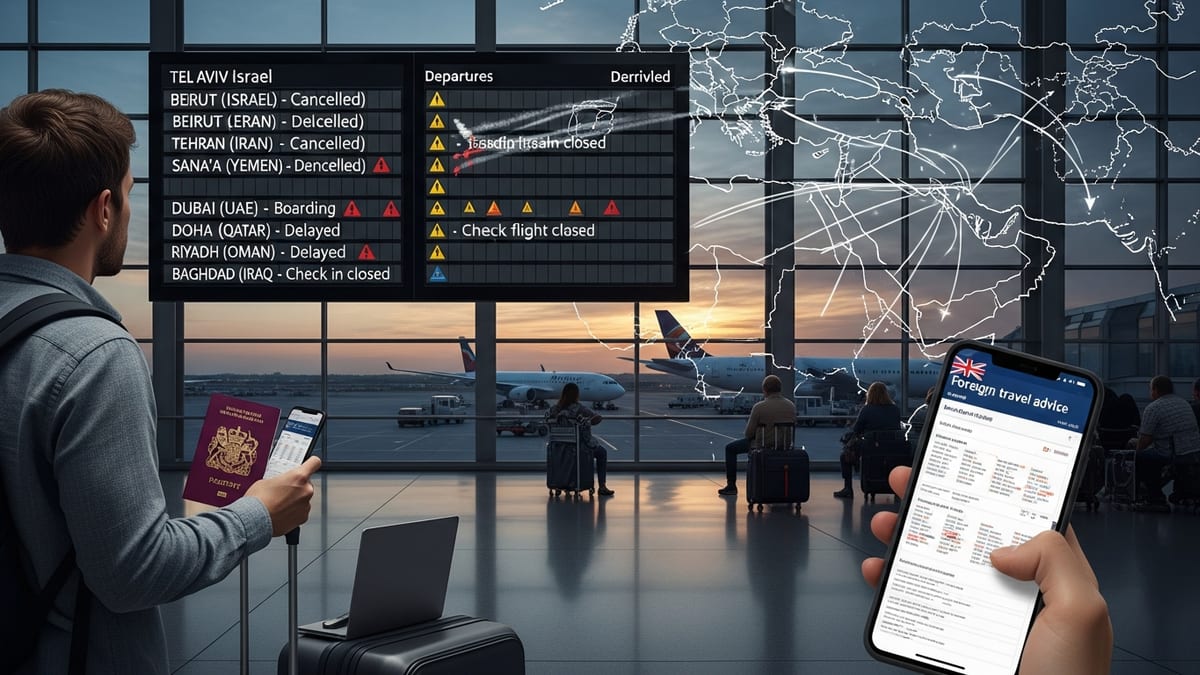
Backlog Persists After Air Traffic Control Failure
According to published coverage, the latest disruption began on 8 September 2026, when a fault in the National Air Traffic Services (NATS) flight processing system forced controllers to limit traffic across U.K. airspace. Reports indicate that hundreds of thousands of passengers were affected as aircraft were held on the ground and airlines pared back schedules at major hubs including London Heathrow, London Gatwick and Manchester.
Initial statements from NATS, cited in media reports, described the problem as a technical issue within flight data processing that required traffic flow restrictions while engineers worked to restore normal operations. Although the fault was identified and remedied later in the day, cancellations and missed connections cascaded into subsequent rotations, effectively pushing the disruption into multiple days for airlines and airports.
Flight tracking and analytics data referenced in news coverage suggest that more than a thousand flights were cancelled or significantly delayed on the day of the incident, comparable to the large-scale failure in August 2023 that also originated in NATS systems. With aircraft and crews displaced across Europe, carriers have indicated through public updates that they expect a multi-day recovery period.
Airports Struggle With Rolling Operational Impacts
Media outlets report that the continued knock-on effects are most visible at the country’s busiest airports, where tightly timed slot regimes and limited spare capacity leave little margin for catching up after a national air traffic slowdown. At Heathrow and Gatwick, arrival and departure boards have shown clusters of cancellations on short-haul European routes, alongside lengthening queues for rebooking and customer assistance.
Publicly available information from airport and airline websites shows that carriers have been prioritising long-haul services and high-demand trunk routes, trimming frequencies on secondary short-haul links to free aircraft and crews. This has left some regional airports facing a higher proportion of cancellations, particularly on routes operated only once or twice a day.
Reports also highlight that overnight curfews and noise restrictions around key London airports have slowed the pace of recovery. Some flights that might otherwise have operated as late rescue services have been unable to depart, extending delays into the following morning’s peak. Ground handling teams, already operating near full capacity during the late-summer travel period, have been contending with irregular aircraft arrivals and surges of displaced passengers.
Comparisons With the August 2023 Meltdown
The latest episode has drawn renewed attention to the vulnerability of U.K. air traffic management infrastructure, coming three years after an August 2023 failure that caused what analysts described as a nationwide “meltdown” in flight operations. That incident forced the cancellation of roughly 1,200 flights on a single bank holiday Monday, with hundreds more axed in the days that followed, as documented in contemporaneous reporting and subsequent technical reviews.
Independent assessments commissioned by the Civil Aviation Authority (CAA) after the 2023 event pointed to rare but critical issues in flight data processing, and set out recommendations to improve resilience and contingency planning within NATS and the wider aviation system. Those recommendations, published in 2024, included strengthening backup capabilities, refining incident response protocols and enhancing oversight of complex software changes.
Current coverage notes that the 2026 disruption, while serious, appears to have been contained more quickly than the 2023 failure, suggesting that some technical and procedural changes may already be in place. Nevertheless, the recurrence of a system-related outage at national level is prompting renewed scrutiny from consumer advocates and industry groups, who argue that even relatively short-lived technical faults can translate into several days of missed holidays, disrupted business trips and additional costs for passengers.
Passenger Rights and Compensation Questions
The continuing delays and cancellations have also revived debate about passenger protections under U.K. aviation rules. In a recent statement, the CAA characterised the latest NATS failure as likely falling under “extraordinary circumstances,” a designation that can limit compensation obligations for airlines under existing regulations when disruption is caused by factors outside a carrier’s direct control.
Consumer organisations referenced in news reports contend that, even in extraordinary circumstances, airlines remain responsible for providing care and assistance, including meals, refreshments and accommodation where necessary. They also point to the findings of the post-2023 independent review, which recommended additional powers for the CAA and mandatory access to alternative dispute resolution schemes for all airlines serving the U.K. market.
Early evidence from the current disruption suggests a mixed passenger experience. Some travellers have reported, via publicly available social media posts highlighted in coverage, being rebooked relatively quickly or offered hotel stays. Others have described longer waits for information at airports and difficulties accessing support channels during peak periods, particularly when call centres and digital platforms were overwhelmed by the volume of affected customers.
What Travellers Should Expect in the Coming Days
Based on airline network data and operational updates, analysts quoted across several outlets expect elevated disruption to continue for at least several more days, even as NATS systems operate normally. Aircraft and crew remain out of position in parts of Europe and the Mediterranean, and some short-haul rotations are likely to be trimmed as carriers focus on restoring core schedules.
Travel industry commentary advises passengers booked to fly to, from or within the U.K. to monitor flight status closely, check in early where possible and consider allowing additional connection time, especially for journeys involving separate tickets. Many airlines have introduced temporary rebooking waivers, permitting free changes for customers due to travel during the most affected dates, as indicated in public notices on their websites.
For travellers yet to depart, publicly available guidance from regulatory and consumer bodies suggests retaining receipts for any necessary accommodation, meals or alternative transport arranged during the disruption. These documents can support later claims to airlines or travel insurance providers, particularly in cases where services are cancelled at short notice or significantly delayed beyond published schedules.
Guardian coverage of the 8 September 2026 NATS disruption
Associated Press report on U.K. flight cancellations and delays
UK Civil Aviation Authority statement on passenger compensation
Government publication of the independent report into NATS failures