


More news on this day
A Russian drone’s incursion into Moldovan airspace on Tuesday temporarily shut down flights and delayed a plane carrying Ukrainian President Volodymyr Zelensky to Oslo, highlighting how evolving aerial threats are increasingly disrupting diplomatic travel routes across Eastern Europe.
Get the latest news straight to your inbox!
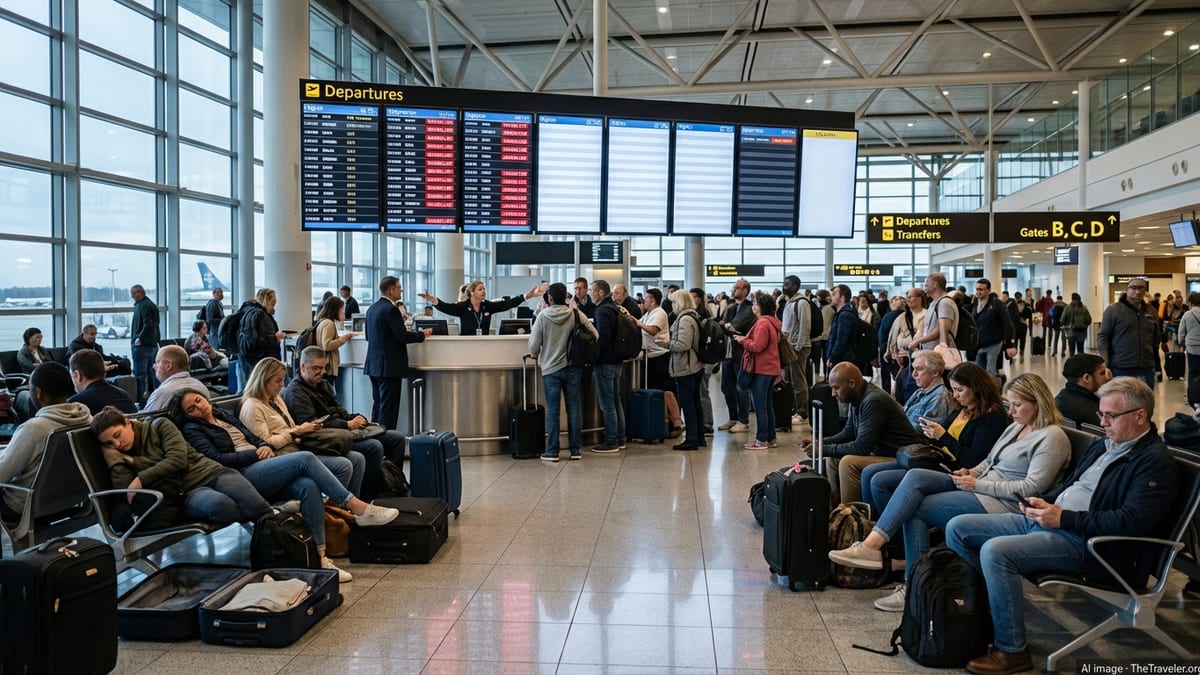
Airspace Closure Over Moldova Halts Departures
According to published coverage, Moldovan airspace was closed for just over an hour on the afternoon of September 8 after a Russian drone entered from the direction of neighboring Ukraine and crossed into Moldova. Publicly available reports describe the drone as part of the broader campaign of Russian unmanned aerial vehicle attacks that have repeatedly spilled over Ukraine’s borders since the full-scale invasion began in 2022.
During the shutdown, three departures and four arrivals were delayed at Chișinău International Airport, including the aircraft scheduled to carry Zelensky onward to Norway. Flight-tracking data cited in regional media indicate that his aircraft eventually departed Chișinău at approximately 17:52 local time, after Moldova’s defense and aviation authorities cleared the airspace.
Reports from Moldovan outlets indicate that the drone ultimately detonated or crashed in a rural area near the village of Mikhailenii Vechi, roughly 160 kilometers from the capital and far from major tourist routes. No casualties were reported, but aviation movements in central Moldova were temporarily suspended as a precaution until the situation was assessed.
Regional monitoring services and international news agencies note that both Moldova and neighboring Romania have documented dozens of cross-border drone incidents since 2022, reflecting how Russia’s long-range attacks on Ukraine’s infrastructure have created persistent risks to civil aviation on the country’s western periphery.
Conflicting Narratives Over Proximity to Presidential Flight
The incident drew heightened attention after Norway’s Prime Minister Jonas Gahr Støre, speaking publicly the following day, characterized Zelensky’s aircraft as having been nearly hit by a drone en route from Moldova to Oslo. International outlets widely relayed that description, framing the event as a near miss involving the Ukrainian leader’s plane.
Subsequent reporting, however, shows a more cautious picture emerging from Chișinău, Kyiv and Oslo. Moldovan government spokespeople cited in European media confirmed the airspace closure and related flight delays but did not describe a direct, immediate threat to the presidential aircraft. Coverage drawing on a source in the Ukrainian presidency described some of the early rhetoric as an “exaggeration,” noting that the alarm was triggered when the drone crossed Moldovan and Romanian airspace rather than when it was in visible proximity to Zelensky’s flight.
Norwegian officials later clarified, according to press accounts, that the incident created a general threat environment for aircraft operating in Moldovan skies at the time, prompting precautionary measures. Publicly available information suggests that the drone’s impact site was some distance from the capital and that the primary effect on Zelensky’s itinerary was the delay caused by the temporary airspace shutdown.
The differing emphases in national statements and media commentary underscore how incidents involving drones and high-profile passengers can quickly become politicized. For travelers and airlines operating in the region, the key operational takeaway was the rapid closure and reopening of Moldovan airspace in response to an unpredictable aerial threat.
Zelensky’s Route to Oslo for Norway’s Royal Funeral
The delayed flight was part of Zelensky’s journey to Norway to attend the state funeral of King Harald V in Oslo. Publicly available schedules show that the Ukrainian leader arrived in the Norwegian capital later on Tuesday and took part in high-level meetings focused on further air-defense and energy support for Ukraine before joining fellow heads of state at the funeral ceremonies the following day.
Regional reporting notes that, since mid-2026, Zelensky has frequently used Chișinău as a gateway for international trips, rather than relying primarily on the Polish airport at Rzeszów-Jasionka that had served as a key hub earlier in the war. Analysts quoted in open-source coverage link this shift partly to a period of political tension between Kyiv and Warsaw, making Moldova an increasingly important transit point for Ukrainian delegations heading to Western Europe.
For Moldova, Zelensky’s repeated transits through Chișinău underscore the country’s role as a strategic corridor between Ukraine and the European Union. However, the drone-related shutdown demonstrates how that role also brings exposure to risks emanating from the conflict next door, with potential implications for scheduling, security planning and airport operations.
The Oslo-bound flight eventually proceeded without further incident, but the episode added a new layer of complexity to a journey already taking place under tight security, with NATO-member Norway hosting a large concentration of world leaders for the royal funeral.
Spillover Drone Risks for Moldova, Romania and Travelers
Publicly available information from defense ministries and regional media shows that Tuesday’s incident followed a pattern of Russian drones crossing into Moldovan and Romanian airspace during strikes on southern Ukraine, particularly the Odesa region. In previous cases, debris has landed near border communities, prompting short-lived flight suspensions and anxiety among residents.
A timeline compiled by European news outlets indicates that the drone involved in the latest episode entered Moldovan skies from Ukraine, briefly traversed Romanian airspace, then re-entered Moldova before detonating. Romanian authorities reportedly scrambled fighter jets to monitor the situation, while air traffic near the city of Iași experienced temporary disruptions.
For airlines, charter operators and government flight planners, such incursions underline the need for flexible routing and contingency planning in the border region. Travel advisories increasingly highlight that civil aviation in parts of Eastern Europe, while generally operating normally, can be subject to rapid, short-notice restrictions when military activity in or near Ukraine intensifies.
Despite these challenges, commercial and diplomatic travel through Moldova and Romania continues, supported by established coordination between civil aviation agencies and air-defense authorities. Industry observers note that airspace closures related to drones typically last from minutes to a few hours, but they can ripple outward, affecting connections and ground operations well beyond the immediate incident zone.
Broader Implications for Diplomatic Travel and Aviation Security
The Moldovan episode reinforces a wider trend in which unmanned aerial systems are reshaping risk calculations for both military and civilian aviation. As reported by European and North American outlets, Russia’s growing use of jet-powered or long-range attack drones has blurred the line between traditional UAVs and cruise missiles, challenging radar systems and air defenses designed around more predictable threats.
For high-level diplomatic travel, itineraries are increasingly managed under the assumption that last-minute changes may be required. Routing around known strike corridors, integrating real-time intelligence on drone movements and coordinating closely with host nations’ airspace managers have become standard practice for delegations moving to and from Ukraine.
Travel analysts note that while the probability of a direct strike on a specific diplomatic aircraft remains low, the operational disruptions created by even a single drone incursion are significant. Short closures, diversions and holding patterns consume fuel, strain airport capacity and complicate logistics for security teams and protocol services, particularly when major international events concentrate multiple delegations at a single destination.
For ordinary travelers, the practical effect is less dramatic but still tangible: occasional delays, reroutings or heightened security checks at airports situated along the western edge of the war zone. Tourism and business travel to cities such as Chișinău and Iași continues, yet the latest incident serves as a visible reminder that even brief interruptions in the sky can reverberate through an interconnected European travel network.
Flight carrying Zelenskyy to Norway delayed in Moldova over drone incursion
Timeline of the Russian drone incursion over Moldova and NATO airspace
Regional analysis of the Moldovan airspace closure and flight delay