


More news on this day
The United Arab Emirates is deepening its role as a bridge between the Gulf and Central Asia as Etihad Airways and Uzbekistan Airways prepare a new codeshare partnership and nonstop Abu Dhabi–Tashkent flights, opening fresh travel flows across India, Saudi Arabia, Kazakhstan and other emerging markets.
Get the latest news straight to your inbox!
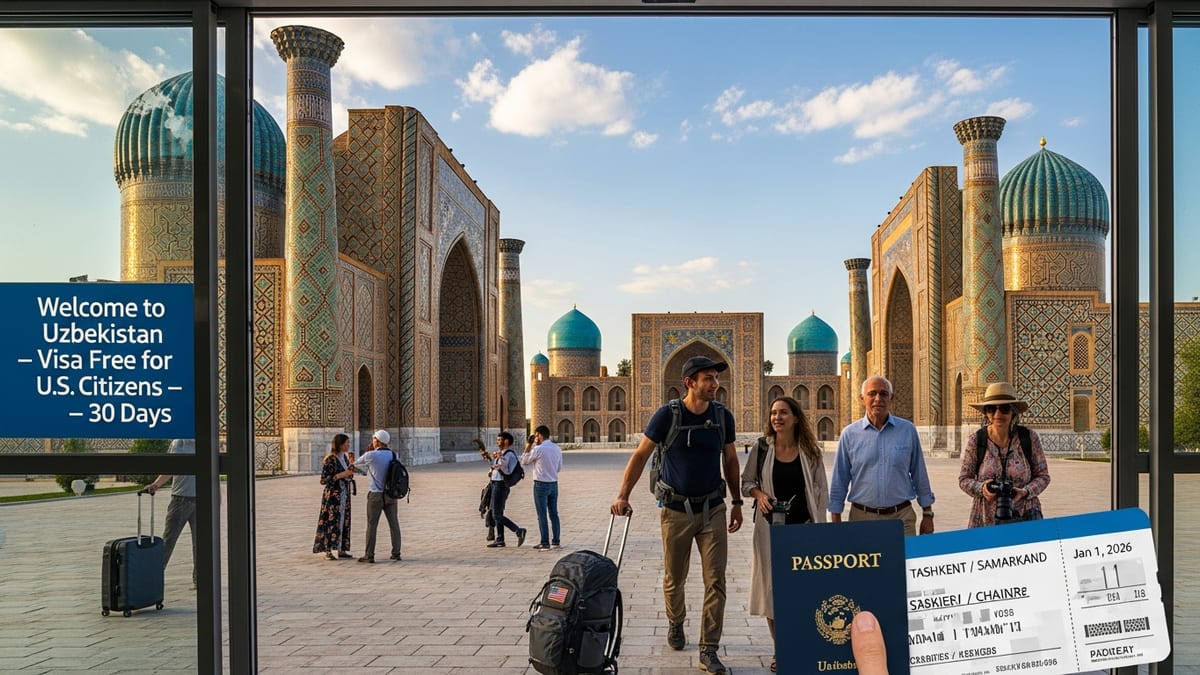
New Codeshare Connects Abu Dhabi and Tashkent
Publicly available information shows that Etihad Airways and Uzbekistan Airways have agreed a strategic codeshare that will link Abu Dhabi with Uzbekistan’s capital and onward destinations from mid-2026. Reports indicate that the agreement takes effect in May, with first joint services entering operation in August, aligning with the launch of Etihad’s new daily Abu Dhabi–Tashkent flight.
Under the arrangement, Etihad customers will be able to book through itineraries from Abu Dhabi to Tashkent and then onward across Uzbekistan and select international destinations on Uzbekistan Airways’ network. In parallel, Uzbekistan Airways passengers will gain new one-stop access to Abu Dhabi, adding a second UAE gateway alongside the carrier’s existing service into Dubai.
Industry coverage suggests that the Abu Dhabi–Tashkent route will be operated by narrowbody aircraft configured for medium-haul markets, reflecting Etihad’s broader fleet strategy in the region. The daily pattern is designed to dovetail with Etihad’s connecting banks in Abu Dhabi, enabling same-day links to India, the Gulf and key long-haul destinations in Europe and North America.
For travellers, the codeshare means a single ticket, coordinated schedules and through-checked baggage across both airlines. For the carriers, it represents a way to grow presence in each other’s home markets without immediately deploying additional aircraft or launching overlapping routes.
Central Asia Joins Etihad’s “Magnificent Seven” Expansion
The Uzbekistan partnership forms part of a wider network expansion that Etihad has been rolling out across Central Asia and the broader Silk Road corridor. Previous announcements detailed plans to add cities such as Almaty in Kazakhstan and Tashkent in Uzbekistan to what the airline has described as a new wave of destinations, scheduled between late 2025 and 2026.
By building direct links from Abu Dhabi to key Central Asian hubs, the UAE carrier is positioning the emirate as an alternative gateway for traffic that might otherwise flow through Istanbul, Doha or major European hubs. Abu Dhabi’s geographic position allows for competitive one-stop connections between Central Asia and major origin-and-destination markets including India, Saudi Arabia and the wider Middle East.
Network maps and timetable filings indicate that the Tashkent route is being launched alongside other growth markets including Medina in Saudi Arabia. This gives Etihad a stronger foothold in religious, visiting-friends-and-relatives and labor traffic segments, all of which are important demand drivers on routes connecting Central Asia with the Gulf.
For Uzbekistan, closer ties with a fast-growing Gulf hub carrier support the government’s push to increase international arrivals and diversify source markets. Tashkent’s airport is undergoing its own transformation as the country seeks to establish itself as a regional connector between Russia, South Asia, the Gulf and China.
Uzbekistan Airways Taps UAE Demand and Regional Flows
Uzbekistan Airways is using the codeshare to plug more deeply into high-yield leisure and business flows from the Gulf. According to airline statements and schedule data, the Uzbek carrier will place its code on the Abu Dhabi–Tashkent sector, effectively adding the UAE capital as a new point in its network without deploying its own aircraft on the route.
The move complements Uzbekistan Airways’ existing daily Tashkent–Dubai flights, which have been a key artery for both tourism and migrant worker traffic. With Abu Dhabi added into the mix, the airline can now offer two distinct entry points into the UAE market, each with a different set of onward connections and customer segments.
Recent route announcements also show Uzbekistan Airways expanding across Central Asia, with new services to Kazakhstan and increased frequencies on regional sectors. When combined with the Etihad partnership, this creates a web of itineraries that can link cities in Kazakhstan, Kyrgyzstan and beyond with the Gulf via Tashkent and Abu Dhabi.
Industry analysis highlights that Uzbekistan’s aviation market has grown rapidly in recent years, with rising passenger volumes and greater route diversity. The codeshare with Etihad is seen as another step in positioning Uzbekistan Airways as a regional connector, rather than solely a point-to-point carrier focused on outbound traffic.
Boost for India, Saudi Arabia and Kazakhstan Traffic
The new partnership is particularly significant for flows touching India, Saudi Arabia and Kazakhstan, where demand for travel to and from Central Asia has been climbing. Etihad already operates an extensive network into major Indian cities, as well as key Saudi gateways such as Riyadh, Jeddah and Medina, in addition to its planned service growth into Kazakhstan.
With Abu Dhabi and Tashkent linked on a daily basis, passengers from cities in India will be able to reach Uzbek and Central Asian destinations via a single Gulf connection. This is expected to appeal to both leisure travellers drawn to Silk Road heritage cities and business passengers following growing trade and energy ties between India, the Gulf and Central Asia.
Saudi Arabia is another important component of the emerging network. Published schedules show Etihad adding capacity to Medina and other Saudi points, which in turn can feed traffic onto the Abu Dhabi–Tashkent route. Pilgrim travel, investment flows and labor mobility between Central Asia and the kingdom are all cited by analysts as potential growth segments.
Kazakhstan stands out as both a destination and a feeder market. Etihad’s existing codeshare with Kazakhstan’s Air Astana already connects Abu Dhabi with multiple Kazakh cities, and industry reports suggest that these links will be complemented by the Uzbekistan Airways collaboration. Travellers from Almaty, Astana and other Kazakh centers will gain expanded options for reaching the UAE and onward markets via a mix of direct services and one-stop connections through Tashkent.
UAE Consolidates Its Role as a Regional Aviation Hub
For the United Arab Emirates, the Etihad–Uzbekistan Airways partnership is further evidence of a strategy that relies on connectivity as a core economic asset. Abu Dhabi and Dubai continue to use aviation links to deepen trade, tourism and investment ties with fast-growing economies along the Silk Road corridor.
Abu Dhabi’s hub development is closely tied to Etihad’s multi-year growth plan, which aims to expand the airline’s fleet, add dozens of new destinations and strengthen alliances with regional and global partners. The Uzbekistan agreement joins a long list of codeshares with carriers across Europe, Asia and the Americas, underscoring a preference for partnership-driven expansion.
Observers note that the UAE’s approach also diversifies passenger flows at a time of evolving global travel patterns. As traffic gradually rebalances between traditional long-haul trunk routes and newer regional corridors, markets such as Uzbekistan, Kazakhstan and India are playing a greater role in filling aircraft and sustaining year-round demand.
With Abu Dhabi–Tashkent flights scheduled to begin in 2026 and the codeshare coming into effect around the same time, the UAE is positioning itself at the center of a new north–south and east–west axis linking Central Asia with the Gulf, the Indian subcontinent and beyond. The result is a denser web of air links that could reshape how travelers move between some of the world’s most dynamic emerging markets.