


More news on this day
Travelers accustomed to airlines covering hotels and meals during long disruptions may soon face tighter limits in parts of Europe, after EU lawmakers and member states reached a political agreement to update air passenger rights rules that govern assistance during delays and cancellations.
Get the latest news straight to your inbox!
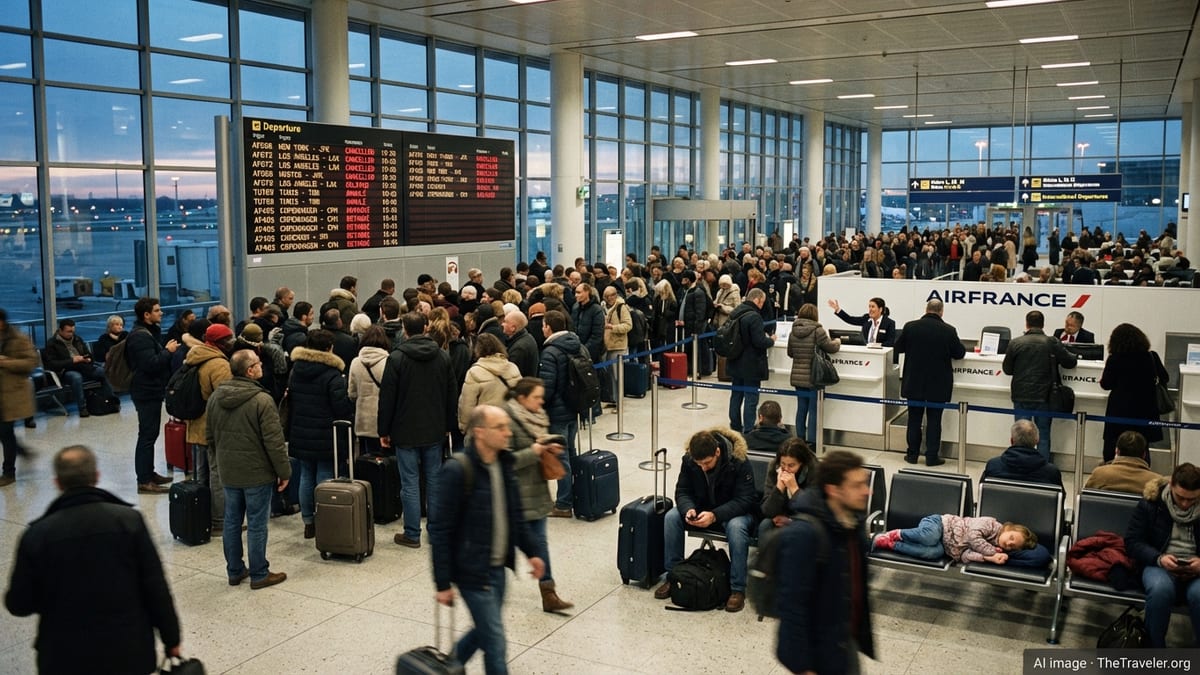
What the new rule changes for hotels and meals
The European Union’s update is aimed at clarifying and standardizing what passengers are owed when travel goes sideways, but some of the most practical help travelers look for, hotel rooms and meals, is also where the new limits are attracting attention. Published coverage of the agreement indicates the revised framework continues to require “assistance” during long waits, including meals, refreshments, and hotel accommodation when an overnight stay becomes necessary, along with transport between the airport and lodging.
At the same time, the revision introduces more explicit boundaries around assistance in extraordinary circumstances, a category that typically includes events beyond an airline’s control. Under the negotiated approach, accommodation obligations in those scenarios can be limited, which is why consumer advocates and travel industry watchers say travelers could see fewer airline-paid hotel nights after certain large-scale disruptions.
For meals, the agreement outlines more standardized timing and frequency. Coverage of the deal indicates meals should be provided after a defined waiting period and at regular intervals afterward, with a daily cap. Standardization can make entitlements easier to understand, but the caps also make clear that assistance is not unlimited during extended disruptions.
Why “extraordinary circumstances” matter for your wallet
The biggest real-world difference between a manageable delay and an expensive one often comes down to the cause. When disruptions are tied to circumstances considered extraordinary, airline obligations for cash-style compensation are typically reduced or removed, but assistance such as meals and lodging has historically been broader and sometimes open-ended in practice, especially during widespread events.
The updated EU framework is designed to clarify those lines, including a clearer concept of extraordinary circumstances and the operational responsibilities that remain even when the airline is not at fault. The tradeoff is predictability for airlines and, potentially, more situations in which travelers hit an assistance ceiling and must make their own arrangements for additional nights or extra meals.
For U.S. travelers connecting through Europe, this matters because EU rules can apply to itineraries departing from an EU airport, including on non-EU carriers, while many itineraries that start in the United States do not automatically trigger comparable hotel-and-meal requirements under U.S. federal rules.
How this compares with the United States and Canada
In the United States, there is still no universal federal requirement that airlines must provide hotel rooms or meals for passengers after a delay or cancellation. Publicly available U.S. Department of Transportation materials focus heavily on refunds when a traveler chooses not to fly after a significant delay or schedule change, rather than mandating specific assistance such as lodging across the board.
Separately, U.S. regulators have been working on a passenger-rights effort that examines requiring airlines to adopt customer service plans and provide “essential services” such as meals, rebooking, hotel, and ground transportation when disruptions are within an airline’s control. That work has been moving through the rulemaking process, but it remains distinct from the EU’s finalized political agreement and does not, as of the most recent publicly available status, function as a single guaranteed U.S.-wide hotel and meal entitlement for delays.
Canada sits somewhere in between, with a national regime that can require standards of treatment, including food, drink, and accommodation in certain situations, while also drawing distinctions based on whether a disruption is within the airline’s control. Canadian rules have also been under review for reforms and clarification in recent years, and publicly available government materials continue to emphasize clearer obligations and improved complaint resolution processes.
What travelers should do before the rule takes effect
Because the EU agreement is a political milestone rather than an instant overnight change at every airport counter, travelers should watch for the implementation timeline and final legal text that will govern when the updated rules apply. For trips booked far in advance, that timing can determine whether a disruption is handled under today’s familiar framework or the revised one.
For travelers who might be caught between rules, the practical advice is to prepare for the possibility that an airline will not cover every night of an extended disruption, especially during extraordinary events that ripple across regions. That means considering lodging and meal contingencies in your budget, keeping receipts when you must self-arrange, and understanding how your ticket type, route, and operating carrier affect which jurisdiction’s rules apply.
It is also worth checking your credit card benefits and travel insurance terms before you fly. Some policies cover trip delay expenses after a defined number of hours, which can become more important if airline-provided assistance is capped. The goal is not to replace passenger rights, but to avoid a scenario in which a long delay turns into an unplanned multi-night expense with limited reimbursement options.