


More news on this day
European airports are warning of mounting queues and missed connections as new EU border checks lengthen processing times for non-EU travelers just as the summer holiday rush begins.
Get the latest news straight to your inbox!
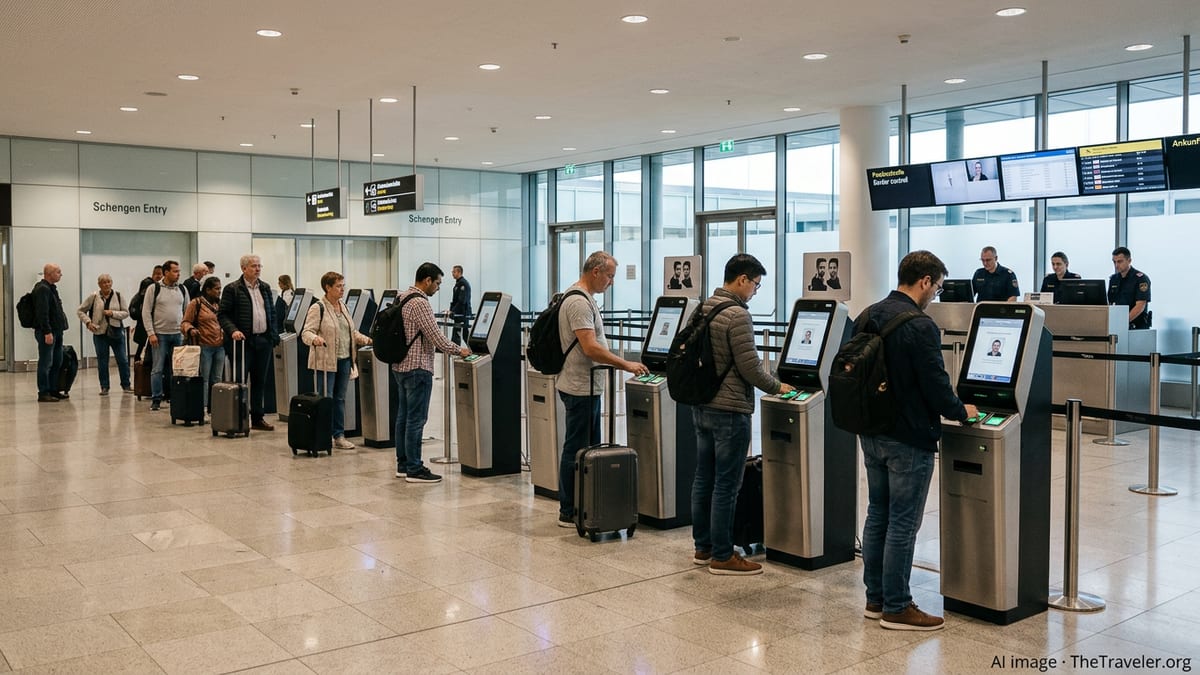
Biometric border rules collide with peak summer traffic
European travel hubs are entering the first full summer with the European Union’s digital Entry/Exit System in place, and early signs point to a difficult season. The biometric scheme, which replaces passport stamping with fingerprint and facial scans for non-EU nationals at the external borders of the Schengen area, became fully operational at all crossing points in April 2026. Industry groups say the new checks are adding several minutes per passenger, creating long queues when flights from multiple long haul destinations arrive within a short window.
Airports Council International Europe, Airlines for Europe and the International Air Transport Association have jointly described the current situation as critical, citing waiting times of up to two or even three hours at airport border posts during busy periods. According to their public statements, these delays have emerged even before the heaviest summer weekend peaks, raising fears that bottlenecks could spread from passport control into security lanes, check in halls and departure gates as passengers struggle to move through the system in time.
Travel media across the continent are already reporting slowdowns at key gateways including Frankfurt, Amsterdam Schiphol, Lisbon, Rome and Paris. At some airports, passengers arriving from the United Kingdom and other non-EU countries have shared accounts of missed onward connections after spending over an hour in border queues, despite airlines building in additional buffer time between flights.
Airports and airlines step up calls for EU flexibility
Airport and airline associations have intensified their lobbying of EU institutions, arguing that the current implementation of the Entry/Exit System does not match the realities of peak demand. In an open letter addressed to the European Commission’s leadership at the start of July, industry bodies warned that the combination of biometric registration and summer volumes risks what they described as systemic disruption at Europe’s external borders unless immediate adjustments are made.
The organisations are urging Brussels to give member states broad discretion to partially or completely suspend Entry/Exit checks when queues exceed the capacity of border facilities, at least during the core holiday months. They say this form of “safety valve” is essential to prevent long delays at land crossings, ferry ports and airports, particularly at congested hubs that already operate close to capacity.
Some national aviation authorities and airport operators have gone further in their public remarks, suggesting that they may unilaterally limit or pause use of the new biometric infrastructure if it begins to compromise safety or punctuality. Operators of busy hubs in France and Italy have raised the prospect of prioritising conventional passport control in the short term if the digital system cannot be streamlined quickly enough, underlining the level of concern within the sector.
Flashpoints emerge at major hubs and ports
Several locations have already emerged as flashpoints where the interaction between new border checks and summer traffic is being closely watched. At Rome’s main airports, management has publicly warned that insisting on full biometric processing for every eligible traveler could create what they characterise as a summer “disaster,” and has floated the possibility of relaxing use of the technology at peak times to keep passenger flows moving.
Reports from Portugal indicate that Lisbon’s main airport temporarily scaled back use of automated Entry/Exit kiosks after the first weeks of operation led to what local media described as excessive queues and crowding in the arrivals area. Similar concerns have been raised at ports such as Dover, where French border officers conduct checks on departing passengers and where enhanced scrutiny earlier in the year led to significant waits for coach and car travelers headed to the continent.
Low cost carriers, which depend heavily on rapid turnarounds and tight schedules, have also begun to sound the alarm. Coverage in British and Irish newspapers highlights warnings from major budget airlines about “queue chaos” if first time biometric registrations for millions of UK holidaymakers are not managed more smoothly. Industry figures argue that even relatively modest increases in border control times can cascade across an entire day of operations when turnaround margins are already slim.
Technical teething problems and confused passengers
Beyond the raw capacity constraints at passport control, anecdotal reports suggest that technical issues and limited passenger awareness are compounding the disruption. Travelers on online forums have described repeat biometric enrollments on separate trips despite being told that their data would remain valid for several years, suggesting that some records may not be matching correctly or that system outages are forcing staff to process people again from scratch.
Holidaymakers have also reported lengthy waits when multiple flights from visa exempt countries land at once, with some passengers unfamiliar with the need to provide fingerprints and facial scans during their first Entry/Exit registration. Where information campaigns have been patchy, border officers are forced to spend extra time explaining the process at the front of the queue, adding to the overall handling time for each person.
Industry groups argue that these growing pains were predictable for such a large scale IT project and that more robust contingency planning should have been in place before the summer season. While the European Commission has highlighted the long term security and efficiency gains of automated border management, airport and airline representatives maintain that the short term impact on queues and connection reliability has been underestimated.
Travelers weigh up how to protect their holiday plans
With warnings multiplying and the main school holiday period still ahead, travelers are beginning to adapt their plans in anticipation of possible bottlenecks at EU borders. Tour operators in the United Kingdom and other non-EU markets report advising customers to build in more time between connecting flights that require a Schengen border crossing, and to arrive at departure airports earlier than in previous years.
Some frequent travelers are choosing to route journeys through non Schengen hubs where possible to avoid a fresh biometric registration, particularly on short breaks where time on the ground is limited. Others are switching from tight self booked connections to through tickets on a single airline alliance, in the hope that this will offer greater protection and rebooking options if queues at passport control cause missed flights.
For now, the picture across Europe remains uneven, with some airports reporting relatively smooth flows and others already seeing hourly spikes in waiting times. What is clear is that the coming weeks will amount to a high stakes stress test of the EU’s new border regime. The way Entry/Exit checks perform under peak demand is likely to shape both political debates in Brussels and traveler sentiment toward European destinations well beyond the 2026 summer season.