


More news on this day
Dozens of Ryanair passengers were left stranded at Athens International Airport after EU border control delays prevented them from reaching the gate in time for a London-bound flight, underscoring mounting disruption linked to new entry checks across Europe.
Get the latest news straight to your inbox!
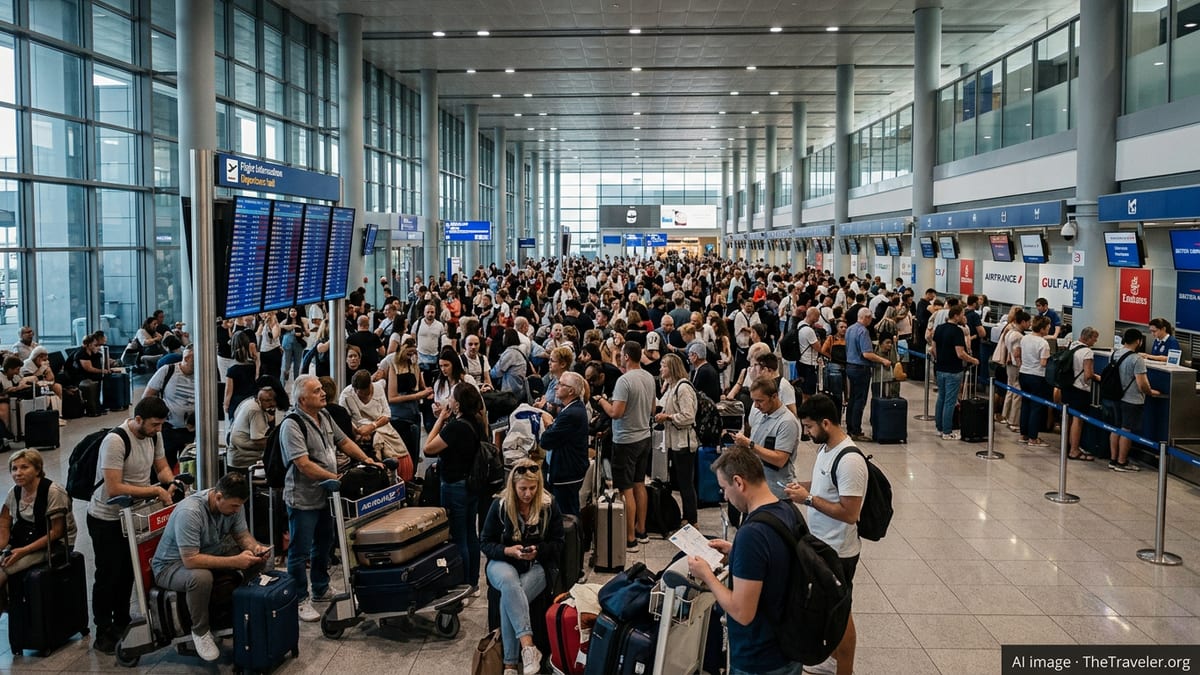
Border queues in Athens leave passengers grounded
Reports from Greek and international outlets indicate that between 20 and 50 passengers missed a recent Ryanair departure from Athens to London Luton after long lines at passport control and security slowed progress through the terminal. The aircraft departed with empty seats while late-arriving travellers remained stuck airside in high temperatures.
Accounts from the scene describe a buildup of queues at both security screening and the non-Schengen passport lanes, where processing times have lengthened for many third-country nationals. By the time some passengers cleared border checks and reached the gate area, boarding had already closed and buses to the aircraft had departed.
Athens International Airport has pointed to a combination of peak-season traffic and more complex screening for travel outside the Schengen area as factors behind the congestion. Publicly available information shows that airport staff were deployed to manage crowds amid rising tensions as stranded customers tried to understand why their flight was leaving without them.
Ryanair has stated in previous public advisories that passengers are responsible for allowing sufficient time to clear border formalities and that flights will not routinely be held for those delayed in security or passport queues. In this incident, the carrier indicated that all travellers who reached the gate before closure were boarded as normal, while those still in border control were treated as late arrivals.
New EU Entry/Exit System adds friction at external borders
The Athens disruption is the latest illustration of strains linked to the European Union’s new Entry/Exit System, a biometric register for non-EU nationals entering and leaving the Schengen area. Since the system moved into full operation in April, travel media and aviation bodies have documented long waits at several major airports, with some passengers missing flights after spending hours at border checkpoints.
The Entry/Exit System is intended to replace manual passport stamping with electronic records, enhancing security and better tracking overstays. However, early implementation has been marked by software glitches, staff training needs and limited biometric kiosks at some terminals. Industry associations have warned that the transition period could last many months while infrastructure and staffing are upgraded.
In Athens, the combination of EES checks, a busy summer schedule and a surge in UK-bound leisure travel appears to have created a bottleneck for departing non-EU passengers. Travel commentators note that similar patterns have already emerged in France, Italy and other key hubs where new biometric procedures sit atop existing peak-season crowding.
European air passenger forums and travel rights groups have begun to track cases where holidaymakers were left behind despite arriving well before departure. These accounts suggest that the Athens episode is part of a broader adjustment shock as border forces, airports and airlines adapt to an overhauled system while demand rebounds strongly.
Ryanair keeps schedule tight as delays mount across Europe
Ryanair operates one of the fastest aircraft turnarounds in the industry, a cornerstone of its low-cost model. Publicly available schedule data and previous company statements show that the airline typically aims for ground times of around 25 minutes on many European routes, leaving limited flexibility when passengers are delayed upstream in the airport process.
In recent weeks, Ryanair has reiterated in customer notices that it will not systematically delay departures for travellers held up at border checks, arguing that such decisions would trigger knock-on disruption across its network. The carrier has instead urged customers to arrive at airports well in advance and to pay close attention to gate information and boarding deadlines.
The Athens incident comes amid a wider wave of operational stress in Europe, with reporting from various travel outlets detailing mass delays and cancellations at hubs such as Frankfurt and Milan as airports grapple with staffing, thunderstorms and regulatory changes. In that context, Ryanair’s insistence on on-time performance is drawing both praise from some passengers for keeping schedules intact and criticism from others who feel abandoned when caught in airport bottlenecks.
According to consumer coverage, passengers who miss Ryanair flights after clearing check-in may be offered rebooking on later services for a fixed “missed departure” fee, subject to availability. However, travellers stuck in Athens reported that same-day alternatives at short notice were limited and often significantly more expensive than their original tickets, leaving many to seek overnight accommodation and make fresh arrangements.
Growing scrutiny of passenger rights and responsibility
The Athens stranding has renewed debate about where responsibility lies when airport-managed border processes cause passengers to miss privately operated flights. Airlines generally argue that they cannot control security and passport staffing, while airports and public authorities emphasise that boarding decisions rest with carriers once aircraft are ready to depart.
Recent developments at EU level on air passenger rights have kept compensation rules for significant delays largely intact, but the framework distinguishes between disruptions within and outside an airline’s control. Published guidance and legal commentary suggest that long lines at state-run border control are usually treated as external circumstances, shifting potential claims away from carriers and towards travel insurance or national complaint mechanisms.
Consumer advocates highlight that many travellers do not fully understand these distinctions, leading to frustration when they discover that missed flights due to airport queues may not trigger automatic reimbursement. Incidents such as the one in Athens are prompting calls for clearer communication at booking and in pre-travel emails about the risks posed by longer border-processing times.
Some European watchdogs and travel bodies are also urging better coordination between airports, police and airlines during the EES bedding-in period, including more dynamic sharing of queue information and potential adjustments to boarding cut-off times when terminals are under exceptional strain. For now, however, most operational decisions continue to be made independently, leaving passengers to navigate a complex patchwork of responsibilities.
Summer travel outlook: advice for flyers through Athens and beyond
With the busy summer season only just beginning, the Athens disruption serves as a warning sign for travellers across Europe. Forecasts from aviation analysts point to passenger numbers at or above pre-pandemic levels on many leisure routes, while reports from several major airports already show stretched capacity at security and border checkpoints.
Travel publications advising on the new Entry/Exit System recommend that non-EU passengers build in extra time, particularly for early-morning and evening peaks when long-haul connections cluster. For Athens and other Mediterranean gateways popular with UK and long-haul visitors, that can mean arriving significantly earlier than traditional guidance and moving promptly to security and passport control rather than dwelling landside.
Experts also suggest that travellers monitor airport and airline channels on the day of departure for live updates on queues and gate changes. In circumstances similar to the recent Ryanair case, reaching the gate before closure remains the decisive factor, regardless of when a passenger entered the terminal building or completed online check-in.
For now, Ryanair customers flying from Athens and other EU airports affected by EES-related congestion face a more demanding pre-flight experience, where successful navigation of border controls can be as crucial as the airline’s own punctuality. As more stories of stranded passengers circulate, pressure is likely to grow on European institutions, border agencies and carriers to smooth out the rough edges of a system designed to make travel more secure but currently making it more stressful.