


Menton looks deceptively simple at first glance: a compact old town, a string of pebbly beaches, a lemon-scented reputation and a railway line that hugs the sea. Yet many visitors arrive with a generic "French Riviera" plan and quickly discover that Menton has its own quirks. From underestimating how strong the sun can be on the Baie du Soleil to misreading Nice Airport bus timetables or visiting at the wrong moment during the Lemon Festival, the same avoidable errors come up again and again. Understanding how the town actually works in 2026 will help you enjoy its gardens, markets and coastal walks instead of queuing, overspending or simply missing the best parts.
Get the latest updates straight to your inbox!
Assuming Menton Is Just a Day Trip From Nice
Many travelers treat Menton as a quick add on to a Nice itinerary, dropping in for a couple of hours between trains. On a map the two towns look close, less than 40 kilometers apart along the same coastline. In practice this mindset leads to rushed visits where you only see the seafront promenade and miss the terraced old town, the gardens above the city and the quieter residential quarters that give Menton its character. Visitors who arrive on a late morning train from Nice, stroll the Biovès Gardens and have lunch on the seafront often leave feeling that Menton is pleasant but forgettable simply because they did not give themselves time to climb, wander and linger.
The reality is that Menton merits at least one full day, and ideally one or two nights, especially in high season when trains can be crowded and delays are not unusual. The regional TER trains between Nice and Menton are frequent, but at peak commuter times and on summer weekends they fill up with people heading to Monaco and the Italian border. If you plan a tight timetable, for example arriving on an 11:30 train and booking a 16:00 return, even a modest delay or a long wait for a restaurant table cuts your exploration time sharply. Treat Menton as a small base rather than a box to tick and you are more likely to discover streets like Rue Longue or the cemetery terrace above the Basilique Saint Michel, which many day trippers never reach.
Another mistake is forgetting that Menton has its own daily rhythm that is different from Nice. Lunch service in many family run restaurants away from the seafront still follows a fairly traditional schedule, often with last orders around 13:30 or 14:00. Arriving from Nice at 14:15 and expecting to find a table at a popular spot in the old town can lead to disappointment. If you are coming only for the day, it is smarter to arrive earlier, explore while the streets are quiet, then sit down to lunch before the main rush from Monaco and the Italian border towns.
Finally, some visitors ignore Menton as an overnight stop because they assume late evening trains or buses back to Nice will be plentiful. Services do run into the night, but not at metro style frequencies. In summer, after a late dinner on the seafront or a concert at the Palais de l’Europe, you may face gaps of 30 to 60 minutes between trains heading west. Building Menton into your trip as a small base for a couple of nights solves this, and also allows you to take relaxed day trips in the other direction to villages like Sainte Agnes or to the Italian markets in Ventimiglia by morning train.
Misunderstanding Transport: Airport Buses, Trains and Cross Border Routes
Transport confusion is one of the most common sources of stress for visitors to Menton. The old advice to take bus 110 straight from Nice Airport to Menton is now out of date. In 2026 the dedicated airport coach is run as the NiceAirportXpress line 80, which connects Nice Côte d’Azur Airport with Monaco and Menton via the A8 motorway. Tickets typically cost around 20 euros one way for the full airport to Menton journey and the ride takes roughly an hour, depending on traffic. Some travelers still search for the old line number or screenshots of decade old timetables and then panic at the airport when they cannot locate the 110 stop.
Others underestimate how useful the regional TER trains can be for both arrival and day to day movement. From Nice Ville to Menton, standard off peak tickets usually fall between 6 and 8 euros and the ride takes 35 to 45 minutes with sea views for much of the way. Many first timers assume they need to pre book these seats weeks in advance and are surprised to learn that TER services are unreserved: you can usually buy tickets on the day from machines or via the SNCF app. The real mistake is failing to check for planned track works or strikes. If you are arriving in Menton on a Friday evening in July and there is a partial strike, trains can be reduced or busy, and allowing extra time becomes essential.
Cross border movements are another area where visitors can trip up. On paper Menton sits just a couple of stops from Ventimiglia in Italy, making it tempting to plan a casual morning market visit. Yet road and rail infrastructure in this narrow coastal strip is delicate. In late 2025 and into 2026 there have been works on the coastal road near Balzi Rossi and Latte on the Italian side, affecting traffic between Menton and Ventimiglia. That does not mean you cannot cross the border, but it does mean that the romantic idea of an effortless seaside stroll to Italy may not match reality on your exact dates. Many visitors only discover this when their intended coastal walk or bus ride meets a diversion or closure. Always verify current conditions once in town at the tourist office near the Biovès Gardens before committing to a border hike or bus plan.
Within Menton itself, some travelers overspend on taxis because they assume the town is larger and hillier than it is. The main railway station, Menton-Ville, is about a ten minute walk from the Biovès Gardens and roughly 15 minutes from the beachfront near the Bastion museum if you walk at a moderate pace. People arriving with wheelie suitcases sometimes jump into the first taxi they see, paying 10 to 15 euros for a ride they could comfortably walk. Save taxis or ride hailing services for genuine climbs, such as late night returns from the plateau areas above town when buses are sparse, and use walking and the local bus network for most journeys.
Underestimating the Lemon Festival Crowds and Costs
Menton’s Fête du Citron is the town’s signature event and a magnet for visitors in February. Many travelers assume that because it is winter and Menton is smaller than Nice, they can book accommodation at the last minute and simply show up for the famous citrus parades. In reality, hotels and well located guesthouses often fill up weeks in advance for the core festival weekends. Rates can easily double compared with shoulder seasons like late March or early November. A room that costs around 110 euros per night in autumn might be closer to 200 or 220 euros during a big Lemon Festival weekend, especially for properties overlooking the Biovès Gardens where the citrus sculptures stand.
Another common mistake is misunderstanding how the festival is structured. Visitors sometimes assume the lemon sculptures are paraded through the streets only once or twice. In fact the large scale citrus installations stay in the Biovès Gardens for the duration of the festival and require a ticketed entry, while separate events such as the Sunday afternoon parades and the nighttime Corsos Nocturnes have their own tickets and seating categories. Arriving in Menton at midday on a parade day and expecting to walk up and find central grandstand tickets can be unrealistic. Locals often advise buying parade or night show tickets in advance once dates and themes are announced, especially for the Saturday and Sunday events.
People also underestimate how tiring the festival can be. On a peak weekend the Biovès Gardens fill with visitors slowly shuffling past towering lemon and orange structures. Queueing to enter can take 20 to 30 minutes in the middle of the day, and standing for an hour watching a parade on the Promenade du Soleil can be demanding, particularly for young children or older travelers. Pack Menton’s mild winter climate with a crowd of people and the sun reflecting off citrus and concrete, and you may find you are warmer and more fatigued than you expected from a February event. Bringing water, a hat and layers that you can add or remove as the evening progresses is important, especially for the nighttime parades when temperatures can drop quickly once the sun sets behind the hills.
A final festival related misstep is focusing so intensely on the lemon sculptures that you miss the linked cultural events. During the same weeks, Menton hosts an Orchid Festival and artisan market at the Palais de l’Europe and often smaller concerts or exhibitions tied to the citrus theme. Travelers who schedule a single quick visit to the gardens between trains may never realize that calm, indoor spaces exist just a few minutes away where you can sit among orchids or discover local pottery and food products. Building a full festival day that balances one or two major events with time in these quieter corners can help you enjoy Menton rather than feeling trapped in a crush of people.
Misjudging Beaches, Weather and What to Pack
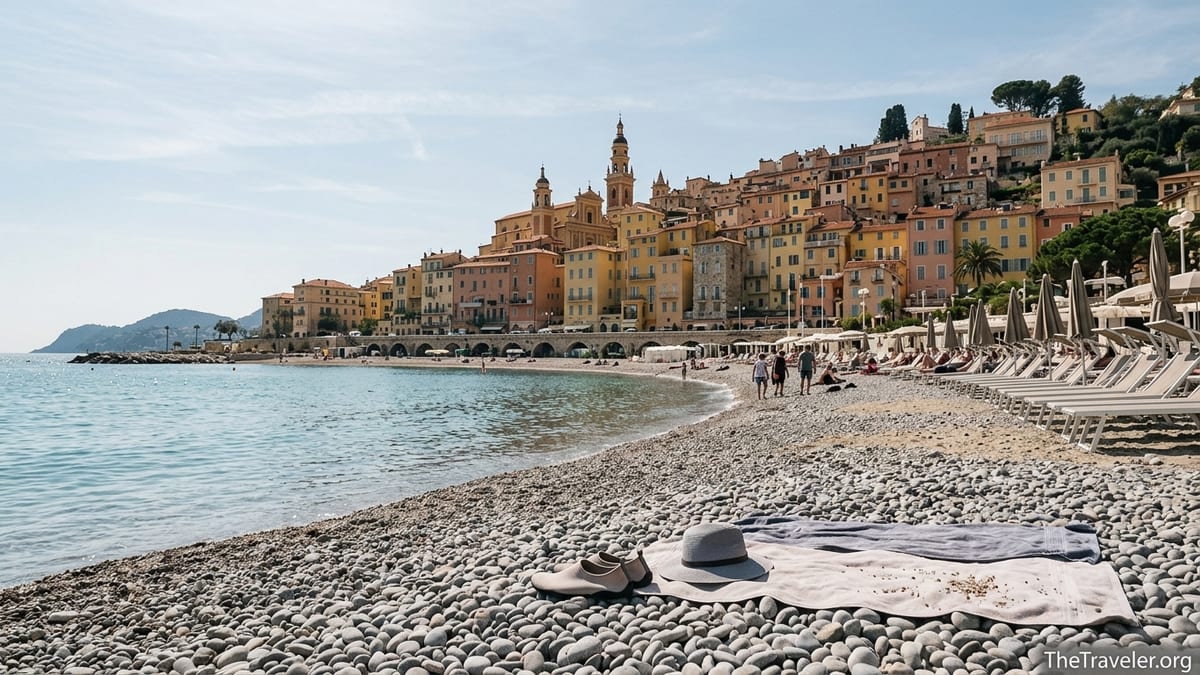
From a distance Menton’s seafront looks like a classic Riviera postcard: sweeping bays, palms, pastel buildings and umbrellas lined up along the water. First timers arriving in lightweight sandals often get a rude surprise when their bare feet hit the shore. Most of Menton’s beaches are pebbly rather than sandy, with smooth but sizeable stones that can make walking to the waterline uncomfortable without proper footwear. On popular public sections like Plage des Sablettes in front of the old town or the stretches near the Casino, locals frequently wear rubber water shoes or at least sturdy sandals. Visitors who show up in thin flip flops often find themselves wobbling and slipping on the stones before they even reach the sea.
Another miscalculation involves the sun. Menton benefits from a particularly mild microclimate, which is why citrus and tropical plants thrive here. That mildness can be deceptive. From late spring to early autumn the reflected light from the pale buildings, sea surface and pebbles creates strong exposure even on days that feel breezy. Tourists who would diligently apply sunscreen on a Caribbean beach sometimes skip it in Menton because the air does not feel as hot, then realize after an afternoon wandering the Promenade du Soleil that they have burned. The same applies on balcony terraces in gardens like the Serre de la Madone, where there is some shade but also pockets of intense midday sun.
Packing choices can also complicate your time in town. Travelers who arrive in July with large wheeled suitcases and no daypack often regret it once they start climbing Menton’s steep lanes and staircases. The old town is made for light bags and comfortable shoes with genuine grip. Stylish yet impractical footwear is a frequent culprit: smooth soled sandals or backless loafers that work perfectly on flat city pavements are treacherous on the polished stone steps leading up to the Basilique Saint Michel or the cemetery terraces. Bringing at least one pair of trainers or walking sandals with decent tread makes a big difference, especially if you plan to continue into the hills above town.
Seasonal weather expectations can also trip people up. Winter in Menton is mild compared with northern France, but that does not mean it is reliably warm enough for long, lazy beach days. Visitors coming in February for the Fête du Citron sometimes bring only lightweight jackets and discover that evenings can still feel raw, particularly when the wind whips off the sea. Conversely, autumn can stay warmer than many expect, with October afternoons comfortable for terrace dining or short swims. Checking a forecast for your specific travel dates and packing layers rather than assuming “Riviera weather” will match your mental picture helps you avoid last minute shopping for overpriced sweaters or beachwear along Avenue Félix Faure.
Staying Only on the Waterfront and Skipping the Hills and Gardens
One of the most persistent mistakes in Menton is never leaving the flat seafront. The promenade is undeniably beautiful, with the old town rising behind Plage des Sablettes and restaurants facing the Baie de Garavan. Many visitors stop there, assuming they have “seen Menton” once they have taken the iconic photo of the church towers from the beach. Yet some of the town’s most rewarding sights sit higher up: the Jardins Biovès are only a starting point, while gardens such as the Val Rahmeh and the gardens of the Serre de la Madone or the Maria Serena villa showcase the subtropical plants that made Menton famous in 19th century travel writing.
Another overlooked experience is simply wandering upward through the old town to the cemetery. The climb from the sea to the top, via stepped streets like Rue de Bréa or the staircase beside the basilica, takes around 15 to 20 minutes at a moderate pace. From the cemetery terraces you gain sweeping views across the harbor to Italy and back along the coast to Cap Martin. Many people on short visits never make this climb, either because they do not realize the viewpoint exists or because they assume it will be too strenuous. In reality, taking the steps slowly, with stops in shaded alleys and perhaps a coffee break at a small bar halfway up, is well within reach for most visitors who are comfortable with stairs.
Similarly, the hills behind Menton hide small villages and walking paths that give a very different perspective on the coast. A bus ride or taxi to Sainte Agnes, perched high above Menton and often cited as one of the most beautiful villages in the region, rewards you with cobbled lanes and a ruined fortress with dramatic views. Travelers who stay only on the seafront miss not only these panoramas but also the contrast between the busy coastal strip and the quieter inland communities. Building even half a day into your plan for one garden visit and one uphill wander transforms your understanding of Menton from “pleasant beach town” to a layered place where Riviera, mountain and garden cultures meet.
Finally, people often underestimate how close many of these sites are. From the seafront near the Bastion museum, it is roughly a 15 minute walk to the Val Rahmeh garden along the coast road towards Italy, without any severe climbs. The Serre de la Madone is a bit further inland and uphill, but still accessible by local bus and a short walk. Because Menton’s urban area is compact, you can realistically visit a major garden in the morning, spend time in the old town and still enjoy the late afternoon on the beach if you plan ahead. Ignoring anything that is not immediately visible from the Promenade du Soleil means missing this variety.
Misreading Prices, Restaurant Culture and Meal Times
Compared with neighboring Monaco or even central Nice, Menton often feels gentler on the wallet. That relative affordability can lull visitors into complacency. One common issue is failing to distinguish between beach clubs with private loungers and public stretches of shore. At Plage des Sablettes, for example, you will find both free public zones and private sections where restaurants provide sunbeds, umbrellas and waiter service. In high season a pair of loungers with umbrella for the day can easily run to 25 to 40 euros per person, with higher rates for front row spots. Travelers who sit down assuming the chairs are public often face an unwelcome bill when staff come by to collect payment. Always ask about prices and whether loungers are hired by the half day or full day before you settle in.
Restaurant culture can also trip up newcomers. In the old town streets behind the basilica, small kitchens and limited seating mean that many restaurants do one intense service for lunch and another for dinner, rather than serving food all afternoon. Tourists who wander in at 16:00 expecting a full menu are often told the kitchen is closed and only drinks are available. On the waterfront, by contrast, some establishments cater more to visitors and keep extended hours but at higher prices. A typical main course at a midrange old town restaurant might cost around 18 to 25 euros, while seafront venues with views can charge several euros more for a similar dish. Checking menus before sitting down, and being realistic about times when kitchens are open, helps avoid frustration.
Another mistake is not trying Menton’s local and cross border food culture. The town’s location near Italy means you will see ravioli, focaccia and gelato alongside traditional Provençal dishes. Some visitors default to generic tourist menus, sticking to pizza and basic salads, and leave without tasting specialty items like socca, barbajuan or citrus based desserts that play on Menton’s lemon heritage. Markets such as the covered Marché des Halles showcase citrus jams, local olive oils and seasonal produce at prices that are often more reasonable than souvenir shops along the promenade. Building a market visit into your morning, buying fruit for the day and perhaps a jar of lemon marmalade, is both economical and more reflective of local life.
Tipping expectations can be another source of uncertainty. Service is typically included in French restaurant bills, so there is no obligation to add a large percentage. Locals often round up or leave a small extra amount in cash, perhaps one or two euros on a simple meal or a bit more on a more involved dinner. American visitors in particular sometimes overtip out of habit, adding 15 to 20 percent on top of already higher seafront prices. While a generous tip is appreciated, it is not expected. Knowing that you are not obliged to mirror North American tipping norms can help you budget more accurately for meals and beach days.
The Takeaway
Menton rewards visitors who slow down, climb a few staircases and look beyond the surface of postcard views. The town’s compact size hides real complexity in its transport options, seasonal events and topography. Many of the most common mistakes stem from treating Menton as either an interchangeable Riviera resort or a simple add on to Nice and Monaco. In 2026, with evolving bus services from Nice Airport, occasional rail disruptions and ongoing works on the coastal corridor towards Italy, assuming that logistics will magically align is risky.
By giving Menton at least a full day, ideally more, and by checking current transport information once you arrive, you can avoid rushing between stations and instead wander its markets, gardens and hillside lanes at a humane pace. Packing footwear that handles both pebbly beaches and polished stone steps, budgeting realistically for Lemon Festival prices and learning the local rhythm of meal times all contribute to a smoother stay. Above all, remember that Menton is not just a backdrop for photos but a lived in town where coastal, mountain and cross border influences meet. Approach it with curiosity and a bit of planning and you will leave with far richer memories than a quick snapshot from the promenade.
FAQ
Q1. Is Menton worth more than a day trip from Nice?
Yes. While you can see the seafront in a few hours, staying one or two nights lets you explore the old town, gardens and nearby hill villages without rushing.
Q2. How long does it take to get from Nice Airport to Menton?
The NiceAirportXpress bus line 80 usually takes about one hour from the airport to Menton, depending on traffic, while a train connection via Nice Ville generally takes 1.5 to 2 hours door to door.
Q3. Are Menton’s beaches sandy or pebbly?
Most beaches in Menton, including Plage des Sablettes and the central stretches near the casino, are pebbly. Water shoes or sturdy sandals make access more comfortable.
Q4. Do I need to buy train tickets between Nice and Menton in advance?
For regular regional TER trains there are no seat reservations and tickets can usually be purchased on the day. Checking schedules and any planned disruptions before you travel is still important.
Q5. Is the Lemon Festival in Menton very crowded?
On main parade weekends the Fête du Citron attracts large crowds, especially around the Biovès Gardens and along the seafront route. Booking accommodation and key event tickets in advance is strongly recommended.
Q6. Can I walk from Menton into Italy along the coast?
There is a coastal route towards the Italian border, but conditions can change due to works or closures near Balzi Rossi and Latte. Check locally for the latest information before planning a cross border walk.
Q7. Are restaurants in Menton open all afternoon?
Many traditional restaurants close between lunch and dinner, typically after about 14:00 until around 19:00. Seafront venues may offer longer hours but often at higher prices.
Q8. Is Menton expensive compared with Monaco or Nice?
Menton is generally less expensive than Monaco and slightly more affordable than central Nice, though prices rise in peak summer and during the Lemon Festival, especially for seafront rooms and beach clubs.
Q9. What shoes should I pack for Menton?
Bring at least one pair of comfortable shoes with good grip for climbing old town steps and one pair suitable for pebbly beaches, such as water shoes or sturdy sandals.
Q10. Is English widely spoken in Menton?
Staff in hotels, main restaurants and tourist services usually speak some English, but learning a few basic French phrases will make everyday interactions in markets and small shops smoother.