


More news on this day
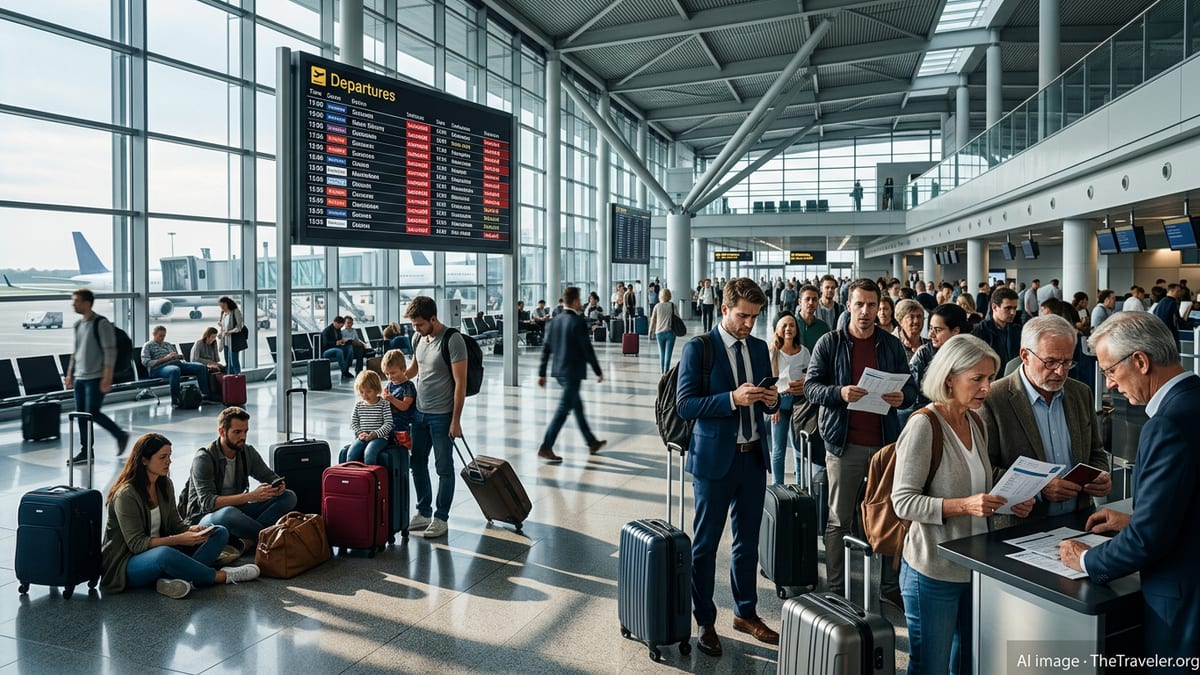
Thousands of travelers were left stranded at Brussels Airport in recent weeks after a wave of unannounced strikes by air traffic controllers and ground handling staff triggered mass flight cancellations, long queues and hours of uncertainty across Belgium’s busiest hub.
Get the latest news straight to your inbox!
Wildcat Air Traffic Control Walkout Halts Belgian Skies
Reports indicate that a surprise work stoppage by air traffic controllers at Skeyes on 2 June brought large parts of Belgian airspace to a standstill during the afternoon and evening peak. Brussels Airport announced that no air traffic was possible between mid-afternoon and late evening, forcing airlines to cancel or divert flights that would normally pass through the country’s main corridors.
Publicly available information shows that several hundred flights were affected across Belgium, with Brussels Airport alone facing around 200 cancellations during the closure window. Carriers operating short-haul services into and out of Zaventem scrambled to rebook passengers or reroute aircraft via neighboring hubs, while long-haul flights adjusted routings to remain above the affected airspace.
Travelers caught in the disruption described being urged not to travel to the airport unless absolutely necessary, as terminal crowds swelled with passengers seeking alternative options. Airlines prioritized stranded customers with urgent connections, but many faced overnight stays or lengthy coach journeys to other European airports in order to continue their trips.
The sudden nature of the walkout left little time for contingency planning. According to published coverage, the industrial action was linked to plans for a new digital control tower in Namur, a project that has stirred concern among controllers about staffing levels and working conditions.
Ryanair and Holiday Traffic Hit Hard at Brussels
Low-cost carriers using Brussels and nearby Charleroi bore the brunt of the immediate chaos. One major airline reported canceling about 100 flights to and from Belgian airports on 2 June alone, disrupting close to 20,000 passengers in a single day. Many of those affected had been traveling for holidays, with Brussels serving as a key gateway to southern Europe at the start of the summer season.
At Brussels Airport, the impact rippled far beyond the departure boards. Cancellations and rolling delays prompted long lines at ticket counters and customer service desks as passengers tried to secure hotel vouchers, meal assistance or rebookings. Social media posts from travelers showed crowded concourses, families sleeping on luggage and departure halls filled with passengers waiting for news of replacement flights.
Travel forums and local discussion boards suggest that the disruption extended into the following days as airlines worked to reposition aircraft and crew that had been stranded out of place during the strike window. Some passengers reported being offered alternative departures from airports in neighboring countries, including Amsterdam and Paris, as carriers sought available seats wherever they could be found.
The timing has raised particular concern among travelers heading to Belgium for major summer events, who now face the prospect of sudden labor actions disrupting long-planned trips. Advice shared online urges passengers to build extra buffer time into itineraries and to monitor both airline updates and local news closely in the days leading up to travel.
Ground Handling Strikes Add to Passenger Frustration
While the air traffic control stoppage grabbed international headlines, unrest on the ground has added a new layer of difficulty for passengers at Brussels Airport. Ground handling company Aviapartner, which manages baggage and check-in for a range of airlines, has been hit by wildcat actions and renewed strike calls in mid-June, just as traffic recovers from the earlier airspace shutdown.
Coverage from Belgian outlets notes that an unannounced strike by Aviapartner staff on 15 June caused significant disruption to early-morning operations at Brussels Airport, with at least a dozen flights reportedly delayed by one to two hours. Long queues formed at check-in and baggage drop counters for airlines relying on the company’s services, while some aircraft departed with limited or delayed luggage loading.
A subsequent breakdown in mediation between Aviapartner management and trade unions on 16 June has fueled concerns over further action. Reports indicate that parts of the workforce resumed industrial action after talks failed to yield an agreement on staffing levels and working conditions ahead of the peak summer period.
For passengers, the combination of air traffic and ground handling disputes has produced a sense of uncertainty around the reliability of services at Brussels Airport. Recent traveler accounts circulating online describe tense scenes at baggage belts and check-in areas, with staff stretched by a surge of rebooked and delayed travelers.
Stranded Passengers Grapple With Limited Options
The rolling disruptions have left many passengers struggling to navigate unfamiliar consumer rights and limited rebooking options. Public information from consumer advocacy groups highlights that travelers departing from Belgium on European carriers are generally entitled to care such as meals, refreshments and accommodation during long delays, as well as possible compensation when strikes fall outside the definition of extraordinary circumstances.
In practice, however, passengers at Brussels Airport have reported uneven access to assistance, particularly during the peak of the airspace closure when airline staff and hotel capacity were under intense pressure. Some travelers turned to online forums for guidance on how to claim refunds, while others shared stories of buying new tickets out of pocket to avoid missing onward commitments.
Travel experts quoted in recent coverage advise that affected passengers keep detailed records of boarding passes, booking confirmations and any expenses incurred while stranded. They also recommend submitting claims directly through airline channels before turning to national enforcement bodies or alternative dispute schemes.
With further labor actions still possible this summer, many observers note that flexibility has become a crucial asset for anyone passing through Brussels. Rebooking onto earlier flights, avoiding tight connections and considering rail alternatives for regional journeys are among the strategies being suggested to reduce the risk of being caught in the next wave of disruption.
Airport Preparedness Under Scrutiny Ahead of Peak Season
The turbulence at Brussels Airport has sparked wider debate about how resilient Europe’s mid-sized hubs are to sudden labor flare-ups. Passenger traffic at the Belgian gateway has been steadily recovering, and official statistics earlier this year pointed to a strong rebound in both short-haul and long-haul markets. That rebound has now collided with industrial tensions at multiple points in the system.
Commentary in Belgian and international outlets suggests that the events of early June have exposed vulnerabilities in coordination between air traffic control, airport operators and private service providers. When several parts of the chain are disrupted within days of each other, recovery becomes slower and passengers more likely to face missed connections, lost luggage and extended stays in the terminal.
In response to public concern, travel advisories have begun to highlight Brussels alongside other European hubs experiencing periodic labor unrest. Passengers planning to transit Belgium over the next few months are being encouraged to check strike calendars, register for airline alerts and remain cautious about planning tight same-day connections through Zaventem.
For now, operations at Brussels Airport have largely resumed, but the memory of grounded aircraft and stranded travelers lingers. With the busy summer holiday wave approaching, many in the travel industry will be watching closely to see whether social tensions ease or whether more days of strike chaos lie ahead for passengers using the Belgian capital’s main airport.