


More news on this day
Travel between the United Kingdom and Dubai is shifting back toward normality after the UK Foreign, Commonwealth & Development Office (FCDO) quietly ended its advisory against non-essential travel to the United Arab Emirates, a move that coincides with Emirates’ rapid rebuilding of its Gulf network following months of missile-related airspace disruption.
Get the latest news straight to your inbox!
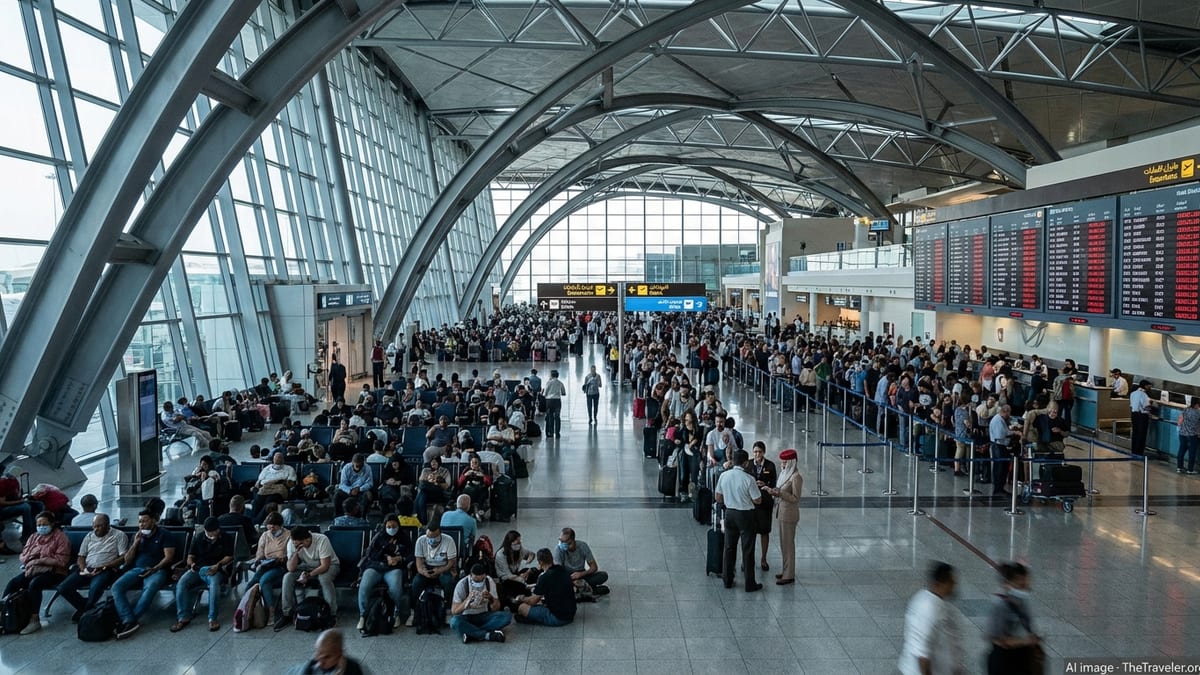
UK Foreign Office Relaxes Guidance After Months of Tension
Publicly available information indicates that the FCDO has withdrawn its strongest warning against travel to the UAE, replacing earlier “do not travel” language with more routine security advice. For weeks, UK-based travelers had been caught in a bind as package tour operators and airlines weighed the stringent Foreign Office guidance against a gradually stabilizing security picture over Emirati airspace.
Discussion among UK travelers and travel agents shows that, as recently as early June, the advisory had still been triggering widespread trip cancellations and automatic refunds on Dubai holidays, even when some flights technically remained scheduled. With the change in wording, tour firms now have more scope to operate normally, and travel insurance policies that were previously voided for leisure trips to Dubai are again beginning to provide standard coverage.
The shift follows a marked easing in regional hostilities after Iranian missile and drone strikes on the UAE in late February forced an abrupt halt to normal operations at Dubai International Airport. That incident led to the closure of airspace, emergency diversions and a prolonged period of disruption that reverberated across Europe-to-Asia corridors.
Travel industry analysts say the latest FCDO stance is likely to unlock a wave of deferred demand from UK leisure travelers who had postponed spring and early summer visits. However, they also caution that the Foreign Office continues to flag elevated regional tensions, meaning conditions could change again if the fragile ceasefire between Iran and Western allies comes under renewed strain.
Emirates Restores Key Gulf and Long-Haul Corridors
While the diplomatic tone has moderated, it is the structural reopening of Middle East airspace that has allowed Emirates to begin restoring its core hub-and-spoke network. Industry bulletins and aviation risk briefings show that the United Arab Emirates, along with neighboring Gulf states, has progressively reopened its flight information regions to civilian traffic, enabling carriers to resume many of the high-frequency links that underpin global connectivity through Dubai.
Executive digests circulated to corporate travel buyers indicate that Emirates is now serving well over 90 percent of its pre-crisis destination network, including most trunk routes linking Europe, Asia and Africa via Dubai. The airline has focused its initial ramp-up on “safe air corridors,” prioritizing routes with strong demand and alternative routings that avoid the most sensitive airspace segments.
Operational updates from regional carriers show a similar pattern. Flydubai has been advising passengers to monitor flight status closely but has been steadily adding back frequencies, while fellow Gulf hubs in Abu Dhabi and Doha have also expanded schedules. Despite this, some European airlines remain absent from the Dubai market or are still flying significantly reduced timetables.
Aviation safety notices from European regulators continue to warn of residual risks in parts of the Gulf and wider Middle East airspace and formally extend crisis-zone guidance into late June. These circulars acknowledge that traffic levels are recovering but emphasize that contingency routings and heightened risk assessments remain in place, particularly for overflights near conflict zones.
Lingering Cancellations and Patchy European Capacity
Even as Emirates and other Gulf carriers accelerate their return to near-normal schedules, travelers face an uneven picture from European airlines. Several major flag carriers, including those in the Netherlands, France and parts of southern Europe, have pushed back their resumptions of Dubai or broader Middle East services, in some cases into July or even the autumn season.
Travel updates from European airlines over recent weeks have repeatedly extended suspension windows for Dubai-bound flights, citing ongoing security evaluations and demand uncertainty. In practical terms, this has created a two-speed recovery: passengers able to route via Gulf-based airlines often find workable itineraries, while those holding tickets with European carriers to Dubai still face cancellations, rebookings or long detours.
Informal reports from traveler forums suggest that flights between UK regional airports and Dubai have been particularly affected, with reduced frequencies and late-notice schedule changes continuing into June. Some travelers have reported being re-accommodated via alternative hubs or shifted onto different travel dates, underscoring that the headline reopening of airspace has not yet translated into fully reliable day-to-day operations.
Industry consultants note that network planners in Europe are likely to remain cautious until there is a longer track record of stability over the Gulf. Insurance premiums for airlines and the ongoing need to keep crew and aircraft clear of higher-risk areas add complexity and cost, encouraging a gradual rather than immediate restoration of pre-crisis capacity.
New Insurance and Passenger Guarantees Aim to Rebuild Confidence
To reassure nervous travelers, Gulf carriers are rolling out new insurance products and passenger guarantees tied directly to Dubai itineraries. Recent coverage in travel industry media describes how Emirates has introduced what is being billed as an “industry-first” comprehensive insurance package for those flying to or through Dubai, addressing gaps that had emerged in conventional travel insurance policies during the crisis.
These enhanced protections, offered automatically with eligible tickets, are designed to give customers greater financial security if their journey is disrupted by renewed regional instability. In parallel, Abu Dhabi-based Etihad has announced complimentary medical coverage for many international passengers, including those stopping over in the UAE, further signaling an industry-wide push to remove perceived barriers to booking Gulf routes.
Publicly available program details indicate that such policies can include coverage for medical expenses, trip interruption and, in some cases, repatriation support if flights are significantly disrupted. By bundling these assurances directly into the ticket, airlines hope to reduce the hesitation among holidaymakers who were deterred by the risk of becoming stranded or uninsured in a rapidly changing security environment.
Travel management companies say these measures are particularly important for corporate clients tasked with sending staff through Dubai on business trips. With insurance, rerouting guarantees and clearer waiver policies in place, companies can more confidently reintroduce Dubai as a preferred transit point between Europe, Asia and Africa.
What UK and Global Travelers Should Expect This Summer
For UK travelers eyeing Dubai holidays or onward connections via the Gulf this summer, the picture is significantly better than it was in March, but far from fully settled. The removal of the FCDO’s strongest warning has reopened the door for tour operators and insurers, and Emirates’ rebuilt network is once again offering extensive one-stop links across three continents.
However, passengers should be prepared for potential last-minute adjustments. Airline advisories still encourage travelers to monitor apps and online flight-status tools closely on the day of departure, arrive at the airport with flexible expectations and understand their rights in case of cancellations or lengthy delays.
Experts point out that as long as regional ceasefires remain formally temporary and aviation authorities continue to classify parts of Gulf airspace as elevated risk, airlines will retain contingency plans that can affect schedules at short notice. This could mean sudden aircraft swaps, longer flight times due to rerouting or rolling capacity reductions if risk assessments shift.
Despite these caveats, booking trends reported by industry observers show demand for Dubai rebounding quickly, particularly from the UK, Europe and major Asian markets. With the Foreign Office’s travel stance softened, airlines adding back frequencies and new insurance-backed guarantees coming into force, Dubai appears set to reclaim its central role in global aviation, even as the region navigates an extended period of geopolitical uncertainty.