


More news on this day
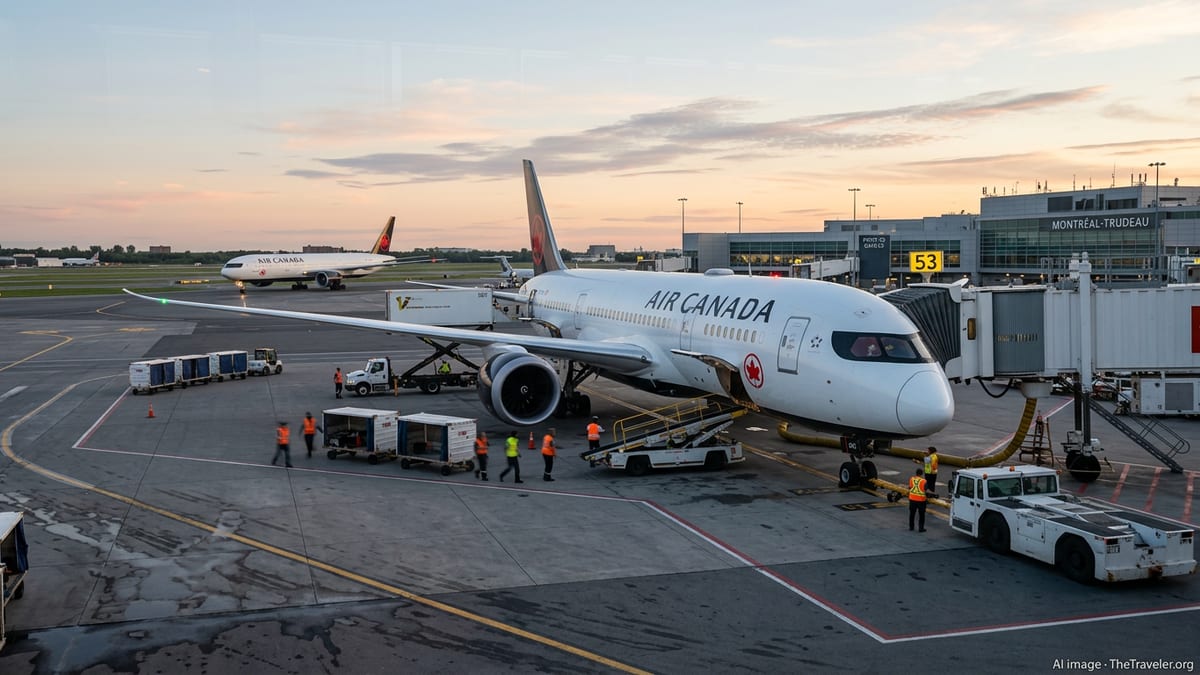
Operations at Montréal–Pierre Elliott Trudeau International Airport were severely disrupted today as regional carrier Jazz, along with Air Canada, Porter Airlines and PAL Airlines, suspended at least 13 departures and logged well over 100 delays, affecting major routes across Canada, the United States, the United Kingdom, Spain, the United Arab Emirates and key destinations in Quebec.
Get the latest news straight to your inbox!
Ripple Effects Across Domestic and Transborder Networks
Publicly available flight-status boards and tracking platforms show that the disruption at Montreal–Trudeau is hitting short-haul and regional services first, particularly those operated under the Air Canada Express banner by Jazz Aviation. These flights form the backbone of domestic connectivity from Montreal to cities in Quebec, Ontario and Atlantic Canada, as well as to several northeastern U.S. destinations. When they are pulled from the schedule, connections across the wider network quickly begin to unravel.
Information compiled from live trackers indicates that at least 13 departures operated or marketed by Jazz, Air Canada, Porter Airlines and PAL Airlines were cancelled over the course of the morning and early afternoon, with many more pushed back by an hour or longer. The most heavily affected routes include services between Montreal and Toronto, Quebec City, Ottawa and Halifax, as well as popular transborder sectors linking Quebec with U.S. hubs such as New York and Boston.
Regional operators are particularly exposed when schedule disruptions occur, because a single aircraft can be scheduled to complete multiple rotations in one day. Once early flights are cancelled or substantially delayed, knock-on effects can cascade through the timetable, forcing airlines either to consolidate passengers on remaining services or to scrub later departures altogether.
International Routes to Europe and the Middle East Disrupted
The disruption is not confined to short-haul traffic. Long-haul and medium-haul flights from Montreal–Trudeau to the United Kingdom, Spain and the United Arab Emirates also recorded extensive delays, according to real-time monitoring services. These routes are typically operated by larger mainline aircraft and serve as crucial gateways linking Quebec and eastern Canada to major European and Middle Eastern hubs.
Even modest delays on these sectors can have outsized consequences, as many passengers are booked on onward connections in London, Madrid, Barcelona, Dubai and other major cities. Prolonged boarding holds, ground holds or late inbound aircraft can cause passengers to miss follow-on flights, forcing airlines to arrange rebookings and, in some cases, hotel accommodation or meal vouchers depending on the reason for the disruption and the regulations that apply.
Montreal’s growing role as an international hub means that the airport’s operational resilience is closely watched by both leisure and business travelers. In recent seasons, carriers have invested heavily in expanding transatlantic and Middle Eastern services from the city, positioning it as an alternative gateway to Toronto and other larger Canadian airports. When the schedule falters on a busy travel day, however, that same concentration of long-haul traffic can compound the strain on airport resources.
Impact on Quebec City and Regional Quebec Connections
The fallout from the disruption is also being felt in Quebec City and across smaller communities in the province that depend on Montreal for onward connections. Regional routes linking Montreal with destinations such as Quebec City, Sept-Îles, Gaspé and other points in eastern Quebec rely heavily on narrow-body and turboprop aircraft operated by Jazz and PAL Airlines. When these services are curtailed, travelers often find that same-day itineraries become significantly more complicated or impossible.
Recent network developments underscore how vital this connectivity is. Air Canada and its regional partners have steadily rebuilt capacity between Montreal and Quebec City following the pandemic, while other carriers have introduced or announced seasonal and year-round services linking Montreal with secondary Quebec markets. Today’s cancellations and delays, concentrated among regional departures, highlight the fragility of those links when schedules come under pressure.
Travelers attempting same-day journeys between Quebec City and international destinations via Montreal reported missed connections and extended rebooking times, based on publicly shared accounts. As airlines prioritize long-haul departures to minimize downstream disruption across their global networks, regional passengers are frequently pushed onto later flights or offered alternative routings through Toronto or other hubs.
Airlines Adjust Schedules as Summer Demand Builds
The timing of the disruption comes as carriers serving Montreal ramp up for the peak summer season. Air Canada, Porter Airlines and PAL Airlines have all expanded their networks in and out of Quebec in recent months, reflecting strong demand for both domestic and international travel. These growth plans include new routes from Montreal to European and African destinations, additional frequencies on North American sectors, and new services from airports elsewhere in Quebec.
Such growth also means that airlines are operating closer to the limits of their available aircraft and crew resources. Industry analyses and recent public reporting on Canadian carriers emphasize that tight staffing levels, especially among pilots and maintenance personnel, leave little margin for operational shocks. When irregular operations coincide with full flights and dense schedules, it becomes more difficult for airlines to find spare aircraft or crews to restore normal operations quickly.
Montreal–Trudeau has also been adapting to increased traffic, with terminal upgrades and lounge expansions announced or completed in the past year. These enhancements are designed to improve the passenger experience over the long term, but on days when cancellations and delays spike, terminal congestion can still intensify as travelers wait for updated departure times, rebooking assistance and baggage handling.
Advice for Affected Travelers
Consumer advocates and travel industry guidance generally recommend that passengers affected by cancellations or long delays monitor their flight status directly with their airline’s app or website and keep boarding passes and receipts for any additional expenses. In many cases, rebooking can be completed digitally, avoiding long lines at airport counters when large numbers of passengers are seeking assistance at once.
Regulations in Canada and in overseas jurisdictions may provide entitlements to compensation or reimbursement in certain circumstances, particularly when disruptions are within an airline’s control. However, eligibility often depends on the nature of the disruption, the length of the delay and the distance of the affected flight. Travelers on itineraries that cross multiple regions, such as those connecting Montreal with the United Kingdom, Spain or the United Arab Emirates, may find that different rules apply to different legs of their journey.
For those yet to travel, industry observers often advise booking longer connection times when transiting busy hubs like Montreal–Trudeau during the summer peak, especially when itineraries involve separate tickets or multiple carriers. Choosing earlier departures in the day can also help, as schedules tend to become more vulnerable to cascading delays in the afternoon and evening once irregular operations begin.